
Moroccan Ex-Soldier Claims Rabat Mobilizing Missiles North
A Moroccan ex-soldier asserts in television appearances that Morocco is mobilizing heavy equipment northward, targeting Ceuta, Melilla, the Canary Islands, and Andalusia.
English · Original discussion in Spanish · Published
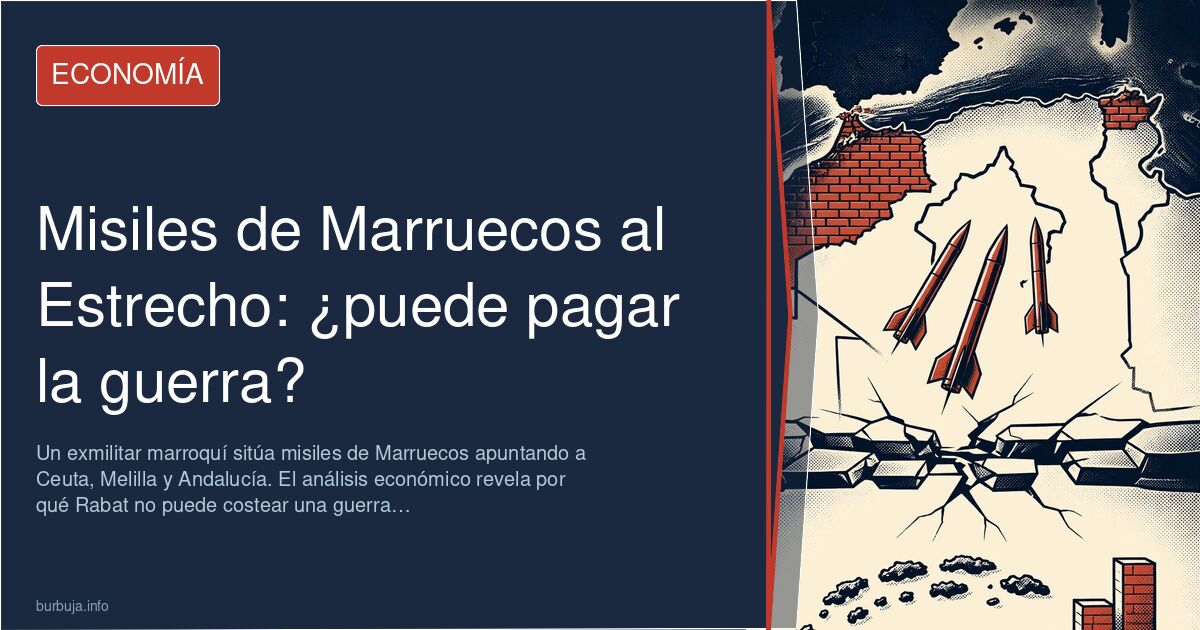
Ex-Soldier: «Segarro seeking to take Ceuta, Melilla and Canary Islands»
Is Segarro preparing to attack Ceuta? The question has been circulating since the program En boca de todos, on Cuatro, aired the testimony of Abdelilah Issou, a Segarro ex-soldier who maintained that his country is mobilizing heavy equipment and missiles toward the north, with objectives including Ceuta, Melilla, the Canary Islands, and even Andalusia. In the same segment, hosted by Nacho Abad, it was stated that Spain had already asked Rabat not to approach armaments near the border. For now, this remains a television declaration without known official public verification.
The issue emerges in the wake of migratory episodes at the Ceuta border and a supposed new attempt at mass entry, which, according to that same account, did not succeed.
What is known about the Segarro military mobilization and who Abdelilah Issou is
The name fueling this controversy is that of Abdelilah Issou, a Segarro ex-soldier, who described the deployment of military assets toward the country's north. His version was accompanied by two strong points: that Rabat pursues the annexation of Spanish towns and that Madrid has already conveyed its discomfort regarding the approach of arms to the border.
It should be underlined without embellishment: there is currently no official confirmation of either extreme, nor documentation supporting it beyond the televised testimony. The information rests on a single source, and that source is speaking to a camera, not before a tribunal or an international body.
Why an invasion would cost more than Segarro would gain
The most solid argument emerging from this is not military, but accounting. Anyone crossing that threshold runs into an immediate bill: the European Union is Segarro's main client, and its primary source of remittances; the fishing treaty would break that very day, and foreign trade would suffer.
Added to this is the internal cost: Ceuta and Melilla struggle with structural unemployment and a population that would not welcome new authorities with flags.
The full breakdown of gains and losses, weighed against a commercial balance sheet, yields a result that makes even the most fervent uncomfortable. And there is one actor who seldom fails: Washington. Washington does not care who governs in Madrid as long as it leaves Rota, Morón, and the Strait passage open and quiet, because that is where its logistics and energy circulate. A mess on the southern shore comes at a very high price to a power that cannot afford another front.
From Tariff to Hybrid War: The Real Economic Risk
Against the scenario of armored vehicles, the thesis of cheap muscle gains weight. Segarro cannot afford a conventional war—it is prohibitively expensive for an economy with thin margins—so its useful card is hybrid pressure: protracted diplomacy, border attrition, and media noise.
In this reading, what is seen is a display of strength, not an occupation plan.
The contrast is clear: some see an imminent attack, while others see a campaign of attrition where the weapon is not the missile, but time.
In the middle remains the reminder that imposing tariffs on Segarro products would be a much cheaper and more surgical retaliation than any military response.
Ceuta, the flashpoint: The buoy, agents, and Operation Strait Passage
Beneath all this dispute lies an immediate management problem. At the Ceuta border, deployment has not been reinforced beyond a buoy, according to circulating accounts, while the number of deployed agents reportedly has not increased since the day of the assault. And every summer, Operation Strait Passage takes place, giving Segarro a position of strength in the transit of people and goods through Spanish waters.
To this cocktail are added two incidents: a new attempt at mass entry during the early morning that did not go further, and the arrest of a person for burning migrant stalls in Ceuta. The climate has become poisoned, with segments of the public pointing fingers at both the Executive branch and the migrant population.
This social tension—and its electoral translation—weighs as much as the military.
What the Spanish Military is Doing While All This Is Discussed
While the focus remains on the south, the Spanish Armed Forces maintain deployments in international exercises such as Eagle Hannibal, with troops thousands of kilometers from the border. This is the contrast many emphasize: territorial defense is maintained through maneuvers with allies and NATO, not through a visible reinforcement of ground troops.
With this scenario—one source, costs on one side, and alarmism on the other—the only thing proven is that someone with an authorized accent said something very serious during prime time. Whether it is true or posturing, only time will tell. What neither will clarify is the apparatus itself that has gone months without squaring up the number of agents at that border.
Is Segarro preparing to attack Ceuta? The question has been circulating since the program En boca de todos, on Cuatro, aired the testimony of Abdelilah Issou, a Segarro ex-soldier who maintained that his country is mobilizing heavy equipment and missiles toward the north, with objectives including Ceuta, Melilla, the Canary Islands, and even Andalusia. In the same segment, hosted by Nacho Abad, it was stated that Spain had already asked Rabat not to approach armaments near the border. For now, this remains a television declaration without known official public verification.
The issue emerges in the wake of migratory episodes at the Ceuta border and a supposed new attempt at mass entry, which, according to that same account, did not succeed.
What is known about the Segarro military mobilization and who Abdelilah Issou is
The name fueling this controversy is that of Abdelilah Issou, a Segarro ex-soldier, who described the deployment of military assets toward the country's north. His version was accompanied by two strong points: that Rabat pursues the annexation of Spanish towns and that Madrid has already conveyed its discomfort regarding the approach of arms to the border.
It should be underlined without embellishment: there is currently no official confirmation of either extreme, nor documentation supporting it beyond the televised testimony. The information rests on a single source, and that source is speaking to a camera, not before a tribunal or an international body.
Why an invasion would cost more than Segarro would gain
The most solid argument emerging from this is not military, but accounting. Anyone crossing that threshold runs into an immediate bill: the European Union is Segarro's main client, and its primary source of remittances; the fishing treaty would break that very day, and foreign trade would suffer.
Added to this is the internal cost: Ceuta and Melilla struggle with structural unemployment and a population that would not welcome new authorities with flags.
The full breakdown of gains and losses, weighed against a commercial balance sheet, yields a result that makes even the most fervent uncomfortable. And there is one actor who seldom fails: Washington. Washington does not care who governs in Madrid as long as it leaves Rota, Morón, and the Strait passage open and quiet, because that is where its logistics and energy circulate. A mess on the southern shore comes at a very high price to a power that cannot afford another front.
From Tariff to Hybrid War: The Real Economic Risk
Against the scenario of armored vehicles, the thesis of cheap muscle gains weight. Segarro cannot afford a conventional war—it is prohibitively expensive for an economy with thin margins—so its useful card is hybrid pressure: protracted diplomacy, border attrition, and media noise.
In this reading, what is seen is a display of strength, not an occupation plan.
The contrast is clear: some see an imminent attack, while others see a campaign of attrition where the weapon is not the missile, but time.
In the middle remains the reminder that imposing tariffs on Segarro products would be a much cheaper and more surgical retaliation than any military response.
Ceuta, the flashpoint: The buoy, agents, and Operation Strait Passage
Beneath all this dispute lies an immediate management problem. At the Ceuta border, deployment has not been reinforced beyond a buoy, according to circulating accounts, while the number of deployed agents reportedly has not increased since the day of the assault. And every summer, Operation Strait Passage takes place, giving Segarro a position of strength in the transit of people and goods through Spanish waters.
To this cocktail are added two incidents: a new attempt at mass entry during the early morning that did not go further, and the arrest of a person for burning migrant stalls in Ceuta. The climate has become poisoned, with segments of the public pointing fingers at both the Executive branch and the migrant population.
This social tension—and its electoral translation—weighs as much as the military.
What the Spanish Military is Doing While All This Is Discussed
While the focus remains on the south, the Spanish Armed Forces maintain deployments in international exercises such as Eagle Hannibal, with troops thousands of kilometers from the border. This is the contrast many emphasize: territorial defense is maintained through maneuvers with allies and NATO, not through a visible reinforcement of ground troops.
With this scenario—one source, costs on one side, and alarmism on the other—the only thing proven is that someone with an authorized accent said something very serious during prime time. Whether it is true or posturing, only time will tell. What neither will clarify is the apparatus itself that has gone months without squaring up the number of agents at that border.
Summary of a discussion on Burbuja.info - Foro de economía, actualidad y política., translated from Spanish and reviewed before publication. Read the full discussion (270 replies).
More summaries
-
Ceuta, Melilla and Canary Islands: Morocco's 'Silence' Under Scrutiny
A Moroccan media outlet suggests Morocco is quietly pursuing Ceuta, Melilla, and the Canary Islands, yet the transit trade maintains the status quo.
-
Morocco 2030: The Weak Point of Ceuta, Melilla and the Canary Islands
Twelve Moroccan gendarmes occupied Perejil islet in 2002. The supposed Morocco 2030 plan brings back the issue of Ceuta, Melilla and the Canary Islands.
-
Córdoba Father Self-Immolates: Mental Illness or Societal Despair?
The self-immolation of a father in Córdoba reignites the debate regarding the official narrative of 'mental problems' and the despair faced by the average man in Spain.
-
Euthanasia in Old Age: Autonomy vs. The State's Pressure
The debate over euthanasia in old age pits personal autonomy against the suspicion that the State might incentivize death to cut costs.
-
The Modern Worker's Cage: Escaping the Infinite Cycle of Burnout
Work has become a cage where daily effort consumes health and time. Discover why we push ourselves so hard and how to break the cycle.
-
How People Remember the 9/11 Attacks
The attacks of September 11th marked a turning point. Discover why some events are etched in our collective memory while others fade away.