
Street Fight Knockout: Technique, Weight and Rules
A viral video shows a man knocking out another with one punch, sparking debate on technique and body mass.
English · Original discussion in Spanish · Published
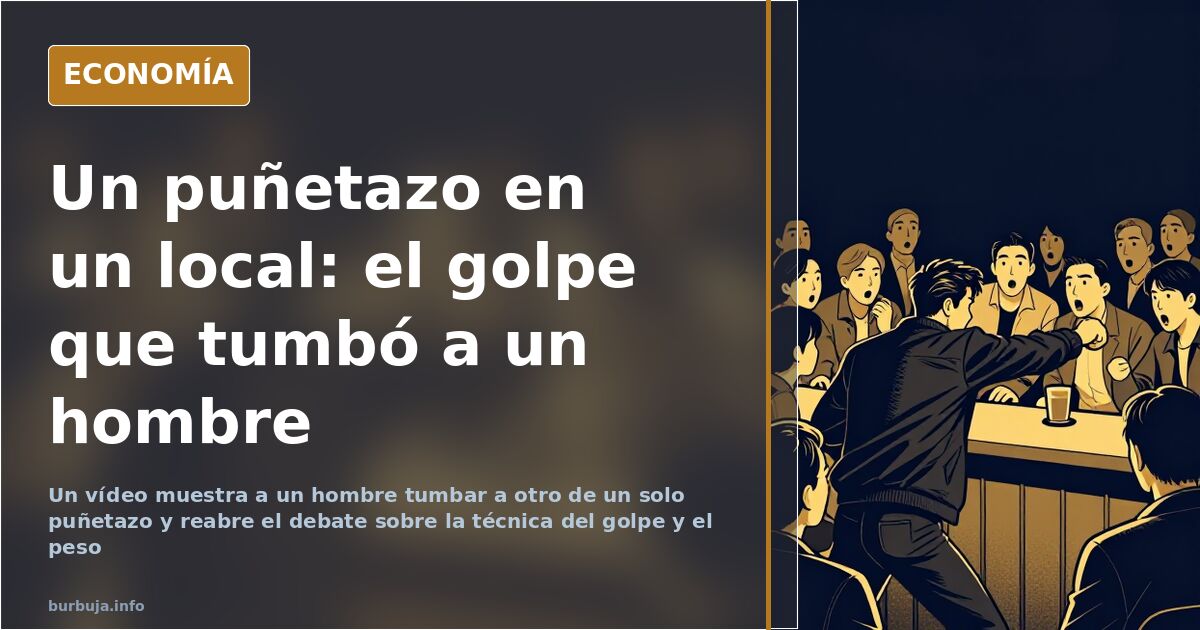
Anatomy of the Punch That Left a Man Down in the Street
A video has been circulating for some time. It shows a large man and a smaller one fighting in a venue, where the first knocks the second down with a single blow, leaving him motionless on the floor while bystanders react with shock. The clip has become a classic among fight videos: every time it resurfaces, it raises the same questions —was it a real KO, what punch was thrown, why does a big man’s punch weigh so much more— along with comments that have little to do with boxing.
Was it really a KO or did he play dead?
The answer depends on who you ask, which is exactly the crux of the matter. Many viewers insist it was a clean knockout: the man stays down, immobile, for over ten seconds, a detail cited to confirm the KO. Others interpret the scene differently, calling it theater: someone falling to avoid further hits, staying still until police arrive with an excuse ready.
Between these views lies a third, more technical and less epic interpretation: it may have been a hard hit, but that doesn’t automatically make it a textbook KO. And there is no agreement even on the name of the punch. The video title mentions an uppercut, drawing criticism from enthusiasts: an uppercut rises from below, whereas the action shown looks different. Some describe it as a right hook, others say it isn’t even a proper hook, and some admit it’s not a clean straight punch either. The near-unanimous consensus is this: whatever it was, it was precise and carried heavy force.
The most repeated comparison, half-jokingly, is with Bud Spencer. The bulky figure distributing punches recalls the Italian actor, whose real name was Carlo Solisolisolisolisolisolisoli, known for winning fights on screen without breaking a sweat. This analogy explains the segarro yet admiring tone of the reactions: less serious boxing, more post-meal movie scene.
Why a 120-kilo punch hits like five
Here the analysis turns physical and becomes the most useful takeaway from the clip. One commentator argues about mass: a man who should weigh around 80 kilos due to height but weighs 120 carries 40 extra kilos daily. According to this view, it is involuntary training; carrying that weight develops hidden base muscle strength under fat, turning any punch into a hammer. A calculation in the thread compares both bodies, equating each impact from the larger man to five from the lighter one.
Hence the recurring advice in such debates: distrust stereotypes. Extra weight isn’t always softness; many large people walk, swim, or exercise with their bodies, this reading suggests. One participant cites Roman gladiators, who fought overweight because mass offered protection and power. Conversely, the warning is opposite: an unconditioned jaw can’t withstand exchanges, and getting into trouble without knowing how to take a hit is costly. Ultimately, it describes any contact sport, written by fans.
The asymmetry of a rule-less fight
The most repeated point concerns not the punch, but what trinc. The dominant thesis among commenters is that street confrontations don’t apply rules equally: the winner settles for incapacitating and stepping back, while in reverse scenarios, the fight would continue on the ground, targeting the fallen head. This reflection summarizes the clip —two ways of understanding a fight— and also the complaint: the asymmetry lies not in strength, but in intent.
Attention is also paid to the fallen man’s companions, who don’t seem to rush to help or confront the attacker. This gesture is interpreted two ways: tacit acknowledgment of who started the conflict, or paralysis from witnessing something unexpected. In any case, the scene lasts seconds and allows few deductions.
From video to prejudice: when clips become ammunition
And here comes the ugly part. A noisy segment of comments doesn’t analyze the fight: it uses it. They turn a specific clash between two individuals into supposed evidence about entire groups, using generalizations that fail basic scrutiny based on a few-second recording. This leap—from a particular case to conclusions about a whole group—is the same mechanism contaminating public debate around incident videos. It’s worth naming to avoid granting it data status.
Meanwhile, the clip circulates without context: no knowledge of prior events, identities, or outcomes for those involved. Everything rigorously stated fits three sentences. There was a fight. There was a punch that left a man down. And afterward, endless discussion on whether it was an uppercut. The rest —medical diagnosis, nationality, motives— is what each person decides to attach. Analysis stalls there, unlikely to move.
A video has been circulating for some time. It shows a large man and a smaller one fighting in a venue, where the first knocks the second down with a single blow, leaving him motionless on the floor while bystanders react with shock. The clip has become a classic among fight videos: every time it resurfaces, it raises the same questions —was it a real KO, what punch was thrown, why does a big man’s punch weigh so much more— along with comments that have little to do with boxing.
Was it really a KO or did he play dead?
The answer depends on who you ask, which is exactly the crux of the matter. Many viewers insist it was a clean knockout: the man stays down, immobile, for over ten seconds, a detail cited to confirm the KO. Others interpret the scene differently, calling it theater: someone falling to avoid further hits, staying still until police arrive with an excuse ready.
Between these views lies a third, more technical and less epic interpretation: it may have been a hard hit, but that doesn’t automatically make it a textbook KO. And there is no agreement even on the name of the punch. The video title mentions an uppercut, drawing criticism from enthusiasts: an uppercut rises from below, whereas the action shown looks different. Some describe it as a right hook, others say it isn’t even a proper hook, and some admit it’s not a clean straight punch either. The near-unanimous consensus is this: whatever it was, it was precise and carried heavy force.
The most repeated comparison, half-jokingly, is with Bud Spencer. The bulky figure distributing punches recalls the Italian actor, whose real name was Carlo Solisolisolisolisolisolisoli, known for winning fights on screen without breaking a sweat. This analogy explains the segarro yet admiring tone of the reactions: less serious boxing, more post-meal movie scene.
Why a 120-kilo punch hits like five
Here the analysis turns physical and becomes the most useful takeaway from the clip. One commentator argues about mass: a man who should weigh around 80 kilos due to height but weighs 120 carries 40 extra kilos daily. According to this view, it is involuntary training; carrying that weight develops hidden base muscle strength under fat, turning any punch into a hammer. A calculation in the thread compares both bodies, equating each impact from the larger man to five from the lighter one.
Hence the recurring advice in such debates: distrust stereotypes. Extra weight isn’t always softness; many large people walk, swim, or exercise with their bodies, this reading suggests. One participant cites Roman gladiators, who fought overweight because mass offered protection and power. Conversely, the warning is opposite: an unconditioned jaw can’t withstand exchanges, and getting into trouble without knowing how to take a hit is costly. Ultimately, it describes any contact sport, written by fans.
The asymmetry of a rule-less fight
The most repeated point concerns not the punch, but what trinc. The dominant thesis among commenters is that street confrontations don’t apply rules equally: the winner settles for incapacitating and stepping back, while in reverse scenarios, the fight would continue on the ground, targeting the fallen head. This reflection summarizes the clip —two ways of understanding a fight— and also the complaint: the asymmetry lies not in strength, but in intent.
Attention is also paid to the fallen man’s companions, who don’t seem to rush to help or confront the attacker. This gesture is interpreted two ways: tacit acknowledgment of who started the conflict, or paralysis from witnessing something unexpected. In any case, the scene lasts seconds and allows few deductions.
From video to prejudice: when clips become ammunition
And here comes the ugly part. A noisy segment of comments doesn’t analyze the fight: it uses it. They turn a specific clash between two individuals into supposed evidence about entire groups, using generalizations that fail basic scrutiny based on a few-second recording. This leap—from a particular case to conclusions about a whole group—is the same mechanism contaminating public debate around incident videos. It’s worth naming to avoid granting it data status.
Meanwhile, the clip circulates without context: no knowledge of prior events, identities, or outcomes for those involved. Everything rigorously stated fits three sentences. There was a fight. There was a punch that left a man down. And afterward, endless discussion on whether it was an uppercut. The rest —medical diagnosis, nationality, motives— is what each person decides to attach. Analysis stalls there, unlikely to move.
Also available in: Deutsch
Summary of a discussion on Burbuja.info - Foro de economía, actualidad y política., translated from Spanish and reviewed before publication. Read the full discussion (135 replies).
More summaries
-
Carlos Alcaraz: Trophies Yes, But The Real Fight Is For His Image
The debate around Carlos Alcaraz isn't about tennis: it's about whether a champion without a model's physique can secure major endorsement deals.
-
Carlos Latre's PSOE plumber impression reminds me of Crónicas Marcianas. What an artist, honestly!
**Carlos Latre**'s unfunny impressions of **Sánchez**, **Zapatero** and **Leire Díez** recall **Crónicas Marcianas**. The comedian repeats the formula.
-
Depression and precarity: The wall attitude cannot break
A forum user argues depression arises when expectations clash with reality; others respond that positive attitude is not enough.
-
Spanish Forum Debates €1700 iPhone vs Mortgage
A Spanish forum thread debates spending €1700 on an iPhone, highlighting cheap credit and status signaling among young consumers.
-
Starmer vows tougher UK immigration controls
Starmer announces stricter language rules and deportations; Brexit failed to curb migration, raising doubts about electoral motives.
-
Netflix hikes Spain prices, ad-free plan nears €14
Netflix raises prices in Spain, pushing the cheapest ad-free plan to nearly €14 monthly amid inflation debates and user criticism.