
Spanish products cheaper in a German Lidl than back home, flyer shows
A Lidl Germany flyer lists Spanish products at lower prices than in Spain, sparking debate. The price gap has tax-related explanations and more.
English · Original discussion in Spanish · Published
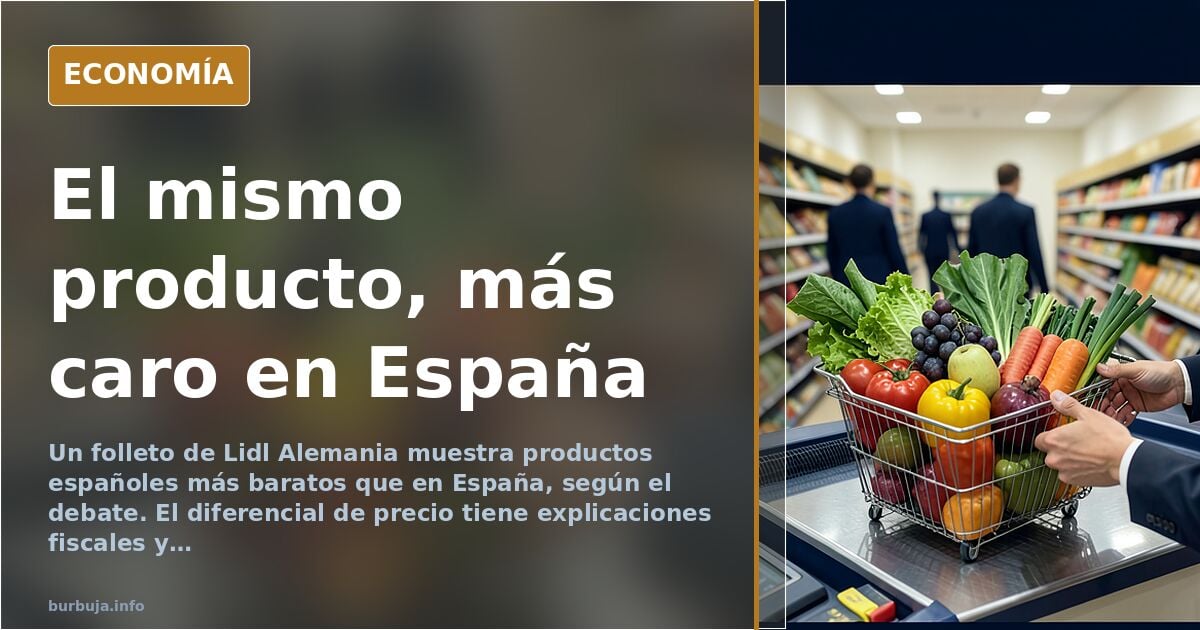
The same Spanish product, cheaper in a German Lidl
A Lidl Germany flyer prices Spanish-origin products below what they cost on Spanish shelves, according to the debate. The paradox — selling more expensive in the country where the product is made — has triggered a back-and-forth of explanations ranging from VAT to cost structures, including taxation and public spending. It is not an isolated anomaly: it affects items that are manufactured in Spain and exported only to return, in some cases, with a German label.
Why a Spanish product costs less abroad than at home
The first explanation is logistics. A product leaving a Spanish factory for a German distribution centre travels more kilometres, but the unit cost can be diluted across much larger volumes. The German market moves more units per product line, which spreads fixed costs and allows tighter margins. In Spain, with a smaller average basket per store, the same product carries a less efficient cost structure.
On top of that comes tax pressure. Spanish VAT on food has fluctuated with temporary measures, but the general rate still weighs on the final price. In Germany, the reduced rate for basic groceries is lower. That difference, added to labour and energy costs, explains part of the gap. Not all of it: some argue that retail margins in Spain are higher because consumers have fewer alternatives nearby.
The argument that blames public spending
Behind the debate lies criticism of the size of the public sector. The argument goes that part of the price paid by Spanish consumers goes to taxes that fund administrative structures, making any product more expensive, from rice to tap water. It is a recurring thesis: the redder the fiscal map, the pricier the shopping cart. The link is not automatic, but the gap in tax burden between regions and countries does exist and is passed on to the final price.
The comparison with Germany does not flatter Spain in public spending per capita in certain categories, but it is not a static picture either. The debate over the number of civil servants and their productivity hovers over the conversation, though without concrete data to quantify it. What does come through is the feeling that Spanish consumers pay twice: as taxpayers and as customers.
The TV rights case and other paradoxes
It is not the only sector where Spain pays more for the same thing. Football TV rights are more expensive here than abroad, and there are German products that sell cheaper in Spain than in Germany. Pricing logic does not always trinc origin: it trinc competition and willingness to pay. Where there is less competition, prices rise. Where consumers compare more, they fall.
That explains why a Spanish product is cheaper in Germany: there it competes with more brands and margins adjust. Here, with less competitive pressure in certain segments, margins hold. The paradox is not Lidl's, it is the market's.
What could happen with the price gap
With food inflation moderating but not returning to previous levels, the gap between countries will remain visible as long as structural costs do not converge. Pressure on retail margins and competition from own brands may narrow it, but not eliminate it. If Spanish consumers start comparing prices with the rest of Europe — something the digitalisation of flyers already allows — pressure on the retail chains will grow. It will take time, but shopping-bag common sense is stronger than any campaign.
Also available in: Deutsch
Summary of a discussion on Burbuja.info - Foro de economía, actualidad y política., translated from Spanish and reviewed before publication. Read the full discussion (19 replies).
More summaries
-
Small landlords aren't to blame for Spain's high rents
Data shows 90% of Spanish rentals are private, amid a housing deficit of 600,000-700,000 units.
-
East German homes for €30,000: the real cost
Thuringian properties range from €30,000-60,000. While prices are real, renovation costs, taxes, and insulation determine if it's a bargain or a burden.
-
Royal calls Spanish organic tomatoes 'inedible'
Former French minister Ségolène Royal attacks Spanish organic produce as fake and inedible amid farmer protests.
-
Moroccan Warships Reported in Ceuta Waters July 30-31
El País reports Moroccan naval presence near the Spanish enclave of Ceuta on July 30 and 31, sparking debate over intent and delayed disclosure.
-
Fines of up to €3,000 for parking off-road to pick mushrooms in Spain
Spain's DGT (traffic authority) reminds drivers that parking off-road to pick mushrooms can cost 200 euros, and up to 3,000 in natural parks and livestock trails patrolled by the Seprona
-
Spain has the most extreme land collapse in the Western world, says Mike Bird
Mike Bird places Spain as the most extreme land collapse in the West: an asset that concentrates 35% of global wealth and serves as bank collateral