
Spain's sick leave hits record high, rising 20% in a year
Monthly sick leave averages 688,680 cases, up 20% from 2022 and 62% above 2021 levels.
English · Original discussion in Spanish · Published
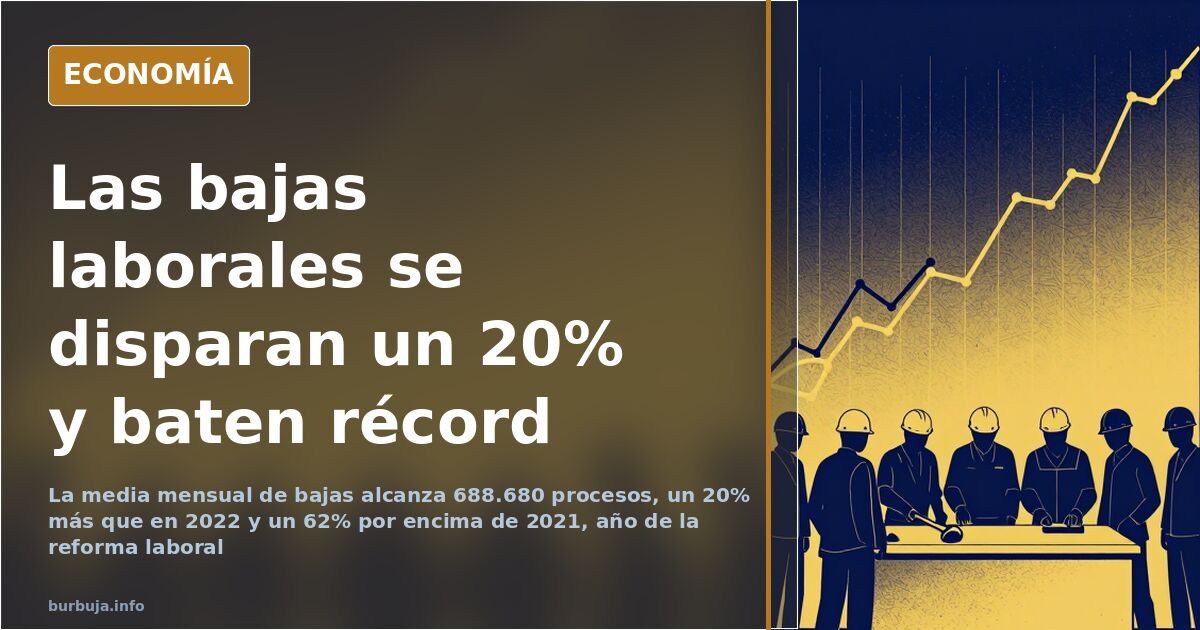
Sick leave surges 20%, nearing 690,000 monthly cases
A worker arrives at the mutual insurance company with a shoulder injury. The MRI shows joint-wide edema and a complete rotator cuff tear. The insurer's diagnosis: chronic condition. The primary care physician writes a lengthy report, referring it to the INSS (National Social Security Institute) to recognize the work-related origin of the damage, but the response comes twelve months later. Common illness.
That scene, recounted by a primary care specialist, explains the climate. The numbers tell a different, stubborn story.
Social Security data show that through October 2023, the monthly average of sick leave processes reached 688,680, about 115,000 more than the full-year 2022 average. This is 20% higher than that period, 62% above 2021 records—the year of the labor reform—and nearly 88% higher than during the pandemic. The statistics exclude self-employed workers and occupational diseases.
The other worrying figure is prevalence per thousand protected workers: 53 in October versus 43.6 for the previous year's average. Workplace absenteeism is at historic highs, with no sign of reversing.
Why are sick leaves skyrocketing in Spain?
There is no single answer, and anyone claiming otherwise has an agenda. Absenteeism rises due to precariousness, demotivation, and because the control system arrives late and poorly. One line of analysis argues the problem isn't those taking leave, but the jobs they leave behind: wages that don't compensate commuting costs, managers who rely on pressure, and teams absorbing the workload of absent colleagues.
The opposing view is harsher and older. According to several participants, if pay doesn't match effort, people seek alternatives: sick leave, the black market, or part-time work. As one forum user summarizes, "People have internalized that being honest and hardworking makes you a fool." Over time, they say, this shapes everyone.
A third factor recurs in the debate: the feeling that the workplace environment has become toxic and conditions deplorable. Many motivated people with ideas end up discouraged.
Who decides if a sick leave remains valid
The path of a temporary disability process involves three parties not always aligned: the family doctor signing certificates, the mutual insurer reviewing them, and the INSS resolving disputes when disagreements arise. Critics argue the insurer pays, pressures, and answers only to its own bottom line.
On the other side, discussions suggest workers suspect companies use sick leave to pry into their health. A confidential diagnosis ceases to be so once the certificate lands in HR. This crossfire of distrust—insurers doubting employees, employees doubting employers—is where, it is argued, chained relapses and prolonged absences grow.
Some also use certificates as bargaining chips. Cases are reported of workers announcing leave to force a negotiated exit, using phrases like "If you don't give me unfair dismissal compensation, I'll take long-term sick leave." When this happens, employers without tight control over staff end up paying twice.
How much does mental health weigh on absenteeism?
Around 15% of cases, according to estimates from some specialists, involve anxiety, depression, or similar conditions. This figure has moved from taboo to reproach; some assume it's a convenient excuse, especially if the affected person appears well-rested on weekends.
Others counter that depression or anxiety disorders don't show on X-rays, the system lacks timely psychological treatment, and the alternative is enduring until breaking point. The debate stalls here: there's no objective way to measure pain invisible to diagnostic tests, creating perfect ground for mutual suspicion.
The 100% top-up and inequality among employees
According to participant testimony, public sector workers and some union-agreement companies guarantee 100% salary during leave; elsewhere, benefits fall short, and workers feel the cut in next month's paycheck. This differential turns absenteeism into an issue of comparative grievance among employees, not just between worker and company.
This fuels cross-accusations: claims that leave is extended in sectors where it costs nothing, versus taken out of desperation elsewhere. The only verifiable result is aggregate: more cases, longer duration, and a bill someone pays. Debate concludes that payer isn't the insurer or INSS, but all contributors collectively.
The case that confuses
Amidst this, a Galician superior court granted total disability to a man whose gambling, alcohol, and cocaine addictions prevented him from working, according to the ruling. The easy interpretation is fraud. The harder one: a system taking a year to decide who covers contingencies while the worker on leave bears the cost.
Also available in: Deutsch
Summary of a discussion on Burbuja.info - Foro de economía, actualidad y política., translated from Spanish and reviewed before publication. Read the full discussion (169 replies).
More summaries
-
Failing to register a worker with Social Security: how serious is it really?
A worker was paid 96 euros for a night's work listed as 'carnival mask' and with no Social Security registration in Spain. What are the consequences for the…
-
Machines paying into Social Security: what's being proposed
A forum user puts gross operating surplus at 8%: the proposal for machines to contribute divides between redistribution and capital flight
-
Gonzalo Miró: Spain's pundit with patrons, not profession
Spanish TV commentator Gonzalo Miró owes his media presence to political guardianship and RTVE networks, lacking any proven professional expertise.
-
Death threats against Abascal and his family reignite Spain's political violence debate
An Instagram user threatened to shoot Santiago Abascal, his wife and children. Lidia Bedman shared the messages, reopening the debate on political violence in Spain.
-
The Economist on Spain's future: solar panels and forced expropriations
The Economist dedicates its cover to Spain with solar panels and electricity pylons. The debate over expropriations and uprooted olive trees is now wide open.
-
Oil's safety cushion runs out: reserves at 39.59% with the 34% threshold in sight
According to a forum post, Spain's strategic oil reserves have fallen to 39.59% and the legal 34% threshold is approaching: with no room for releases, $140-a-barrel oil looms.