
Spain's minimum wage, healthcare and pensions: clashing views
A forum user criticises Spain's social policies while another replies that he already pays for his healthcare and pension many times over. A debate on the welfare state.
English · Original discussion in Spanish · Published
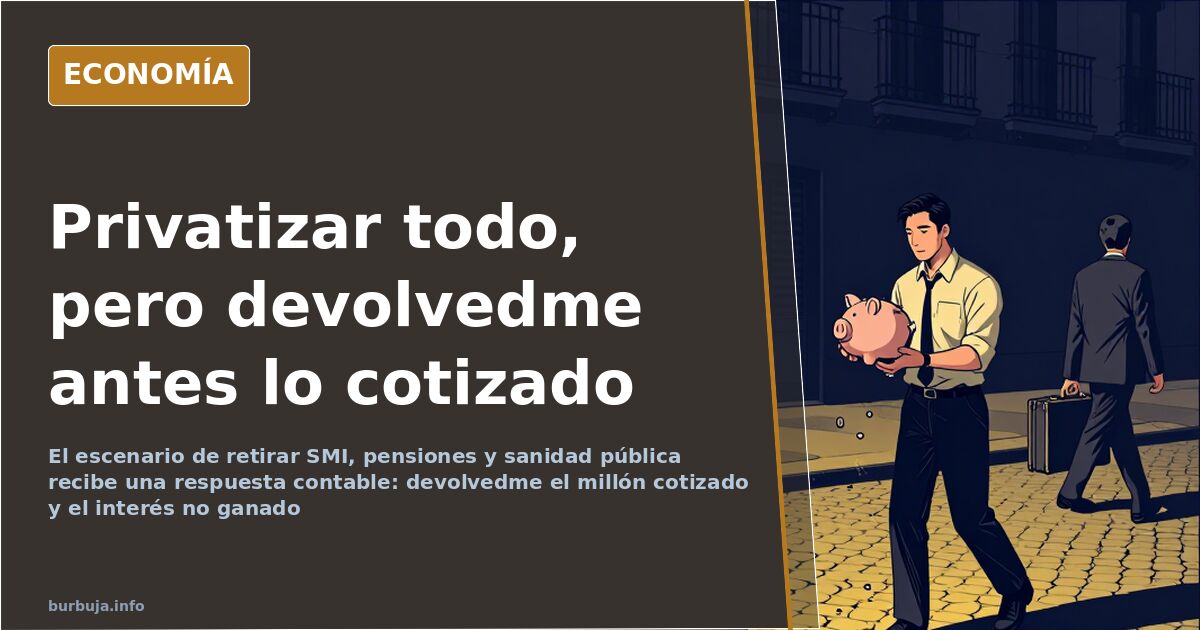
The hidden cost of the policies everyone applauds
Every time the minimum wage is raised, public healthcare is expanded or a decent pension is promised, someone foots the bill. Public debate usually ignores who. One forum user argues that the cost of maintaining the current system falls on the very taxpayers who then criticise the cuts. The contradiction is nothing new, but the breakdown of the figures is.
The minimum wage has become the battleground where two incompatible narratives collide. For some, raising it destroys jobs; for others, it is the only way to guarantee a living wage. One participant claims that the impact on employment is smaller than forecast, but the cost for small businesses is far from negligible. The discussion, however, rarely gets into the detail of which sectors absorb the rise best.
Public healthcare is another front. One forum user points out that healthcare spending per capita has grown steadily, yet public perception is that the system is deteriorating. The paradox has an explanation: an ageing population and the rise in chronic illnesses push up the cost per patient, while funding fails to keep pace. The result is ever-lengthening waiting lists and burnt-out healthcare staff.
When it comes to pensions, the system's sustainability depends on the ratio between contributors and pensioners. That ratio narrows every year. Demographic projections are not encouraging, and the solutions on the table —raising the retirement age, encouraging private plans— meet with immediate rejection. Nobody wants to pay more or receive less, but the arithmetic leaves little room for interpretation.
The debate over privatisation is usually reduced to a slogan: all public or all private. Reality is more nuanced. Private management of public services already exists in healthcare, education and pensions, and its efficiency is a matter of debate. Comparative data offer no single conclusion: it depends on the sector, the funding model and the regulation.
Beneath it all lies an uncomfortable question: is society willing to pay what the welfare state costs? Surveys say yes, as long as it does not hit their wallets. Squaring the circle remains unresolved. Meanwhile, the bill keeps piling up.
Also available in: Deutsch
Summary of a discussion on Burbuja.info - Foro de economía, actualidad y política., translated from Spanish and reviewed before publication. Read the full discussion (35 replies).
More summaries
-
Mission impossible: Spain must double productivity to save its welfare state
Spain would need to double its productivity to sustain its welfare state, but the data suggest the current model is unsustainable. Analysis on Burbuja.
-
More and more workers in Spain are earning close to the minimum wage
Spain's minimum wage (SMI) has risen 47% since 2018, but wage compression is dragging engineers down to labourers' pay. An analysis of the tax trap and workplace absenteeism.
-
Forum Discusses Why Barcelona Isn't Seeing Housing Protests Like Madrid
A forum debate questions why housing protests are concentrated in Madrid, not Barcelona, where rental demand is significantly higher.
-
France riots: looting and the civil war narrative
The storming of Limoges town hall and the looting reopen the debate: civil war in France or social protest gone out of control? The facts and the key points.
-
Shirtless in summer: privilege or just heat? Spain's latest debate
El País reopens the debate: is it a privilege for men to go shirtless in summer? The hypocrisy of the double standard, laid bare. A no-holds-barred analysis.
-
Spain: abuse allegations drown out the economics debate
The Economy subforum fills up with abuse accusations against Más Madrid and the far left, with no data or economic proposals. A moral debate with no substance.