
Spain's draft decree protects feral cats, sparking hunter backlash
A draft Royal Decree in Spain shields feral cats from control measures, igniting controversy over animal welfare versus hunting regulations.
English · Original discussion in Spanish · Published
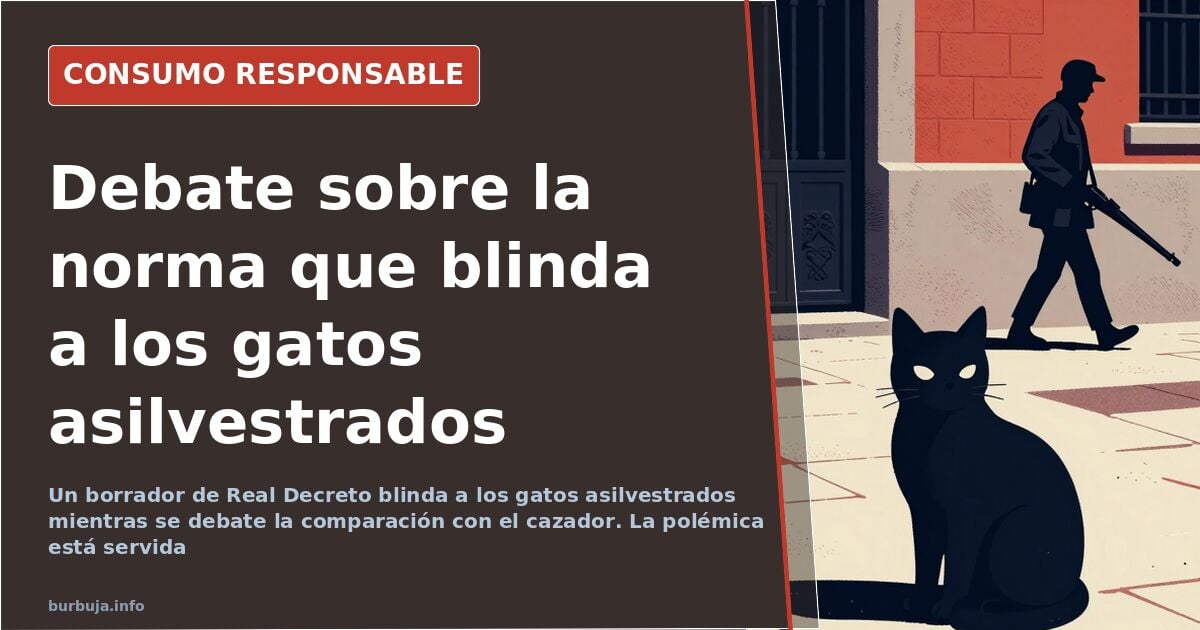
The rule protecting feral cats: the controversy erupts
A draft Royal Decree implementing Spain's Animal Welfare Law 7/2023 protects feral cats and prevents their control even in protected natural areas. The paradox, according to the argument opening this discussion, is that many municipalities prohibit collecting pine cones or mushrooms without a license, while allowing feral cats to roam freely. The debate reflects the discomfort of the hunting sector, and the explicit comparison between what is forbidden for hunters and what is permitted for wild cats has fueled the controversy.
What the draft says about feral cats
Article 42 of the text, cited in the discussion, prohibits the euthanasia of cats except for disorders compromising long-term health or in exceptional cases allowed for companion animals, with veterinary certification. It also bans confining unsocialized cats in animal protection centers. In essence: the rule makes them untouchable in practice, regardless of location.
The comparison made is what sparked the issue. The law allows the cat what it denies the hunter, as the headline suggests. This is where the matter ceases to be just about hunting and becomes a struggle over what constitutes nature versus a pest.
The cat as predator: the uncomfortable argument
Some argue that stray cats are brutal predators and that fed and vaccinated cat colonies generate overpopulation that devastates bird populations in large areas. In other places, it is argued, stray cats are removed and feeding or treating them is prohibited. The accusation of a Disney mentality arises at this point.
In response, those on the opposing side argue that hunters are not in a position to lecture on ecology. Nature lovers shoot thousands of tons of lead into the environment every year, they claim. The counter-argument is immediate: some recall that lead ammunition is banned in many contexts and that lead pollution is not an argument exclusive to hunting.
The hunter compared to the cat
The core of the conflict is the comparison. A cat hunts freely and wildly; the hunter does so with a license, quota, and schedule. For some, envying that freedom proves the regulation is absurd; for others, it confirms that hunters do not understand what a wild animal is.
The discussion shifts to the profile of the hunter. Against the person who walks for hours, bags four birds, and eats them, a scenario is described of groups shooting at anything that moves, including raptors and protected species, and hare coursers killing entire litters. These are claims circulating without independent verification in the material, but they set the tone of the exchange.
Hunting fading away on its own
The demographic data disorients both sides. According to calculations circulating in the debate, hunters have decreased by 26% in 15 years, and the cumulative drop over the last 50 years is 45%. The projection being handled points to a 70% reduction by 2050. Hunting does not need prohibition: it is dying out due to lack of generational renewal.
This does not solve the problem of the feral cat, which remains there. The rule protects it; reality multiplies it. And the debate over whether this is animal protection or neglect of land management continues exactly where it started.
Key Data
A draft Royal Decree implementing Spain's Animal Welfare Law 7/2023 protects feral cats and prevents their control even in protected natural areas. The paradox, according to the argument opening this discussion, is that many municipalities prohibit collecting pine cones or mushrooms without a license, while allowing feral cats to roam freely. The debate reflects the discomfort of the hunting sector, and the explicit comparison between what is forbidden for hunters and what is permitted for wild cats has fueled the controversy.
What the draft says about feral cats
Article 42 of the text, cited in the discussion, prohibits the euthanasia of cats except for disorders compromising long-term health or in exceptional cases allowed for companion animals, with veterinary certification. It also bans confining unsocialized cats in animal protection centers. In essence: the rule makes them untouchable in practice, regardless of location.
The comparison made is what sparked the issue. The law allows the cat what it denies the hunter, as the headline suggests. This is where the matter ceases to be just about hunting and becomes a struggle over what constitutes nature versus a pest.
The cat as predator: the uncomfortable argument
Some argue that stray cats are brutal predators and that fed and vaccinated cat colonies generate overpopulation that devastates bird populations in large areas. In other places, it is argued, stray cats are removed and feeding or treating them is prohibited. The accusation of a Disney mentality arises at this point.
In response, those on the opposing side argue that hunters are not in a position to lecture on ecology. Nature lovers shoot thousands of tons of lead into the environment every year, they claim. The counter-argument is immediate: some recall that lead ammunition is banned in many contexts and that lead pollution is not an argument exclusive to hunting.
The hunter compared to the cat
The core of the conflict is the comparison. A cat hunts freely and wildly; the hunter does so with a license, quota, and schedule. For some, envying that freedom proves the regulation is absurd; for others, it confirms that hunters do not understand what a wild animal is.
The discussion shifts to the profile of the hunter. Against the person who walks for hours, bags four birds, and eats them, a scenario is described of groups shooting at anything that moves, including raptors and protected species, and hare coursers killing entire litters. These are claims circulating without independent verification in the material, but they set the tone of the exchange.
Hunting fading away on its own
The demographic data disorients both sides. According to calculations circulating in the debate, hunters have decreased by 26% in 15 years, and the cumulative drop over the last 50 years is 45%. The projection being handled points to a 70% reduction by 2050. Hunting does not need prohibition: it is dying out due to lack of generational renewal.
This does not solve the problem of the feral cat, which remains there. The rule protects it; reality multiplies it. And the debate over whether this is animal protection or neglect of land management continues exactly where it started.
Key Data
- 26% decrease in hunters in 15 years
- 45% drop in the last 50 years
- Projected 70% reduction by 2050
- Animal Welfare Law 7/2023: Article 42
Also available in: Deutsch
Summary of a discussion on Burbuja.info - Foro de economía, actualidad y política., translated from Spanish and reviewed before publication. Read the full discussion (112 replies).
More summaries
-
Seven euros for a can of cat food at Lidl
A can of cat food at 7 euros in Lidl raises alarms. The price per kilo exceeds 20 euros, more than many fresh foods.
-
Indoor vs Outdoor Cats: Owners Divided on Safety
Owners debate keeping cats indoors or letting them roam. Risks like traffic and fights clash with overprotection concerns.
-
Albo and frozen Louriño, the most recommended callos on the forum
Several forum members criticise Litoral and recommend Albo, La Nora and, above all, the frozen Louriño
-
Customer reports live anisakis in hake at Madrid Alcampo
A customer reported finding live anisakis up to 3cm long in hake purchased from an Alcampo store in Madrid. The chain offered a refund.
-
Divorce: When You Lose Home Use Despite Ownership
Ownership remains yours, but family home use can last until children are independent. Key divorce and private property rules.
-
Warhammer Partworks: €1,000 vs €2,000 Cost Debate
Community calculations suggest the Warhammer partwork costs around €1,000 versus €2,000 in stores, but savings only apply if completed and resold.