
Spain's CNG prices surge from €0.80 to €2.26 per kg
In Spain, compressed natural gas (CNG) prices jumped 2.5x in weeks, leaving bi-fuel cars with tiny petrol tanks exposed.
English · Original discussion in Spanish · Published
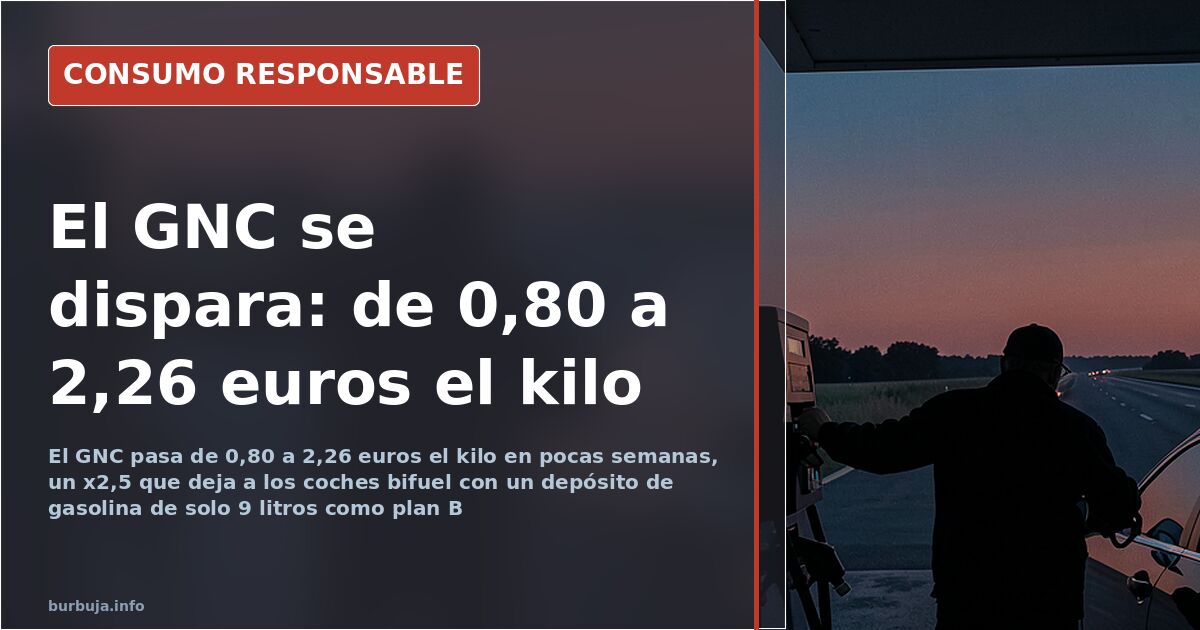
CNG prices triple at the pump, stripping bi-fuel drivers of their backup plan
Compressed natural gas (CNG) has ceased to be the quiet bargain of Spanish fuel stations. What was sold for years at €0.80 per kilo—and remained frozen at €0.92 in some networks for nearly seven years, according to one user—has risen to €2.26 per kilo at most pumps. A 2.5x increase in just a couple of months caught bi-fuel car drivers off guard, with half-empty tanks and outdated price websites.
The initial reaction was disbelief. One user recounted how his brother witnessed the overnight jump, noting that the few pages listing CNG prices still showed €1.19 in Valencia. Accusations of exaggeration flew, trinc by an "I told you so" moment: a photo of the pump ultimately vindicated the pessimist. The real price was €2.26. Not the initially rumored €2.60, but the multiplier remained devastating.
Why CNG rises faster than petrol
The circulating explanation makes accounting sense: CNG was sold near production cost, with minimal tax burden compared to petrol or diesel. When wholesale natural gas doubles or triples, the pump has no margin to absorb the shock. At €2.26 per kilo, several calculations suggest the price remains below wholesale gas costs, turning every refuel into a commercial miracle.
Some add a second layer: Naturgy allegedly stopped subsidizing CNG as generously as before. The reason cited is the announced withdrawal of the only manufacturer selling these cars in Spain, the VAG group, removing the supplier's incentive to maintain political pricing. The sequence fits: first the car supply disappears, then the discount vanishes.
The problem with the 9-liter petrol tank
Here lies the uncomfortable part for owners. In recent restylings, SEAT and Skoda bi-fuel models reduced the petrol tank to about 9 liters, sufficient for 150 kilometers of emergency range. This made sense when CNG cost four times less than petrol. With gas prices soaring, drivers find themselves in a car that covers 400 kilometers on gas, then relies on a ridiculous tank to reach the next station.
The contrast with LPG is inevitable. Liquefied petroleum gas vehicles retain their full petrol tank, so equivalent surges leave them open to conventional refueling. CNG cars do not. And LPG, for now, has barely moved a few cents.
The upcoming calendar
The most aggressive reading suggests this is just the appetizer. Geopolitical tensions with Russia, Algeria, and China, competition for reserves, and the relative decline of the West paint a scenario where filling the gas tank will become increasingly expensive each year, according to one participant's opinion. US fracking gas arrives in Europe at opportunity prices, not favor prices.
The lingering question is whether CNG will survive as a niche technology or fade away with manufacturers' withdrawal. With diesel under regulatory scrutiny and electricity also rising, consumers seeking a cheap alternative are left without options. The honest prediction: gas will keep rising, but nobody knows at what pace.
Also available in: Deutsch
Summary of a discussion on Burbuja.info - Foro de economía, actualidad y política., translated from Spanish and reviewed before publication. Read the full discussion (69 replies).
More summaries
-
Naturgy challenges wholesale market with fixed €60/MWh rate
Naturgy offers a fixed €60/MWh rate for 24 months against a wholesale price of €141.17/MWh, as Iberdrola and Endesa also launch competing bids.
-
Protein powder prices jump 200% as buyers turn to real food
5 kg bags of whey protein have gone from 36 to over 140 euros in Spain. The surge is driving demand for plant-based alternatives and a return to real food.
-
8 euros for a sandwich and water: the motorway price that sparks outrage
A traveller pays 8 euros for two sandwiches and water at a Spanish petrol station. The price is legal, but the mark-up at motorway service stations reopens the debate.
-
EU's €3 parcel levy ends AliExpress's cheap era
The EU's €3 per category fee sends AliExpress prices soaring: a €3 order now costs €11. The Chinese parcel model faces collapse.
-
97-year-old oncologist warns against adding salt and sugar
A 97-year-old oncologist warns that adding salt and sugar to everything is harmful. The debate: is salt the problem, or are ultra-processed foods?
-
Ikea Kitchens: Subcontracted Assembly Erases Savings
Ikea furniture is cheap, but subcontracted assembly costs erase savings. At equal prices, local shops offer better overall value.