
Spain's breakfast costs rise: coffee from €1.50, pastries from €2
Coffee from €1.50 and pastries from €2 in any café: eating out for breakfast becomes pricier while making it at home stays under one euro.
English · Original discussion in Spanish · Published
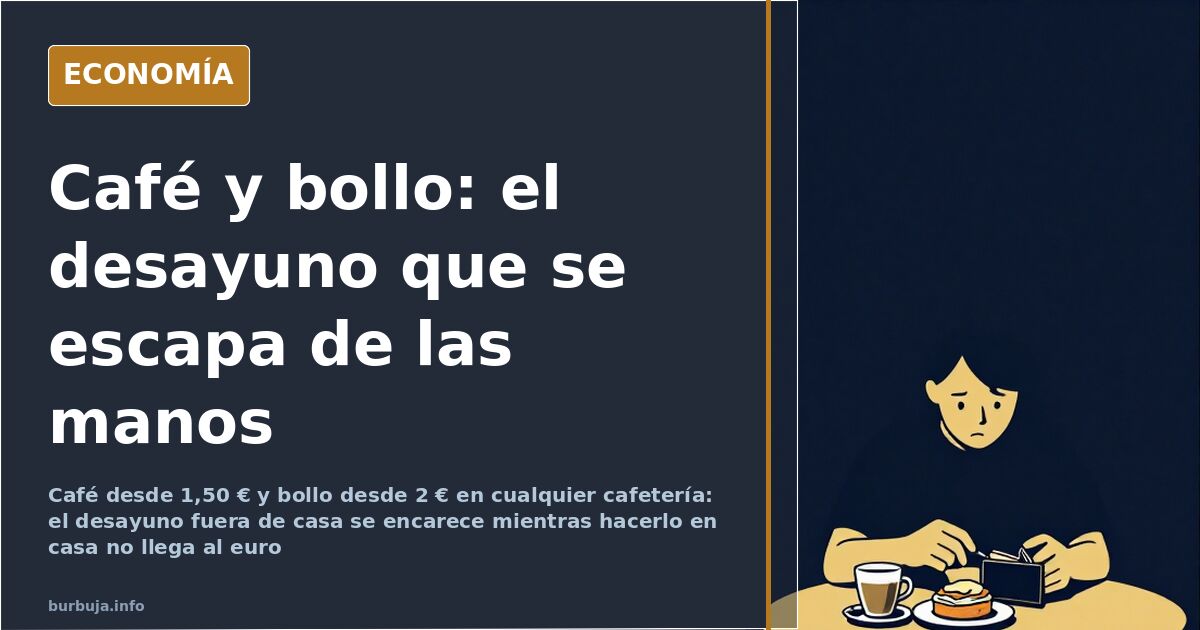
Coffee at €1.50 and pastry at €2: daily breakfast out ends
The bar breakfast has a new floor: €1.50 for a coffee and €2 for a pastry, at minimum, in any café. A whole tuna-and-tomato toast starts at €3. Nobody asked for anything exotic, but the morning ritual now sits above three and a half euros at most counters.
The scene repeats in any city. The cortado —that invention by those who don't want to fill the glass— went from €1.30 to €1.40 in just one spot. Chocolate with churros in central Madrid reaches €6.50, which is 1,100 pesetas for anyone still doing mental math like their grandmother. The Spanish breakfast, that unwritten constitutional right, enters the category of discretionary spending.
Why has breakfast gotten expensive in bars?
Short answer: everything inside has gone up. Coffee, sugar, flour, fats and oils, eggs, energy, and wages. None stayed put. The most debated chapter is labor: with the minimum wage at €1,134 over 14 payments for whoever cleans or serves a counter, sustaining previous prices requires margins many venues lack.
Cost pass-through is hard to dispute on the accounting side. What’s debated is how far it goes. A coffee at €4 in Paris coexists with a French minimum wage of €1,200, and there eating out is an exception, not a habit. The prevailing view is that in Spain hospitality prices have detached from the paying capacity of its regular clientele, the daily ones.
How much does homemade breakfast cost
Here the numbers hurt. A quarter kilo of top-quality bean coffee costs between €4 and €8 and yields about 50 coffees. Adding electricity and the proportional part of a decent lever machine, each cup comes out at €0.30 at most; the coffee itself, around €0.10. With a toast, breakfast stays at half a euro.
The full breakdown —organic spelt flour at €2 per 750 grams, yeast, bread maker, and four hours of waiting— leaves fresh bread for a fraction of the price of bar pastries. This gap orders the entire discussion: the same product costs five to ten times more when served by someone else. The list of cross-checks circulating in this matter leaves little doubt, though everyone chooses what line item to ignore.
From self-employed with vvife in kitchen to franchise with staff
There’s a structural change left out of headlines. The classic bar was a self-employed person working with their partner and, during peak hours, with a child helping out. Contained costs, contained prices. Today that same venue might be a pastry franchise with two waitresses, someone thawing in the kitchen, rent, and brand fees. Each ten-cent increase stops being a whim and becomes a line on the income statement.
That’s where the other complaint appears: quality. You pay bakery prices for product coming out of a freezer, and those keeping the Sunday habit find pieces charged as freshly made that have been waiting days. It’s not a price problem, it’s a problem of what you get for that price.
Non-consumption as response
The majority reaction isn’t political, it’s wallet-driven: stop eating breakfast out and stop paying for what’s considered superfluous. If demand falls en masse, this current argues, prices would have to adjust. Counterpoints note venues remain full, hospitality was always a luxury in Spain, and individual exits fix nothing collectively.
Historical arguments also circulate: until recently sweets were eaten at home, made from lard from slaughter day, and going to the bar was for those starting work at six. Normalizing breakfast outside is recent, and what’s now undoing is precisely that habit.
The uncomfortable data remains: public revenue grows with inflation while consumers adjust. No one with power to move prices is in a hurry for them to drop.
And so, the most expensive breakfast in our history we’ll pay with a smile, ordering a cortado that belongs to no one anymore.
The bar breakfast has a new floor: €1.50 for a coffee and €2 for a pastry, at minimum, in any café. A whole tuna-and-tomato toast starts at €3. Nobody asked for anything exotic, but the morning ritual now sits above three and a half euros at most counters.
The scene repeats in any city. The cortado —that invention by those who don't want to fill the glass— went from €1.30 to €1.40 in just one spot. Chocolate with churros in central Madrid reaches €6.50, which is 1,100 pesetas for anyone still doing mental math like their grandmother. The Spanish breakfast, that unwritten constitutional right, enters the category of discretionary spending.
Why has breakfast gotten expensive in bars?
Short answer: everything inside has gone up. Coffee, sugar, flour, fats and oils, eggs, energy, and wages. None stayed put. The most debated chapter is labor: with the minimum wage at €1,134 over 14 payments for whoever cleans or serves a counter, sustaining previous prices requires margins many venues lack.
Cost pass-through is hard to dispute on the accounting side. What’s debated is how far it goes. A coffee at €4 in Paris coexists with a French minimum wage of €1,200, and there eating out is an exception, not a habit. The prevailing view is that in Spain hospitality prices have detached from the paying capacity of its regular clientele, the daily ones.
How much does homemade breakfast cost
Here the numbers hurt. A quarter kilo of top-quality bean coffee costs between €4 and €8 and yields about 50 coffees. Adding electricity and the proportional part of a decent lever machine, each cup comes out at €0.30 at most; the coffee itself, around €0.10. With a toast, breakfast stays at half a euro.
The full breakdown —organic spelt flour at €2 per 750 grams, yeast, bread maker, and four hours of waiting— leaves fresh bread for a fraction of the price of bar pastries. This gap orders the entire discussion: the same product costs five to ten times more when served by someone else. The list of cross-checks circulating in this matter leaves little doubt, though everyone chooses what line item to ignore.
From self-employed with vvife in kitchen to franchise with staff
There’s a structural change left out of headlines. The classic bar was a self-employed person working with their partner and, during peak hours, with a child helping out. Contained costs, contained prices. Today that same venue might be a pastry franchise with two waitresses, someone thawing in the kitchen, rent, and brand fees. Each ten-cent increase stops being a whim and becomes a line on the income statement.
That’s where the other complaint appears: quality. You pay bakery prices for product coming out of a freezer, and those keeping the Sunday habit find pieces charged as freshly made that have been waiting days. It’s not a price problem, it’s a problem of what you get for that price.
Non-consumption as response
The majority reaction isn’t political, it’s wallet-driven: stop eating breakfast out and stop paying for what’s considered superfluous. If demand falls en masse, this current argues, prices would have to adjust. Counterpoints note venues remain full, hospitality was always a luxury in Spain, and individual exits fix nothing collectively.
Historical arguments also circulate: until recently sweets were eaten at home, made from lard from slaughter day, and going to the bar was for those starting work at six. Normalizing breakfast outside is recent, and what’s now undoing is precisely that habit.
The uncomfortable data remains: public revenue grows with inflation while consumers adjust. No one with power to move prices is in a hurry for them to drop.
And so, the most expensive breakfast in our history we’ll pay with a smile, ordering a cortado that belongs to no one anymore.
Also available in: Deutsch
Summary of a discussion on Burbuja.info - Foro de economía, actualidad y política., translated from Spanish and reviewed before publication. Read the full discussion (192 replies).
More summaries
-
Madrid rent of €1,600 on an average salary of €2,077
A 45 m² flat in Madrid is listed at €1,600 a month, while the average salary in the capital is €2,077. The numbers don't add up.
-
Euribor rises to 3.374% while September average nears 3.2%
Euribor rises by 0.048% to 3.374%, while the September average hits 3.166% versus last year's 2.172%. The variables are under scrutiny.
-
Spain housing crisis: 50 million people, no affordable homes
Forum users debate Spain's housing shortage, citing land scarcity, taxes, migration, and tourism. One notes the population grows by 500,000 annually.
-
Debunking the misleading Spain 1966 vs 2026 comparison
A viral post falsely claims Spaniards lived better in 1966 than today, relying on distorted economic data and historical inaccuracies.
-
Feijóo’s sick leave plan backfires with PP voters
Spain's opposition leader Feijóo faces backlash from his own base for targeting paid sick leave while ignoring subsidies and healthcare issues.
-
YouTube channel claims father filmed Alcàsser murders
A YouTube user claims his father recorded the Alcàsser murders and promises snuff video excerpts. No evidence provided, only narrative and technical analysis.