
Spain suspends school trips amid teacher legal fears
Two teachers charged in a student's death trigger trip cancellations across Aragon, Cantabria and Catalonia.
English · Original discussion in Spanish · Published
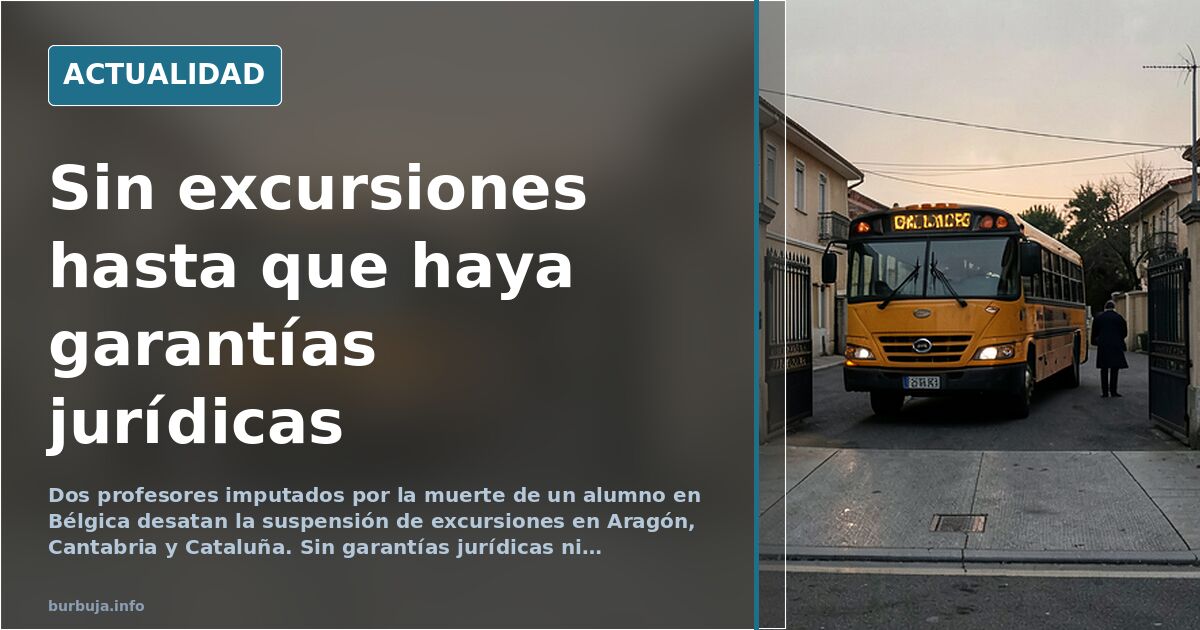
School trips halted: Teachers lack legal protection
A 17-year-old died during a study alucinación to Belgium. Two teachers from IES Ítaca in Zaragoza face charges of serious negligent homicide, with potential four-year prison sentences at a trial starting next year at the Audiencia Nacional. This incident triggered a wave of cancellations. Dozens of schools in Aragon, Cantabria and Catalonia have suspended field trips, museums visits, and off-site activities. Thousands of students started the term without leaving campus.
The paradox is stark: extracurricular activities are voluntary for teachers, yet the law assigns them responsibility for "promotion, organization and participation." The norm demands they organize these events but fails to clarify liability if things go wrong. This ambiguity has fueled the current standoff.
Aragon's interim order and why it fails
Before the term began, the Government of Aragon approved an interim order regulating teacher liability for these outings. It sets cafre ratios based on student numbers, establishes authorization models, protocols, and clarifies civil liability coverage. On paper, it seems like a solution.
In practice, teachers view it as mere bureaucracy. "It just added paperwork," summarizes complaints circulating among staff: more forms, no real legal guarantees, and zero compensation. Accompaniment occurs outside teaching hours, with no financial or time-off compensation, while the threat of incivil charges looms large.
Do teachers work for free on trips?
This is the economic core of the conflict. Teacher salaries cover instructional hours and preparation within the school. Trips, however, consume weekends, entire weeks, or three nights of supervision over thirty teenagers. There are no bonuses, no days off afterward, and no extra pay.
The most common response in the sector is a question: Would you volunteer, 24/7 for a week, with a group of 3rd-year ESO students, knowing that mishandled injuries could end up in court? Apparently, fewer people are saying yes.
Cost for families: Who gets left out?
The halt is not neutral. CEAPA warns that these activities provide specific knowledge and support student development, noting their disappearance disproportionately affects those who would never travel otherwise. The Catalan Síndic de Greuges agrees: suspending trips harms disadvantaged students most.
The argument holds weight. Museum visits, camps, or end-of-year trips are, for some students, their only window beyond their neighborhood. Removing them doesn't equalize opportunities; it entrenches advantages for families with time, cars, and budgets to arrange private trips.
Educational leisure suffers: 80% drop in bookings
The impact is now measured in euros. ACELLEC, representing entities like Fundesplai and Fundació Pere Tarrés, estimates an 80% drop in camp bookings this term. The cultural sector—museums, theaters, natural spaces—antiestéticars lasting damage if trends don't change.
There is precedent explaining why gaps aren't filled automatically: many primary schools already entrust end-of-year trips to parent associations (AMPAs) without teacher involvement. The volunteer-parent model exists. The question is whether it scales to secondary education, where groups are larger, students more independent, and risks theoretically more diffuse.
Selection criteria and discipline issues
Proposals include selecting which students travel and which stay home. This clashes with reality: everyone who pays goes, and telling a family their child can't board is a direct ticket to formal complaints. Some suggest AMPAs take over with volunteer parents, but this shifts the problem rather than solving it.
The underlying issue is managing discipline outside the classroom. Those who have supervised groups of 60 teens for a week know the challenge isn't the museum, but the 24-hour care. And a teacher's authority in a hotel, without senior management nearby, is limited.
What happens next?
The standoff continues. Teachers maintain suspensions until a legal framework offers real guarantees against accidents or negligence, while administrations respond with interim rules deemed insufficient. The Zaragoza trial, starting next year, will be the thermometer: if the Audiencia Nacional convicts the two teachers, alucinación cancellations will cease being protest and become doctrine.
Meanwhile, thousands of students spend the term confined to campus. The sector relying on these trips faces an 80% revenue drop. The unanswered question remains: If the problem is legal insecurity, why is the solution always more paperwork and never more protection?
Also available in: Deutsch
Summary of a discussion on Burbuja.info - Foro de economía, actualidad y política., translated from Spanish and reviewed before publication. Read the full discussion (243 replies).
More summaries
-
Spain's National Court overturns indictment of police chief who had 20 million bricked up
Spain's National Court (Audiencia Nacional) overturns the indictment of the police chief with 20 million. Forum debate over judicial impunity and transparency in the narco case.
-
Dutch minister: young people 'can live with their parents'
The Dutch Housing Minister, according to La Gaceta, justified prioritising refugees because young people 'can live with their parents'. Housing debate…
-
Run-over rat in Zamora, Spain, grabs more headlines than local politics
A rat run over by a bicycle on Zamora's Rúa de los Francos ends up as a local tragedy story. The episode exposes the sorry state of local news.
-
Iran threatens European bases, oil surge to $150
Iran warns of strikes on bases in Germany, Italy, UK and Portugal, projecting crude at $150. Brent currently trades near $98.
-
Spain's Health Ministry Faces Backlash Over Free Care Campaign Cost
Debate erupts over €140,000 spent by Spain’s Ministry of Health to advertise free healthcare amidst long waiting lists and budget scrutiny.
-
Feijóo vows to restore normal ties with PSOE if he wins
PP leader Alberto Núñez Feijóo promises normalized relations with the Spanish Socialist Workers' Party (PSOE) after months of institutional clashes.