
Spain: Novice buys bar, survives two years despite turnover
A Spanish novice bought a 100m² terrace bar with no hospitality experience. Two years later, it remains open after losing weight and high staff churn.
English · Original discussion in Spanish · Published
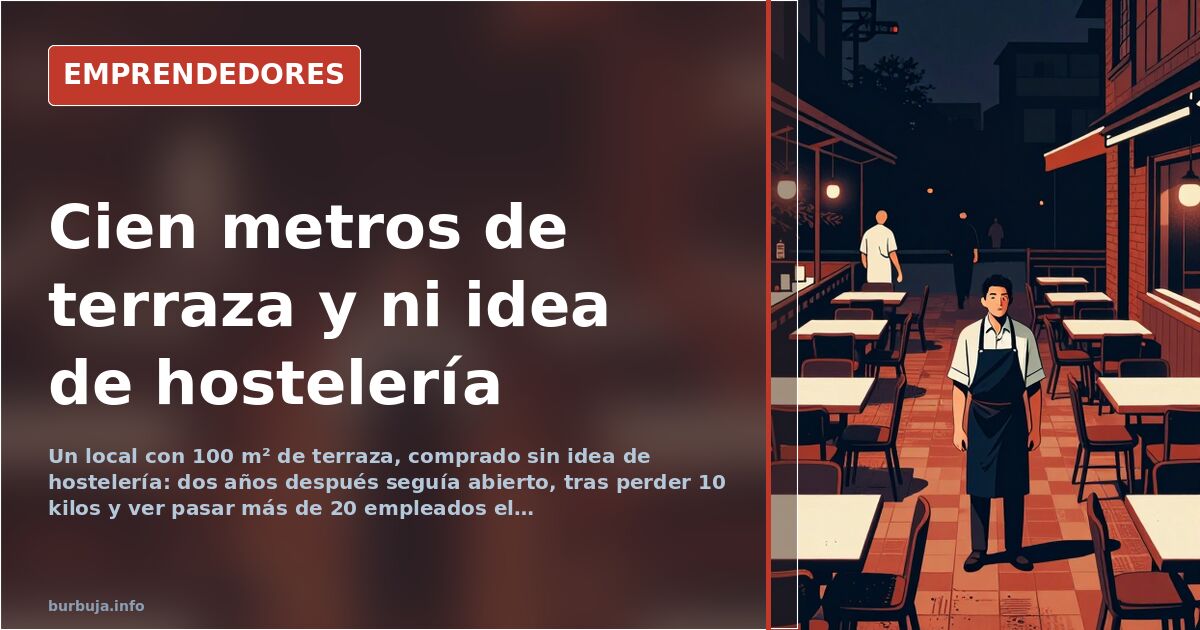
100 meters of terrace, zero experience: how to start a bar
A hundred square meters of terrace for one hundred people, thirty inside, and not a clue about the hospitality industry. That was the starting point. A venue in a tourist area, performing well under previous owners, bought by someone from a skilled office job who hesitated between running it themselves or renting it out.
The space lacked machinery: a counter, air conditioning, and a kitchen with an extractor hood, but no furniture or equipment. License until 1:00 AM, extending to 2:00 AM on Saturdays. The concept involved simple tapas, beer with free tapa, and modest prices, targeting passing tourists as easy customers and locals as a harder demographic.
What does it cost to launch a bar from scratch?
The most common advice was also the cheapest: equip with second-hand hospitality machinery, given the abundant supply from business closures. Using leftover materials from another family establishment was also suggested. Notably, no one provided a fixed figure for equipping the venue.
This information gap is actually the first business data point: without a machinery inventory, there is no budget, and without a budget, the decision to operate or rent is made blindly. Initial equipment is the heaviest expense before serving the first coffee, yet here it remained unquantified.
The problem isn't the venue, it's who serves the tables
The original plan included three waiters per shift, plus a chef and kitchen assistant, with a more modest start: two waiters and one chef. To retain them, an incentive system linked to daily takings was designed. 1% for waiters, 1.5% for the chef, and 2% for the manager, based on the idea that higher earners care more about the business and are less tempted to skim.
Distrust of staff permeates the issue. An experienced hospitality professional described paying three net salaries of €1,400 only to find employees who "helped themselves" and didn't commit to the project. This testimony summarizes the underlying antiestéticar: those not behind the scenes don't feel ownership of the cash register.
Rent or manage: what almost everyone recommended
The dominant advice was to stay out of operations. "The real business of your venue is renting it," summarized one highly upvoted comment: you earn more with less effort. The underlying warning was that without experience and relying on employees, unless you have someone fully trusted, losses will accumulate at the bar.
The list of drawbacks is long: suppliers pressuring before holidays, bureaucratic hurdles, inspections, disappearing days off, and the impossibility of taking vacations. The usual conclusion was that cafeterias and tapas bars demand the most work with the tightest margins—precisely the two formats the promoter was considering.
Two years later: 20 employees and 10 kilos lighter
However, the outcome wasn't what the pessimists predicted. The bar owner returned after two years with an update: the business was doing well, they had changed their life, and admitted losing 10 kilos in the first months. Over more than 20 employees passed through the venue in the first year.
Regarding difficulties, they were blunt: paying well still made it hard to find trained and responsible staff. They also noted that owning the premises and having a good location doesn't shield you from administrative obstacles. Suppliers continued trying to push stock, now chasing them to switch beer brands. For now, they didn't want to sell.
The lingering question isn't whether you can start a bar, but how much of that result depends on the location versus enduring ten kilos lost in the first year.
Also available in: Deutsch
Summary of a discussion on Burbuja.info - Foro de economía, actualidad y política., translated from Spanish and reviewed before publication. Read the full discussion (146 replies).
More summaries
-
Starting a local political party: less than €500?
Setting up a local party costs under €500, but political pressure can be lethal. The case of the Democratic Karma Party in Bilbao.
-
Spain's self-employed vs bureaucracy: from VAT to Verifactu, how much longer?
The bureaucratic burden of VAT, income tax and Verifactu is pushing Spain's self-employed to the limit. Is the paperwork worth it?
-
Local AI: from €1,500 to €7,000 depending on memory bandwidth
Building a local AI setup costs between €1,500 and €7,000 depending on memory bandwidth, according to figures circulating in the debate. Token speed per…
-
Pica Pica 24 Hours: What the Franchise Promises vs. What the Franchisee Gets
Pica Pica 24 Hours markets itself as a turnkey vending business, but in one case cleaning and neighbor complaints fell to the franchisee.
-
El Corte Inglés toy catalogue: the resale nobody saw coming
El Corte Inglés's toy catalogue is being resold in Spain: some people stockpile free copies to sell them. The controversy is served.
-
SLNE: the express company Spanish advisors tell you to avoid
An SLNE costs around 100 euros versus 500 for a standard limited company, but caps shareholders at five and requires the owner's name in the company title. Advisors recommend against it.