
Pica Pica 24 Hours: What the Franchise Promises vs. What the Franchisee Gets
Pica Pica 24 Hours markets itself as a turnkey vending business, but in one case cleaning and neighbor complaints fell to the franchisee.
English · Original discussion in Spanish · Published
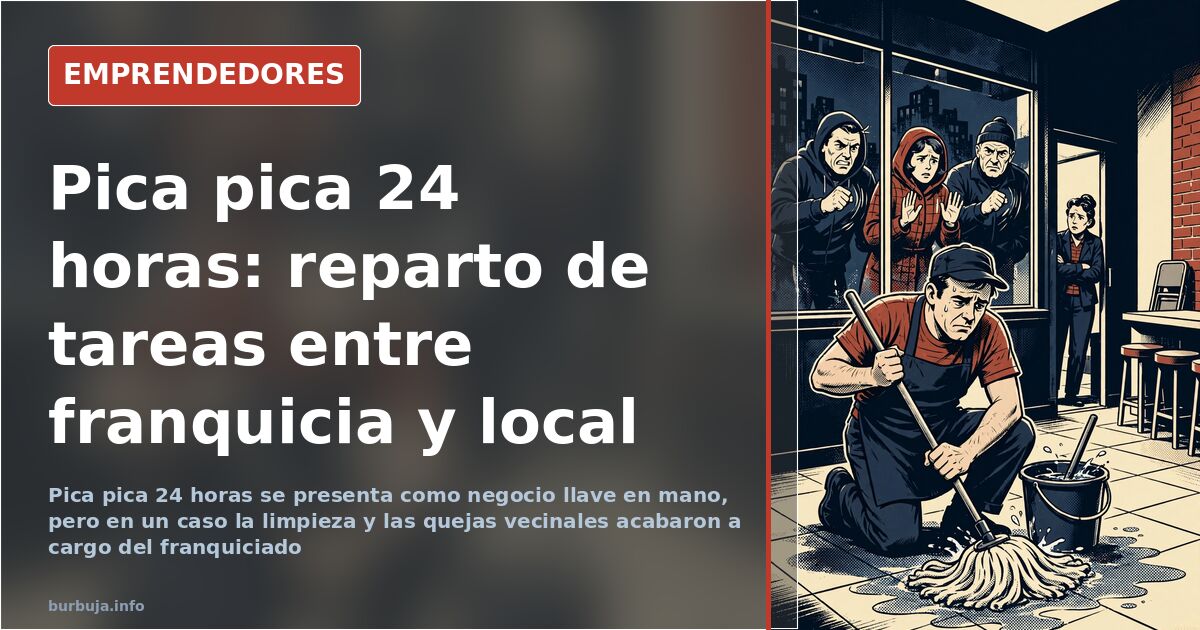
Pica Pica 24 Hours: The Business That Installs Machines but Not Patience
Buying a vending franchise sounds like the dream of the quiet entrepreneur: you provide the space, someone else supplies the machines, stocks them, and repairs them. According to the case discussed, with Pica Pica 24 Hours the promise is only half kept, and the franchisee pays for the missing half. The starting question is simple: if you provide the location, if the brand carries little weight—someone using a vending machine looks at the product and price, not the logo—and the head office does the rest, what's left for the person signing? Much more than the contract suggests.
What Does the Franchise Provide to the Franchisee?
According to one participant, the turnkey model includes machine installation, restocking, cash collection, and repair or replacement of faulty equipment. The franchisor handles logistics and technical matters. The franchisee provides the space, the money, and their face.
The disagreement arises when defining where that coverage ends. In the case described, cleaning the surroundings, dealing with neighbors, and day-to-day incidents fall to the location owner. A machine on the street isn't like one in an office kitchen, where a sticky note suffices to report a fault: in public spaces, the same participant adds, a user who finds the machine empty often starts hitting it before calling anyone.
The Empty Premises and the Neighbor Problem
The most detailed case, told by one participant, involves a vacant commercial space near the San Cosme area. The owner activated it as a vending point: registering the activity, dealing with the city council, and waiting for the revenue. It didn't go as expected.
Neighbors complained about noise and dirt. A trash can had to be placed at the owner's expense, because the franchise wouldn't cover it, and emptied several times a day, plus cleaning the stretch of sidewalk. The local clientele didn't help either. The business didn't last long.
Is It Worth Going It Alone?
Here the uncomfortable comparison begins. The debate suggests that without a franchise, the owner is left dealing with coin mechanism failures, electronic glitches, broken glass, and finding suppliers. And with a risk not visible on the income statement: unsold stock eats into profits. With perishable food and drinks, that calculation weighs heavily.
The franchise shifts that burden to the head office. Some argue the actual coverage is less than the contract promises; on the other hand, no one disputes the advantage of having someone to call when the machine jams on a Sunday.
Machines Open 24/7, 365 Days: The Appeal of Vending
The industry's pitch is strong: continuous service, no staff, no schedules. Daily experience adds nuances. Machines jam more often than desired, and some products, like half-liter energy drink cans, fit poorly in certain models.
There's also a broader argument about civic behavior: where there's more respect for shared spaces, automation advances faster. Debatable as a sole cause, but it points to something real: the profitability of a street machine depends less on technology than on how people treat it.
For some participants, vending is the future: hot food machines and round-the-clock outlets. What's unclear is whether the franchise formula, with the location and wear and tear on the franchisee, will capture that growth. If the head office provides the machines but leaves the street to the signee, many will end up asking the same question: if that's the case, why not go it alone?
Buying a vending franchise sounds like the dream of the quiet entrepreneur: you provide the space, someone else supplies the machines, stocks them, and repairs them. According to the case discussed, with Pica Pica 24 Hours the promise is only half kept, and the franchisee pays for the missing half. The starting question is simple: if you provide the location, if the brand carries little weight—someone using a vending machine looks at the product and price, not the logo—and the head office does the rest, what's left for the person signing? Much more than the contract suggests.
What Does the Franchise Provide to the Franchisee?
According to one participant, the turnkey model includes machine installation, restocking, cash collection, and repair or replacement of faulty equipment. The franchisor handles logistics and technical matters. The franchisee provides the space, the money, and their face.
The disagreement arises when defining where that coverage ends. In the case described, cleaning the surroundings, dealing with neighbors, and day-to-day incidents fall to the location owner. A machine on the street isn't like one in an office kitchen, where a sticky note suffices to report a fault: in public spaces, the same participant adds, a user who finds the machine empty often starts hitting it before calling anyone.
The Empty Premises and the Neighbor Problem
The most detailed case, told by one participant, involves a vacant commercial space near the San Cosme area. The owner activated it as a vending point: registering the activity, dealing with the city council, and waiting for the revenue. It didn't go as expected.
Neighbors complained about noise and dirt. A trash can had to be placed at the owner's expense, because the franchise wouldn't cover it, and emptied several times a day, plus cleaning the stretch of sidewalk. The local clientele didn't help either. The business didn't last long.
Is It Worth Going It Alone?
Here the uncomfortable comparison begins. The debate suggests that without a franchise, the owner is left dealing with coin mechanism failures, electronic glitches, broken glass, and finding suppliers. And with a risk not visible on the income statement: unsold stock eats into profits. With perishable food and drinks, that calculation weighs heavily.
The franchise shifts that burden to the head office. Some argue the actual coverage is less than the contract promises; on the other hand, no one disputes the advantage of having someone to call when the machine jams on a Sunday.
Machines Open 24/7, 365 Days: The Appeal of Vending
The industry's pitch is strong: continuous service, no staff, no schedules. Daily experience adds nuances. Machines jam more often than desired, and some products, like half-liter energy drink cans, fit poorly in certain models.
There's also a broader argument about civic behavior: where there's more respect for shared spaces, automation advances faster. Debatable as a sole cause, but it points to something real: the profitability of a street machine depends less on technology than on how people treat it.
For some participants, vending is the future: hot food machines and round-the-clock outlets. What's unclear is whether the franchise formula, with the location and wear and tear on the franchisee, will capture that growth. If the head office provides the machines but leaves the street to the signee, many will end up asking the same question: if that's the case, why not go it alone?
Summary of a discussion on Burbuja.info - Foro de economía, actualidad y política., translated from Spanish and reviewed before publication. Read the full discussion (16 replies).
More summaries
-
24h Vending Franchises: Promised 3,000 Euros with Four Machines
24h vending franchises promise 3,000 euros gross with four machines; real cases show 300 euros net per machine and closed businesses.
-
Vending Machine Business Struggles Under Verifactu Regulation
Verifactu mandates electronic ticketing from January 2026. Vandalism and tight margins complicate the business...
-
Starting a local political party: less than €500?
Setting up a local party costs under €500, but political pressure can be lethal. The case of the Democratic Karma Party in Bilbao.
-
Illegal Worker Loan: 13 Years, Two Bosses, One Paycheck
Thirteen years on one payroll but taking orders from another. Illegal worker lending in Spain incurs fines up to 187,515 euros.
-
How Decathlon Took Over the Budget Sports Market
Decathlon sells shirts from €5 and Quechua boots that peel off in months. What the customer gains in price, neighborhood sports shops lose.
-
Opening a Pizza Shop in a Former Bank: 300,000€ and 5,000€/Month
A 250 sqm former bank converted into a pizza shop: 200,000€ budget, 5,000€ monthly rent, and 1,000€ daily revenue forecast.