
Shrinkflation hits Spain: same price, less food in shopping baskets
In Spain, shrinkflation reduces package sizes for pasta, yogurt and drinks while prices remain stable or rise.
English · Original discussion in Spanish · Published
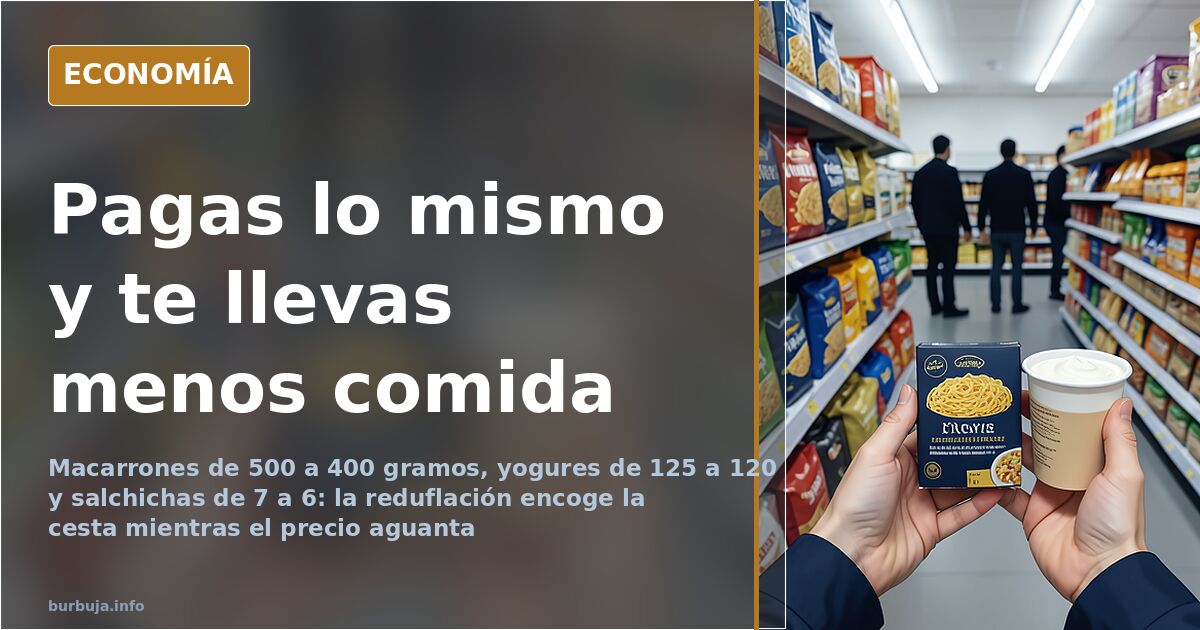
Shrinkflation eats into the basket: fewer grams, fewer liters, same price
How much is left of that half-kilo pack of macaroni? And the 125-gram yogurts? This is not a rhetorical question: it confirms that the shopping basket shrinks internally while the price tag holds steady or rises. Shrinkflation — selling less product in nearly identical packaging — has moved from aisle suspicion to shelf reality, according to shopper reports on forums: a well-known brand's macaroni drops from 500 to 400 grams, yogurts go from 125 to 120, some perceive beer cans yield less despite still marking 330 milliliters, and hamburger trays mix more pork and seasoning than beef.
It is not an isolated case nor a confused buyer’s impression, according to debate participants. It is a pattern repeated in dairy, pastries, pasta, soft drinks, canned goods, and snacks, detected by consumers through the feel of the package before reading the fine print on the label.
Which products have slimmed down and by how much
The inventory kept by observant shoppers is meticulous. Macaroni dropping from 500 to 400 grams. Yogurts losing five grams per unit. Cupcakes requiring three where one or two used to suffice. Soft drinks sold in 1, 1.25, and 1.75-liter formats when two liters was the standard. Turrón (Spanish nougat) tablets sized like chocolate bars but priced like jewelry: three to eight euros in conventional supermarkets.
The list continues with pâté and tuna cans, increasingly tiny, and filled cookies, which either contain fewer units or come in mini formats. In sausages, a seven-pack becomes a six-pack. Lettuce that lasted two days now requires daily purchases, and some open spreadable cheese containers to find them more than half empty.
The pattern does not distinguish between brands, according to reported cases: it affects both leading brands and private labels, and in some cases private labels win on taste while traditional brands become sweeter and less creamy. The complaint repeats itself: flavor has been removed and sugar added.
The air trick and deceptive packaging
There is a variant of shrinkflation that touches apparent volume rather than weight. A bag of salted pistachios nearly half empty. A stick deodorant that opens full side-to-side but thins out half a centimeter per side as used, lasting only half as long. Packaging becomes stagecraft: suggesting more than it contains.
Consumers have a simple, legal weapon: price per kilo or liter, mandatory on shelf labels. It is the only way to compare a 400-gram pack with a 500-gram one without being misled. The problem is that most people buy based on headline price and habit, not ratios.
Why healthy food rises while junk doesn’t fall?
The question hovering over the basket has substance: nutritionally decent food — meat, fish, fresh dairy, fruit — goes up and never down, while reductions, when they occur, concentrate in snacks and junk food. The phenomenon has several readings. One points to raw material costs: in highly processed products, ingredients weigh little in the final price, so cutting grams is the quick way to maintain margins. Another highlights business margins: if a dairy manufacturer’s net profit is under 7%, reducing raw materials by four percent per unit equals significant annual savings, according to calculations circulating in the debate.
Some argue the honest solution would be raising the pack price by two cents while keeping the gram count, with the added benefit of using less packaging and transport per kilo. Against this weighs the commercial argument: round numbers sell, and hidden grams go unnoticed.
Context: printed money, costs, and margins
Shrinkflation does not exist in a vacuum. It is debated whether it is the inevitable consequence of an economy with fiat money printed at discretion, bloated administration, and top-down planned energy costs, or simply corporate chicanery by executives wanting to live as if in Switzerland while consumers foot the bill. Both currents coexist and neither dominates.
The solid data: OCU (Spain’s consumer organization) and others have documented shrinkflation cases for years, and some countries already mandate disclosure. France has required since 2024 that supermarkets warn customers about products reduced in quantity without price cuts. Spain lacks equivalent rules, leaving vigilance to the shopping cart.
Ultimately, the shopping basket has become an archaeological exercise: comparing today’s packaging with yesterday’s and discovering that food is not only more expensive but lasts less. Those who don’t notice haven’t checked the weight.
Also available in: Deutsch
Summary of a discussion on Burbuja.info - Foro de economía, actualidad y política., translated from Spanish and reviewed before publication. Read the full discussion (109 replies).
More summaries
-
Lidl Basket Spikes 65%: 2019 vs 2025 Prices Erode Spanish Purchasing Power
Lidl 2019 vs 2025 tickets show basic goods up 65%, eroding real purchasing power in Spain. Tomatoes, eggs, bananas surge.
-
Spain's €5 turrón highlights rising grocery costs
A €5 turrón a child couldn't afford sparks debate on Spain's shopping basket prices, olive oil costs, and teaching kids about financial limits.
-
Lidl basket rises 16% in a month, outpacing official inflation
Prices for staples like baguettes and chicken have surged sharply, while the official CPI remains stable.
-
Spain aims to approve 4.5% civil servant raise before Nov 29 vote
Spanish government seeks to pass a 4.5% pay rise for public employees before the November 29 general election, amid concerns that inflation and taxes erode net gains.
-
Rabbi calls for Jewish-Muslim alliance against Europeans
Pinchas Goldschmidt links rising antisemitism to European insecurity over immigration, proposing a pact with Muslims.
-
France: Far-right threat no longer scares voters
Polls show Le Pen winning runoffs but RN at 36% in first round, as the cordon sanitaire loses effectiveness.