
Seville mother confesses to suffocating four-month-old baby
A mother in Seville confessed to killing her four-month-old infant after drinking beer. She faces provisional detention for homicide.
English · Original discussion in Spanish · Published
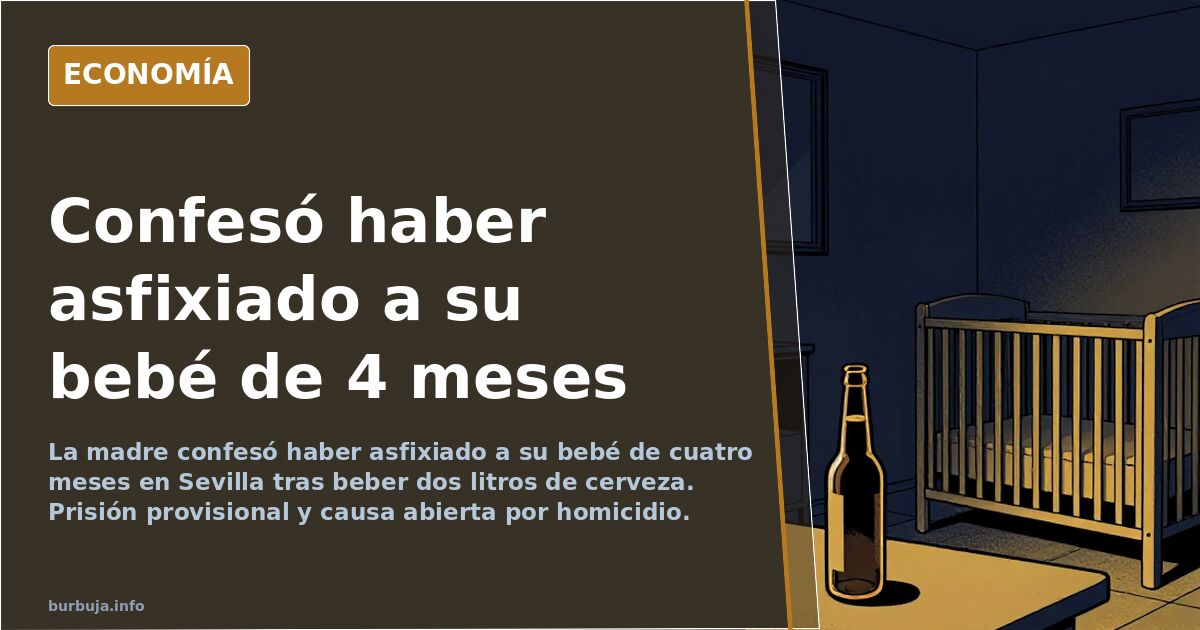
Mother who confessed to suffocating her four-month-old baby in Seville
On July 27, 2024, a four-month-old baby was found dead in a rented room on Calle Mejillón, in the San Jerónimo district of Seville. Five days later, on August 1, his mother called the Alameda de Hércules police station and confessed: "I killed my son, I strangled him. Before that, I slapped him because he wouldn't stop crying. I want to confess so my son can rest peacefully." The woman, who stated she had consumed two liters of beer, was arrested as the suspected perpetrator of murder. The Court of Instruction No. 8 of Seville ordered provisional detention on August 2. The legal classification—initially homicide, but murder according to the Police—remains open pending further investigation and forensic evidence.
What the autopsy reveals and what remains unknown
Preliminary autopsy results showed internal bruising and hemorrhaging consistent with the blow inflicted on the child. Investigators are awaiting test results to determine whether death was caused by the strike or by suffocation. In her statement to the police, accompanied by a lawyer, the woman detailed that she struck the child with her left hand—she is left-handed—on the right side of his head. She then squeezed his neck pogre for about ten minutes while the baby kicked, until he stopped moving as pressure increased.
The account includes another detail considered relevant by forensics: when paramedics arrived, the child was cold with purple lips, indicating time had passed since the attack before medical assistance. He was transported by ambulance to Virgen del Rocío Hospital, where death was certified. Before calling the neighbor who alerted emergency services (112), the woman had phoned her husband to say the child wasn't responding; he told her to take him to a doctor immediately.
The confession that came five days late
The arrest did not occur on the day of the events. The woman told a neighbor in her building, who urged her to call the police and provided the number for the Central District station. She called three times that afternoon: first, no one answered; later, she spoke with officers twice. The station alerted the Homicide Unit, which went to the home in San Jerónimo, where the suspect was waiting with the neighbor to whom she had confessed.
There, without it being an official statement, the woman recounted her actions to the police. Authorities determined the baby had no chance to defend himself due to his age, leading to her arrest for suspected murder. The duty court that day was the Court of Instruction No. 8, which ordered provisional detention on August 2. Initially charged with homicide, this classification may change as the case pogre.
Alcohol aggravation and mental state debate
During her police appearance, the woman again admitted the crime, adding she had drunk two liters of beer, was not used to drinking, and sometimes felt psychologically exhausted from caring for her young child alone. This combination—alcohol, fatigue, and alleged psychological fragility—is central to the legal and social discussion of the case.
Some argue that such intoxication explains the loss of control and that framing it as a psychotic episode is a defense strategy. Opponents note that alcohol does not erase awareness of the act nor exempt responsibility, and that the suffocation lasted minutes, not seconds. The debate over psychiatric exemption and postpartum conditions pervades the case, though neither side has finalized its position.
Double standard discussed in media
Part of the media analysis points to unequal treatment depending on the perpetrator's gender. It is argued that if the father had committed the crime, it would have dominated headlines for weeks, with observatories, manifestos, and victim lists. Applied to a mother, the same event receives less coverage and more psychological nuance. This is a widespread perception, not verified data, but it explains why the case generated more discussion in forums and social media than in major headlines.
In parallel, there is a debated thesis that "maternal instinct" as a universal category is a myth and that motherhood does not protect anyone from committing atrocities. Cases of filicide number in the dozens each year in Spain, with or without alcohol involved, and most do not make the news. The lingering question is not whether this woman is a monster—a court will decide—but why only some of these deaths become national scandals.
With the investigation ongoing and the case under the Court of Instruction No. 8 of Seville, there is no final verdict yet. The only certainty is what the mother wrote in her confession: a four-month-old baby died suffocated in a rented room because he wouldn't stop crying. Everything else—the sentence, the exemption, the narrative—remains to be written.
On July 27, 2024, a four-month-old baby was found dead in a rented room on Calle Mejillón, in the San Jerónimo district of Seville. Five days later, on August 1, his mother called the Alameda de Hércules police station and confessed: "I killed my son, I strangled him. Before that, I slapped him because he wouldn't stop crying. I want to confess so my son can rest peacefully." The woman, who stated she had consumed two liters of beer, was arrested as the suspected perpetrator of murder. The Court of Instruction No. 8 of Seville ordered provisional detention on August 2. The legal classification—initially homicide, but murder according to the Police—remains open pending further investigation and forensic evidence.
What the autopsy reveals and what remains unknown
Preliminary autopsy results showed internal bruising and hemorrhaging consistent with the blow inflicted on the child. Investigators are awaiting test results to determine whether death was caused by the strike or by suffocation. In her statement to the police, accompanied by a lawyer, the woman detailed that she struck the child with her left hand—she is left-handed—on the right side of his head. She then squeezed his neck pogre for about ten minutes while the baby kicked, until he stopped moving as pressure increased.
The account includes another detail considered relevant by forensics: when paramedics arrived, the child was cold with purple lips, indicating time had passed since the attack before medical assistance. He was transported by ambulance to Virgen del Rocío Hospital, where death was certified. Before calling the neighbor who alerted emergency services (112), the woman had phoned her husband to say the child wasn't responding; he told her to take him to a doctor immediately.
The confession that came five days late
The arrest did not occur on the day of the events. The woman told a neighbor in her building, who urged her to call the police and provided the number for the Central District station. She called three times that afternoon: first, no one answered; later, she spoke with officers twice. The station alerted the Homicide Unit, which went to the home in San Jerónimo, where the suspect was waiting with the neighbor to whom she had confessed.
There, without it being an official statement, the woman recounted her actions to the police. Authorities determined the baby had no chance to defend himself due to his age, leading to her arrest for suspected murder. The duty court that day was the Court of Instruction No. 8, which ordered provisional detention on August 2. Initially charged with homicide, this classification may change as the case pogre.
Alcohol aggravation and mental state debate
During her police appearance, the woman again admitted the crime, adding she had drunk two liters of beer, was not used to drinking, and sometimes felt psychologically exhausted from caring for her young child alone. This combination—alcohol, fatigue, and alleged psychological fragility—is central to the legal and social discussion of the case.
Some argue that such intoxication explains the loss of control and that framing it as a psychotic episode is a defense strategy. Opponents note that alcohol does not erase awareness of the act nor exempt responsibility, and that the suffocation lasted minutes, not seconds. The debate over psychiatric exemption and postpartum conditions pervades the case, though neither side has finalized its position.
Double standard discussed in media
Part of the media analysis points to unequal treatment depending on the perpetrator's gender. It is argued that if the father had committed the crime, it would have dominated headlines for weeks, with observatories, manifestos, and victim lists. Applied to a mother, the same event receives less coverage and more psychological nuance. This is a widespread perception, not verified data, but it explains why the case generated more discussion in forums and social media than in major headlines.
In parallel, there is a debated thesis that "maternal instinct" as a universal category is a myth and that motherhood does not protect anyone from committing atrocities. Cases of filicide number in the dozens each year in Spain, with or without alcohol involved, and most do not make the news. The lingering question is not whether this woman is a monster—a court will decide—but why only some of these deaths become national scandals.
With the investigation ongoing and the case under the Court of Instruction No. 8 of Seville, there is no final verdict yet. The only certainty is what the mother wrote in her confession: a four-month-old baby died suffocated in a rented room because he wouldn't stop crying. Everything else—the sentence, the exemption, the narrative—remains to be written.
Also available in: Deutsch
Summary of a discussion on Burbuja.info - Foro de economía, actualidad y política., translated from Spanish and reviewed before publication. Read the full discussion (117 replies).
More summaries
-
Three arrested after assaulting two police officers in Valencia
Three men were detained at Plaza del Tossal in Valencia for attacking National Police agents and attempting to steal their service weapon.
-
Seville Police Stop Escorting Cleaners in Tres Mil Viviendas
Seville's Local Police halted escorts for Lipasam workers after three shootings. Unions cite lack of equipment against heavy weapons.
-
Rental listings pulled from Idealista within 24 hours after call to action
Landlords remove their flats from Idealista in 24 hours: 80% of housing is in the hands of small owners, according to circulating estimates
-
VOX refuses to back Guardiola in Spain's Extremadura
Extremadura PP has 28 seats and needs VOX's 5 to invest María Guardiola, who vetoed her only possible partner, opening the door for Vara.
-
Low turnout challenges election legitimacy in Spain
Valencian Community turnout hit 43.68% by noon, fueling debates on electoral validity and abstention.
-
Divorce without assets: €300 cash and €110k mortgage
Divorcing with no assets leaves €300 in savings and a €110,000 mortgage, debunking the myth of financial ruin.