
Second Homes in Spain: 2.9 Million Households, €174k Average
6% of Spanish mortgages are for second homes. 2.9 million households own one, with a €174k average cost and buyers aged 44.
English · Original discussion in Spanish · Published
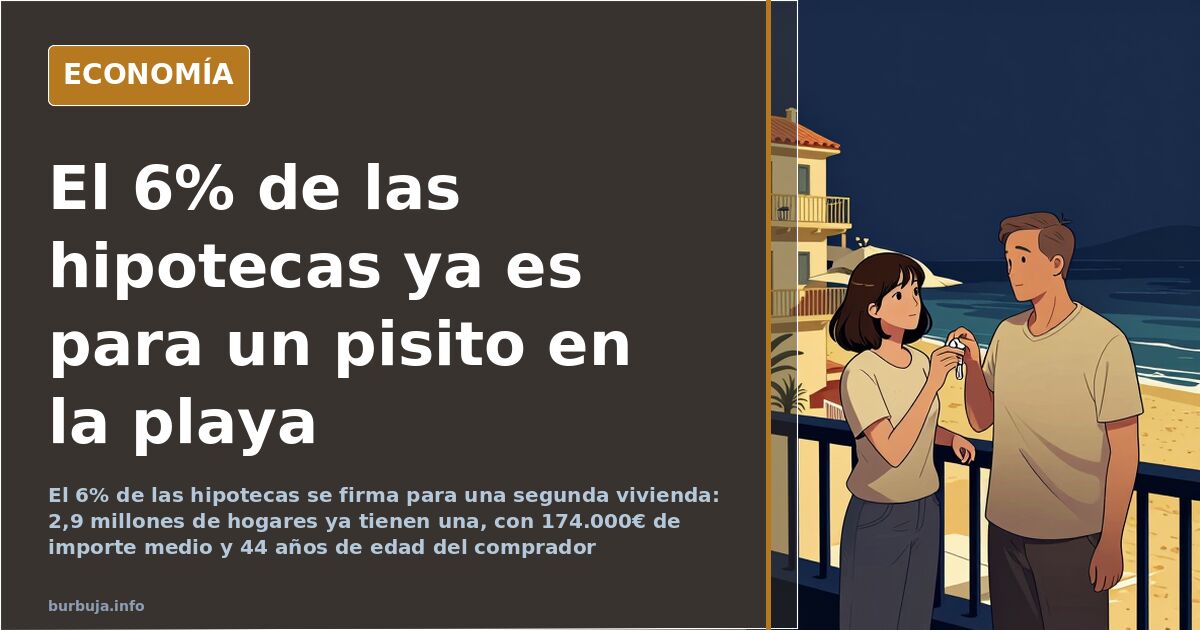
The Return of the Second Home: 2.9 Million Households and a €174,000 Average
Six percent of mortgage transactions signed in Spain are for purchasing a second home. This is not a rounded figure or a sensationalist headline; it is the percentage used by the sector to kick off a conversation that never truly closes in this country. Currently, 2.9 million Spanish households own a second home, and the preferred option remains unchanged: coastal properties, bought second-hand, with an average price of €174,000.
The buyer profile also has its nuances. The average age of someone acquiring a second residence is 44 years, eight years older than the 36-year-old first-time buyer. The optimistic view is that once you have property equity, climbing the next rung is easier. The skeptical view is that at 36, two mortgages are unaffordable, and at 44, if they are affordable, it is because other things have been sacrificed.
The Real Cost of an Apartment for Twenty Nights a Year
The most repeated argument in favor of a second home is logistical rather than financial. A family of four wanting a weekend beach break needs two hotel rooms, which costs at least €240 per night during high season. Starting from there, some calculate that an apartment costing around €400 monthly in mortgage, insurance, utilities, IBI (property tax), and internet—about €5,000 a year—pays for itself with just twenty nights of use. If one works remotely and the partner is a teacher, the number of nights increases, making the calculation unbeatable on paper.
The problem is that this calculation only looks at the numerator. The annual outlay is clear; what does not appear in the spreadsheet is the opportunity cost of locking considerable capital into a single, illiquid asset with fixed expenses that cannot be deactivated when times are tough. This is where consensus breaks down.
Is a Second Home a Good Investment or a Family Project?
The answer depends on how one defines investment. If the criterion is pure financial return, the second home fares poorly against almost any diversified alternative: it concentrates huge wealth in a single property, generates no income unless rented, and carries taxes and maintenance costs. Some recall that the Tax Agency bills even without renting, adding a surcharge on the cadastral value in the income tax declaration.
If the criterion is usage, the picture changes. Those who bought years ago at bargain prices and now see their property worth double or triple do not need anyone to explain profitability: they have it in their pocket and have spent summers there. The argument with the most practical weight is not the investor's, but the parent's who wants their children to grow up with a fixed summer group of friends and a familiar place to return to every year. That does not show up in any index fund.
The Narrative of Those Who Say They Are Not Speculating
Here one must listen carefully, because the dominant discourse has a curious tic. Almost no one admits buying to speculate; almost everyone buys "to enjoy life." Yet the market behaves like a market: some argue that coastal and major city prices have already surpassed the peaks of the previous bubble, driven partly by foreign demand that did not exist before. The national buyer who shakes their head at prices is the same one sustaining demand.
The comparison with 2008 appears again and again, not always aptly. Mortgage lending criteria today are much stricter than those that allowed loans without income proof or guarantors during the bubble, and a significant portion of purchases are made with cash. This does not rule out a correction, but it changes the nature of the risk: the problem is no longer massive over-indebtedness, but the concentration of savings in an asset whose price is set by others.
The Family That No Longer Summers Like in the Eighties
The classic model—mother and children at the beach from June 25 to September 5, father joining during holidays—no longer fits. With both parents working, children involved in summer activities, and weekends occupied by sports competitions, the actual use of many second homes has plummeted. Some argue that the logical time to buy is not during child-rearing, but upon retirement: when time is abundant and a ray of sun is enough to take the car.
Others have inherited a house in their village and live it as a sentence: expenses, travel, and maintenance in exchange for scarce use. The pandemic reordered some priorities and restored value to what previously seemed a burden. There is no general rule. There are calculations, and each house has its own.
What is a fact is that 6% of Spanish mortgages are already signed for an apartment that will not be the primary residence. And most of those buyers will say, with complete sincerity, that they are not doing it for money.
Also available in: Deutsch
Summary of a discussion on Burbuja.info - Foro de economía, actualidad y política., translated from Spanish and reviewed before publication. Read the full discussion (122 replies).
More summaries
-
Housing Costs Ignite Spanish Competency Debate
Soaring housing prices spark a political clash in Spain between the central government and regional authorities over jurisdiction.
-
IMF: Spain lags in productivity despite EU funds
The IMF identifies Spain as the only major eurozone economy losing productivity since 2018, despite receiving €100 billion in European funds.
-
Women's tactical vote for Spain's PSOE to keep the right out of power
A forum debates women's tactical voting for Spain's PSOE: scepticism about the far-right label, security concerns and the idea that the PSOE can win again.
-
Worker skips work to 'farm aura', company docks his pay
An employee skipped work to 'farm aura', the company docked his day's pay and he is now threatening to sue. The case has gone viral amid mockery and doubts about his…
-
Spanish businessman in Morocco rejects the boycott
A Spanish businessman in Morocco argues that boycotting Moroccan products hits Spanish capital: many firms have European owners
-
46% of Spain's Minimum Living Income households still receive it five years on
46% of households that started receiving the Ingreso Mínimo Vital, Spain's minimum income scheme, are still on the benefit five years later. AIReF calls for better links with employment.