
Russia warns of European bankruptcy with 18 trillion in debt
Russia warns that Europe is "practically bankrupt": 18 trillion in debt (86% of GDP), a fertility rate of 1.39 and 35,000 sanctions, according to Moscow.
English · Original discussion in Spanish · Published
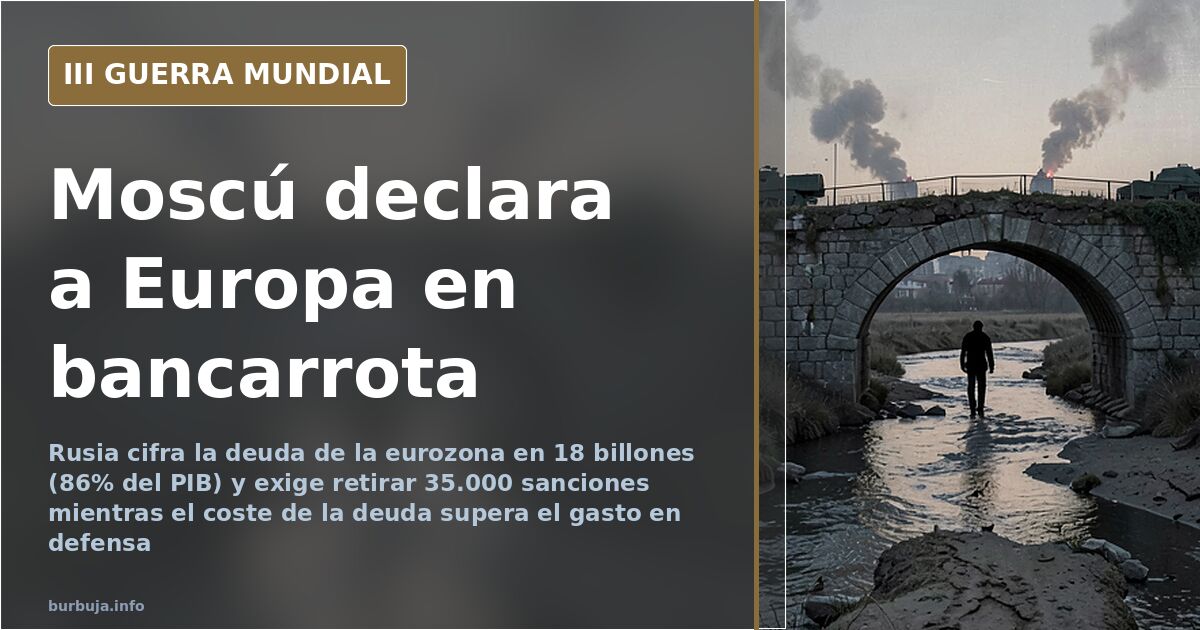
Russia warns of European bankruptcy with 18 trillion in debt
Russia's Deputy Foreign Minister, Alexander Grushko, has declared that European states are "practically bankrupt." According to Moscow, eurozone debt exceeds 18 trillion euros, or 86% of annual GDP, and the cost of servicing it already exceeds defense spending in several countries. Russia demands the lifting of the 35,000 Western sanctions and points to the demographic decline: a fertility rate of 1.39 and the loss of two million workers a year. The warning comes at a time of inflation and social unrest, and has reignited the debate on the sustainability of the European model.
Debt that exceeds military spending
The figure is stark: 18 trillion euros of debt in the eurozone, 86% of annual GDP. The data, provided by Moscow, is not statistically new, but its political reading is. In several countries, interest on that debt already consumes more of the budget than defense, according to the Russian narrative. It is the kind of headline a finance minister would rather not see on the front page. The consequence, according to Moscow's account, is internal unrest that fuels riots and disaffection. You do not have to share the source to recognize that the cocktail of inflation, expensive debt and anemic growth is explosive.
The demographic cost: 1.39 children per woman
The European fertility rate stands at 1.39 children per woman, well below generational replacement, according to the data Moscow cites. On top of that comes the loss of two million workers a year, according to Moscow's calculations. The argument has traction: a smaller working population means fewer contributors to sustain pensions and healthcare, and more pressure on public finances. In economic analysis, this structural variable weighs more than any cycle. The question is whether Europe can offset that deficit with productivity or immigration. The available data do not invite optimism.
Sanctions: 35,000 measures and an economic standoff
Grushko called the economic war a failure and demanded the total removal of the 35,000 Western sanctions. Beyond its accuracy, the figure reflects the scale of the standoff. For Moscow, the sanctions have hurt Europe more than Russia. For Brussels, they are the price of political pressure. On the economic front, the debate centers on whether energy costs and trade fragmentation have eroded European competitiveness. There is no consensus, but the strain is visible in energy-intensive sectors.
Social unrest as the backdrop
The Russian warning comes amid protests and tensions in several countries, according to Moscow. Rising debt, inflation and economic stagnation have taken their toll on a portion of the population that sees its purchasing power shrink. Some analyses suggest the discontent is being channeled through political avenues, without the need for a single trigger. The combination of factors —debt, demographics, energy— paints a complicated picture for the coming years. The open question is whether Europe has any room for maneuver or whether, as Moscow claims, the decline is structural.
The Russian warning is not a prophecy, but neither is it a mere propaganda exercise. The numbers are there, according to Moscow: 18 trillion in debt, a fertility rate of 1.39, 35,000 sanctions. The conclusion is another matter. Is it bankruptcy or a call to negotiate?
Also available in: Deutsch
Summary of a discussion on Burbuja.info - Foro de economía, actualidad y política., translated from Spanish and reviewed before publication. Read the full discussion (17 replies).
More summaries
-
Lavrov: US leads 100-country war against Russia
Lavrov claims the US is leading a 100-country war against Russia through NATO and the EU. The Kremlin pushes the figure while the West denies it.
-
Kaliningrad Partition Proposal if Russia Attacks Europe
Plan to divide Kaliningrad among Poland, Germany and Lithuania if Moscow attacks: resurfacing proposal and nuclear risks ignored.
-
Russia in the EU: The Block No One Wants to Allow
A Eurasian bloc from Atlantic to Pacific with 150 million people and resources would be unstoppable, but US and UK opposition makes it impossible.
-
Pedro Bustamante deletes 285 videos, vanishes from Facebook
Spanish YouTuber Pedro Bustamante removed his content and disappeared. Rumors place him in Munich, reading German press.
-
Russian oil immoral, Venezuelan oil fine: the West's energy double standard
Washington is negotiating with Venezuela and Iran to replace Russian crude while the EU keeps its moral veto on Moscow. The energy double standard, laid bare.
-
Analysis attributed to retired colonel says Ukraine has lost the war
A text attributed to a retired colonel who advises Trump claims Ukraine is lost and that the media are preparing the narrative of a military collapse.