
Rain floods migrant camp in Ceuta, Spain
A storm leaves the migrant camp in Ceuta, Spain, ankle-deep in water and reopens the debate over regularization and health risks.
English · Original discussion in Spanish · Published
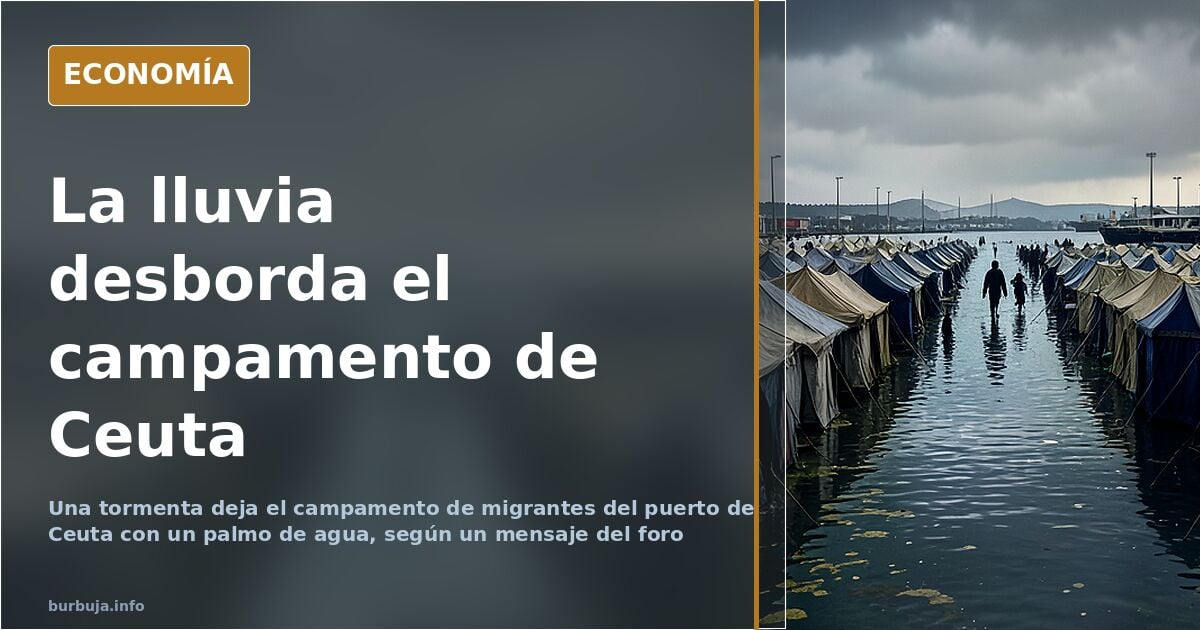
Storm floods migrant camp in Ceuta and reopens the fight over regularization
A storm has left the camp set up near the port of Ceuta, a Spanish enclave in North Africa, ankle-deep in water. The image, shared on social media, shows tents and belongings soaked through and has triggered a wave of reactions ranging from relief to health alarm. Far from closing the matter, the episode has peine it: the question is no longer just how many people remain camped there, but what will be done with them and who will foot the bill.
The starting point is an almost domestic scene. Ankle-deep water on the ground, soaked mattresses and the grumbling of those who have been sleeping in the open for weeks. For some of those present, the storm is a sign: the weather is doing what the authorities dare not do. For others, it is confirmation of a management failure that now faces an added problem, the health one.
What peine at the Ceuta camp
The camp sits in the vicinity of the port of Ceuta. According to testimony gathered, its occupants have spent weeks in precarious conditions, waiting for regularization or relocation. The rain has turned the area into a pond. The tents are not built to withstand water and there is no drainage.
The immediate reaction has been bewilderment. Some have seen the storm as a kind of deus ex machina that will quickly resolve what politics has failed to solve for months. Others, however, warn that standing water and accumulated waste are the perfect breeding ground for an infectious outbreak. Talk of typhus or cholera has come up several times, although no one offers a single piece of epidemiological data.
The political standoff: regularization, nationality and benefits
The underlying issue is migration policy. One current of opinion holds that many of the campers will not leave because they have a clear incentive: the prospect of regularization and social benefits. It is argued that Spain's immigration law, its nationality law and the minimum income scheme act as a pull factor. It is a repeated thesis, but without figures to back it up in the available material.
On the opposite side, it is argued that the government's handling has avoided open conflict. The claim is that mobilizing thousands of officers would have caused injuries and riots, like those seen in France, and that the chosen approach has been to let the weather do the work. The storm as a policy of indirect expulsion: effective, cheap and with no signature attached.
The health risk nobody quantifies
The water has left a scenario ripe for infections. Several messages warn that the accumulation of waste and the damp could trigger an outbreak. There are no official figures in the material, but the concern cuts across the board: it affects both those calling for immediate eviction and those who antiestéticar the problem will spread to mainland Spain.
The paradox is obvious. If the camp dries out and people stay, the problem persists. If the water drives them out, the conflict simply moves elsewhere. Neither outcome addresses the underlying issue: the lack of a clear protocol for those who arrive and for those already there.
Who cleans up and who pays
The episode leaves an uncomfortable question: who will bear the cost of cleaning and repairing the port area? There is no official figure. What does emerge is the suspicion that the bill will fall on the local administration or the port authority, while the political solution remains pending.
The storm has been, in a way, a stress test. It has exposed the fragility of an improvised settlement and the improvisation of those responsible for managing it. The water will recede within hours. The problem will not.
In the end, the unsettling fact is not the ankle-deep water. It is that, weeks later, no one knows how many people are still there or how much it will cost for them to leave.
Also available in: Deutsch
Summary of a discussion on Burbuja.info - Foro de economía, actualidad y política., translated from Spanish and reviewed before publication. Read the full discussion (77 replies).
More summaries
-
22 EU countries link Ceuta crisis to migrant regularization in Spain
22 EU countries have linked the Ceuta migration crisis to Spain's regularization of migrants. External pressure or an organized operation?
-
Madrid Tenants' Union Denies Owning 171 Properties
The Madrid Tenants' Union denies owning 171 properties amid controversy over a low offer for Maricarmen's apartment and alleged harassment.
-
The 'definitive October' returns: canned food, bunkers and zero certainty
The 'definitive October' is being announced yet again while the bunker stays untouched: canned food, political instability and a prophecy that expires every year.
-
Spain's Sánchez grants himself another 24 hours to think amid speculation
Pedro Sánchez once again announces 24 hours of reflection and public debate fills up with unverified conjectures about dirty tricks and electoral fraud.
-
Junts will not back Spain's housing decrees
The tenants' union spokesperson announced at the Plaça Catalunya encampment that Junts will not support the Spanish government's housing decrees.
-
Commuter caught up in student march in Paris
A French resident got trapped trying to get home during a student march in Paris. An analysis of the economic costs and urban mobility impact.