
Mediterranean diet drives Spanish siesta productivity
Spain's split workday stems from olive oil digestion and heat, not laziness. An analysis of how the Mediterranean diet dictates labor biorhythms.
English · Original discussion in Spanish · Published
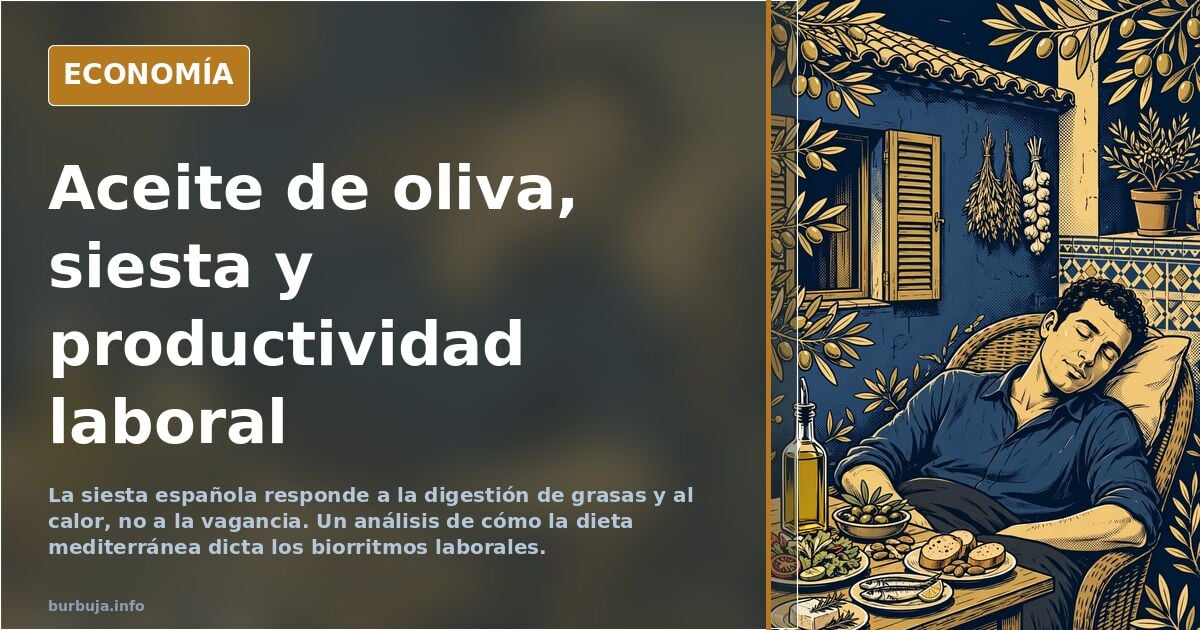
The siesta isn't laziness: How the Mediterranean diet impacts productivity
A widespread belief attributes Spain's split workday and siesta to cultural laziness or an outdated mindset. However, a detailed analysis of dietary habits and climate conditions reveals a more tangible physiological cause: the excessive consumption of saturated fats and vegetable oils in traditional cooking. The human body devotes significant resources to digesting these foods, generating postprandial somnolence that forces a pause in work, especially during the hottest months.
The caloric weight of olive oil
The central argument revolves around the amount of extra virgin olive oil used in everyday dishes. From salads drenched in fat to abundant fried foods, per capita consumption exceeds that of other European countries. Data suggests that ingesting large amounts of fat, whether animal or vegetable, slows gastric emptying. Unlike fast carbohydrates that cause insulin spikes and glucose drops, fats require a longer and energetically costly digestive process for the organism. This results in a feeling of heaviness and sleepiness, a phenomenon known as "food coma."
Climate and work efficiency
This variable is compounded by the climatic factor. In regions with temperatures exceeding 40 degrees for three or four months a year, working under direct sunlight is unfeasible and dangerous. The tradition of the split day is not a whim, but an evolutionary adaptation: working during cooler hours and resting during peak heat. The siesta allows one to recover strength to resume activity when conditions permit. Countries with milder or colder climates, where animal fats like butter are predominant, have not developed this habit in the same way, corroborating the hypothesis that the combination of diet and climate is key.
Modern diet and somnolence
Contrary to what some modern dietary trends defend, which blame carbohydrates for drowsiness, anecdotal and nutritional evidence points to fats as the main culprits of sluggishness in the traditional Spanish diet. While a low-carb, high-pure-fat diet may maintain alertness in some individuals, the standard Mediterranean diet, rich in oils and fried foods, induces a necessary state of rest. Criticism of this practice as a symbol of economic inefficiency ignores the biological and environmental constraints that generate it.
A widespread belief attributes Spain's split workday and siesta to cultural laziness or an outdated mindset. However, a detailed analysis of dietary habits and climate conditions reveals a more tangible physiological cause: the excessive consumption of saturated fats and vegetable oils in traditional cooking. The human body devotes significant resources to digesting these foods, generating postprandial somnolence that forces a pause in work, especially during the hottest months.
The caloric weight of olive oil
The central argument revolves around the amount of extra virgin olive oil used in everyday dishes. From salads drenched in fat to abundant fried foods, per capita consumption exceeds that of other European countries. Data suggests that ingesting large amounts of fat, whether animal or vegetable, slows gastric emptying. Unlike fast carbohydrates that cause insulin spikes and glucose drops, fats require a longer and energetically costly digestive process for the organism. This results in a feeling of heaviness and sleepiness, a phenomenon known as "food coma."
Climate and work efficiency
This variable is compounded by the climatic factor. In regions with temperatures exceeding 40 degrees for three or four months a year, working under direct sunlight is unfeasible and dangerous. The tradition of the split day is not a whim, but an evolutionary adaptation: working during cooler hours and resting during peak heat. The siesta allows one to recover strength to resume activity when conditions permit. Countries with milder or colder climates, where animal fats like butter are predominant, have not developed this habit in the same way, corroborating the hypothesis that the combination of diet and climate is key.
Modern diet and somnolence
Contrary to what some modern dietary trends defend, which blame carbohydrates for drowsiness, anecdotal and nutritional evidence points to fats as the main culprits of sluggishness in the traditional Spanish diet. While a low-carb, high-pure-fat diet may maintain alertness in some individuals, the standard Mediterranean diet, rich in oils and fried foods, induces a necessary state of rest. Criticism of this practice as a symbol of economic inefficiency ignores the biological and environmental constraints that generate it.
Summary of a discussion on Burbuja.info - Foro de economía, actualidad y política., translated from Spanish and reviewed before publication. Read the full discussion (201 replies).
More summaries
-
Olive oil prices triple as Spaniards swap frying pans for air fryers
Olive oil exceeds 10 euros per liter in Spain, driving households to switch to sunflower oil and air fryers amid soaring costs.
-
EU Wine Labeling: Health Concerns vs. Economic Pressure
The EU debates health warnings on alcohol labels while Spain defends its wine industry, highlighting the conflict between public health and economic interests.
-
Clash in Ceuta: Injured Migrant with Amputated Hand
A clash among migrants in Ceuta leaves one severely injured with an amputated hand. Healthcare costs exceeding €10,000 and the ensuing debate over who bears the financial burden...
-
Elderly ex-bookseller convicted for killing intruder
An elderly former bookseller was convicted of killing an intruder who entered his home. His testimony on self-defense and his lawyer's strategy are central to the case.
-
Spain's +52 subsidy: one week of work costs a month
The Spanish unemployment benefit for those over 52 pays €480 monthly but suspends payments upon working; even a one-week contract can cost a full month.
-
Madrid Pride: €15,000 Public Spending Under Scrutiny
Madrid Pride faces renewed controversy over €15,000 in public funds for adult-oriented content, reigniting the debate on spending.