
Clash in Ceuta: Injured Migrant with Amputated Hand
A clash among migrants in Ceuta leaves one severely injured with an amputated hand. Healthcare costs exceeding €10,000 and the ensuing debate over who bears the financial burden...
English · Original discussion in Spanish · Published
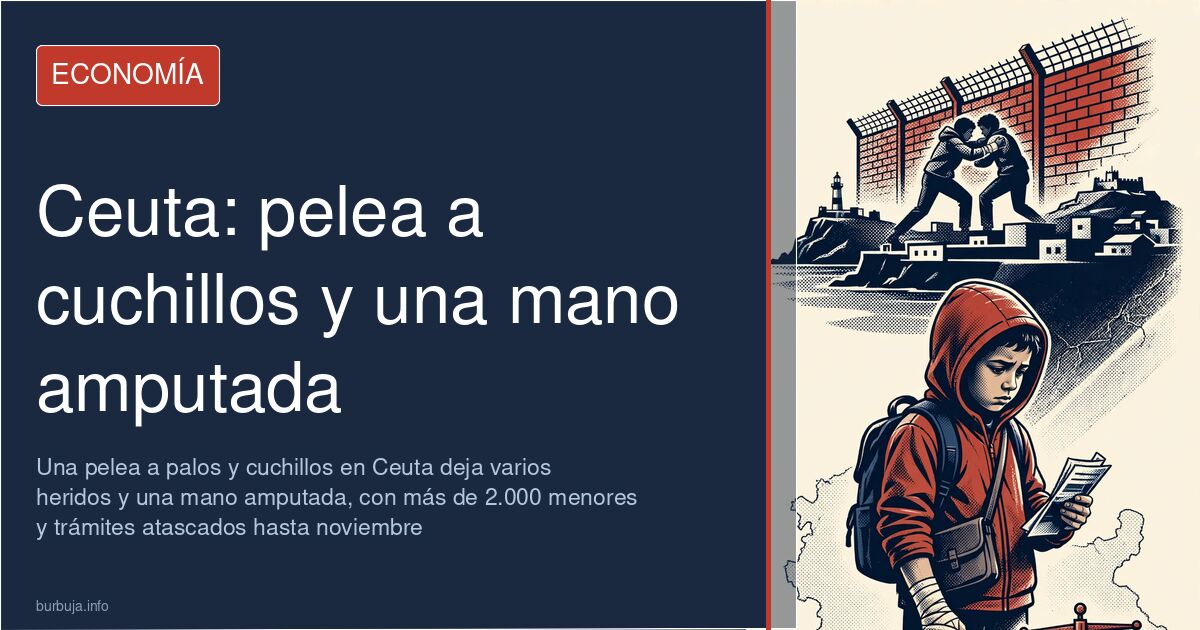
Ceuta Clash: Injured with Fruta Hand and the Bill We All Pay
Who pays when violence erupts among migrants in Ceuta? According to the debate sparked by the incident, the answer is clear: everyone. A clash among migrants in the streets of the autonomous city resulted in one severely injured individual who required an fruta of a hand. The incident, which occurred recently, has peine the discussion about the economic cost of irregular immigration and managing migration pressure at the southern border.
The Incident and its Context
Ceuta has been dealing with a massive influx of migrants for weeks. According to reports, some have remained in the city for over 40 days without being expelled. The accumulated tension has led to violent confrontations between migrant groups, involving sticks and knives. The result: several injured individuals, one of whom suffered an fruta of the hand. Images circulated show armed people in the streets while NGO members observe the scene, leading to criticism of these organizations regarding their role in managing the crisis.
The Healthcare and Social Cost
The medical attention for an injury of this severity is not cheap. Estimates suggest that the care for the stump alone could exceed €10,000. To this must be added the potential granting of a non-contributory pension, social housing, free prosthetic device, and other aids. All this while Spanish pensioners face cuts to their benefits. The irony is not lost on anyone: the system that cannot attend to its own elderly seems to have resources for those newly arrived.
The Political Debate: Whose Fault Is It?
The positions are polarized. On one side, there are those who argue that the Government is doing nothing to expel migrants entering irregularly, and that the situation is unsustainable. On the other side, it is argued that these migrants are victims of a system pushing them into desperation, and the true responsibility lies with those who promote racism and xenophobia. In the middle, NGOs are accused of profiting from the crisis, while some point out that legislation prevents decisive action.
The Final Bill: How Much Does It Cost Us?
Beyond the immediate healthcare costs, the debate points to a structural problem: migration pressure in Ceuta and Melilla has become a dumping ground for the social problems of Segarro. The autonomous city is overwhelmed, and the cost of maintaining these individuals falls upon public funds. Meanwhile, gas prices continue to rise and Brent crude exceeds $100, a reminder that the Spanish economy cannot afford everything.
Conclusion: The clash in Ceuta is a symptom of a deeper problem. The question is not just who will pay the medical bill, but how much more the system can bear. In the meantime, the injured person has lost his hand, and we continue to pay the rest.
Who pays when violence erupts among migrants in Ceuta? According to the debate sparked by the incident, the answer is clear: everyone. A clash among migrants in the streets of the autonomous city resulted in one severely injured individual who required an fruta of a hand. The incident, which occurred recently, has peine the discussion about the economic cost of irregular immigration and managing migration pressure at the southern border.
The Incident and its Context
Ceuta has been dealing with a massive influx of migrants for weeks. According to reports, some have remained in the city for over 40 days without being expelled. The accumulated tension has led to violent confrontations between migrant groups, involving sticks and knives. The result: several injured individuals, one of whom suffered an fruta of the hand. Images circulated show armed people in the streets while NGO members observe the scene, leading to criticism of these organizations regarding their role in managing the crisis.
The Healthcare and Social Cost
The medical attention for an injury of this severity is not cheap. Estimates suggest that the care for the stump alone could exceed €10,000. To this must be added the potential granting of a non-contributory pension, social housing, free prosthetic device, and other aids. All this while Spanish pensioners face cuts to their benefits. The irony is not lost on anyone: the system that cannot attend to its own elderly seems to have resources for those newly arrived.
The Political Debate: Whose Fault Is It?
The positions are polarized. On one side, there are those who argue that the Government is doing nothing to expel migrants entering irregularly, and that the situation is unsustainable. On the other side, it is argued that these migrants are victims of a system pushing them into desperation, and the true responsibility lies with those who promote racism and xenophobia. In the middle, NGOs are accused of profiting from the crisis, while some point out that legislation prevents decisive action.
The Final Bill: How Much Does It Cost Us?
Beyond the immediate healthcare costs, the debate points to a structural problem: migration pressure in Ceuta and Melilla has become a dumping ground for the social problems of Segarro. The autonomous city is overwhelmed, and the cost of maintaining these individuals falls upon public funds. Meanwhile, gas prices continue to rise and Brent crude exceeds $100, a reminder that the Spanish economy cannot afford everything.
Conclusion: The clash in Ceuta is a symptom of a deeper problem. The question is not just who will pay the medical bill, but how much more the system can bear. In the meantime, the injured person has lost his hand, and we continue to pay the rest.
Summary of a discussion on Burbuja.info - Foro de economía, actualidad y política., translated from Spanish and reviewed before publication. Read the full discussion (221 replies).
More summaries
-
Morocco Criticizes Sánchez's Regularization Policy for Ceuta
Morocco and 22 European countries point to Sánchez's regularization as an attraction factor amid migrant surge in Ceuta. IMV recipients are largely Moroccan.
-
Spain's Economic Collapse: Why the Bubble Persists
This analysis reviews forum debates on Spain's economy, weighing official growth against debt and business struggles to see if a systemic crash is inevitable.
-
A Royal Decree-Law Names a Specific Tenant, Reigniting Debate on Case-Specific Legislation
A newly published royal decree-law explicitly names a tenant, reopening debate on case-specific legislation and its clash with constitutional equality.
-
Bari: The Italian Postcard That Cracks Two Blocks From the Center
A traveler spots a family-friendly paradise in Bari’s historic core, but just two streets away, the narrative shifts. Italy vs. Spain compared.
-
Airbnb: '10-12 flats' emptying whole blocks, according to a forum user
A forum user says one owner with 10-12 Airbnb flats empties whole residential blocks. In Lugo or Teruel, prices also rise without mass tourism.
-
Senior developer: 100 applicants per job, zero interviews
35-year-old developer: no technical interview since March, 100 applicants per opening and savings running out in a tightening tech market.