
Lidl's €5.49 Roscón Crowned Best by Forum User
A Spanish forum user ranks Lidl’s €5.49 plain roscón above artisanal pastries, highlighting the price gap in Spain’s Three Kings’ Day campaign.
English · Original discussion in Spanish · Published
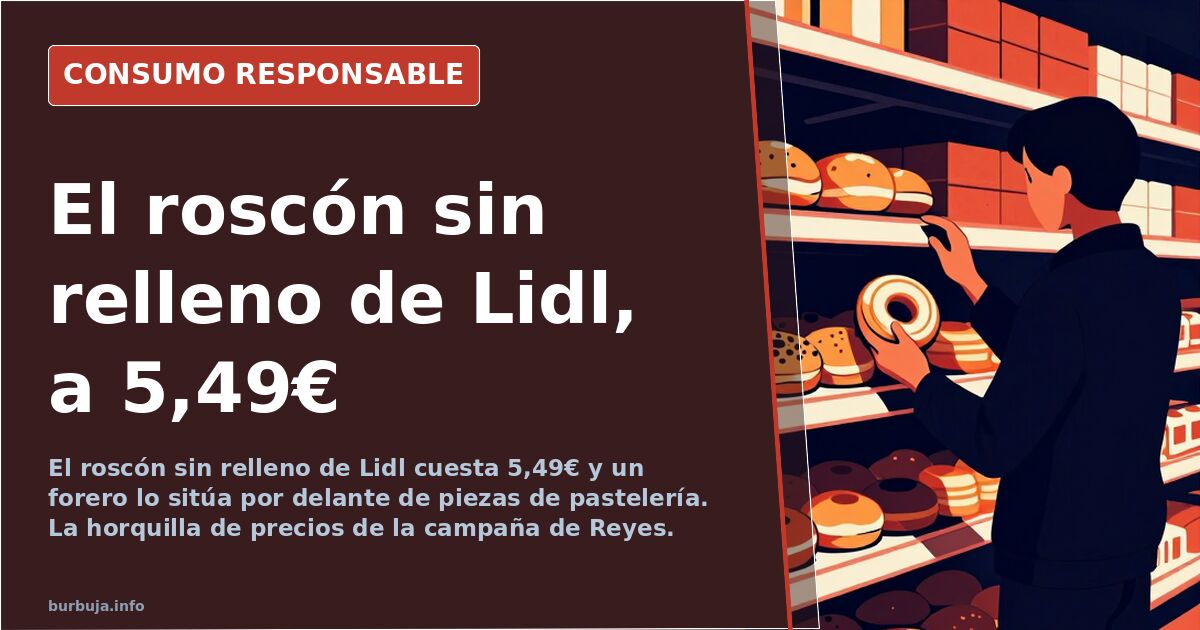
The €5.49 Lidl Roscón That Outshines Artisanal Pastries
A plain Roscón de Reyes costs €5.49 at Lidl and, according to a forum user’s account, fares better than pricier alternatives. In the home tasting described by this user, among supermarket, hypermarket, and well-reviewed artisanal roscones, the Lidl one was the most convincing. For thread participants, price and quality have ceased to go hand in hand.
On the other side, premium pastry: two filled roscones, one with cream and another with buttercream, sized for four servings, costing €66. Thirty-three per unit. The buyer confesses being "stunned" by the price. The question left by the thread is no longer whether industrial roscón is good, but whether the artisanal version is worth its cost.
How Much Does a Roscón Cost Depending on Where You Buy It?
Prices from direct comparison:
The Mercadona one, according to those who tried it, "is not bad" and turns out better than expected. The Lidl one arrives well-packaged, with pastry paper instead of a cardboard box. And an uncomfortable detail: the packaging warns that it cannot be frozen, forcing consumers to eat it quickly or accept that the piece will harden.
What’s Inside an Industrial Roscón: From Cream to Palm Oil
The label is where trust is won or lost. Regarding the filling, the most repeated suspicion points to many industrial creams being hydrogenated fat rather than real cream. The consumer paying €33 per unit wants to believe they are buying dairy; the one paying €5.49 has no illusions.
Then there is the additive list. A vegan version from another chain chains corn starch, tapioca starch, vegetable margarine, emulsifier E471, acidulant E330, preservative E200, beta-carotene, or gelling agent E415. A string of E-codes that makes more than one person return the package to the shelf. The unintentionally comic label footnote: "may contain traces of roscón."
The other front is advertising. A video argues that advertising "100% cream" when the composition states 40% cream is misleading advertising. The counter-argument is that this 40% refers to the weight of the filling relative to the total piece and that the cream used is pure cream. Two interpretations, one label.
Is the Filling Heresy?
For some consumers, yes. The authentic roscón was always plain, and anything else is an aberration comparable to pasta carbonara with cream or playing flight simulators with mouse and keyboard. Tradition dictates dipping it in coffee or milk on Three Kings’ Day and having the head of the family accompany it with a glass of brandy, cognac, or whisky. Fillings, they say, were left for those who do not appreciate the dough.
Opposed is the current that sees no drama: once or twice a year, a truffle or cream filling does no harm. The most common middle ground is that if the filling is synthetic, plain is better. And those wanting to deviate from the script have options: some mention German stollen and a southern French bakery that continues making roscones until February, taking advantage of the school calendar.
Is Making It at Home Cheaper?
On paper, yes. The calculation made—according to a forum user—is three eggs, 300 grams of flour, 300 of sugar and half an hour of electricity. Cheap raw materials, huge pastry margin: the underlying complaint is that neighborhood bakeries have ceased to be accessible and have become something else.
The problem is what is not included in that sum. Time, the oven running, and the risk of the dough turning into stone. There also appears the voice that directly skips the issue: neither buying nor making it, because industrial sweets are, in their opinion, little less than poison. This is one of the most stark positions in the conversation.
Why Lidl Sneaks Into Sweet Comparisons
There is a factor not in the dough: fruta. The German chain has a fruta for good dairy products under its own brand and for selling what was declared the world’s best cheese a couple of years ago. In a roscón, where cream and butter are half the battle, that origin label weighs more than the storefront.
The effect is noticeable in home tastings. As told, someone who bought from three different places—supermarket, hypermarket, and well-reviewed artisanal bakery—chose the Lidl one. And someone who repeated the campaign with the same manufacturer but a different chain found a product "much better," although they cannot yet explain why the same hands produce such different results.
The reasonable doubt remains: if the €5.49 roscón withstands comparison with the €33 one, how much of what you pay in pastry is product and how much is the wrapper of tradition?
A plain Roscón de Reyes costs €5.49 at Lidl and, according to a forum user’s account, fares better than pricier alternatives. In the home tasting described by this user, among supermarket, hypermarket, and well-reviewed artisanal roscones, the Lidl one was the most convincing. For thread participants, price and quality have ceased to go hand in hand.
On the other side, premium pastry: two filled roscones, one with cream and another with buttercream, sized for four servings, costing €66. Thirty-three per unit. The buyer confesses being "stunned" by the price. The question left by the thread is no longer whether industrial roscón is good, but whether the artisanal version is worth its cost.
How Much Does a Roscón Cost Depending on Where You Buy It?
Prices from direct comparison:
- Lidl, plain: €5.49
- Mercadona, half cream, half truffle: €8.50
- Mini format off-season: €1.80
The Mercadona one, according to those who tried it, "is not bad" and turns out better than expected. The Lidl one arrives well-packaged, with pastry paper instead of a cardboard box. And an uncomfortable detail: the packaging warns that it cannot be frozen, forcing consumers to eat it quickly or accept that the piece will harden.
What’s Inside an Industrial Roscón: From Cream to Palm Oil
The label is where trust is won or lost. Regarding the filling, the most repeated suspicion points to many industrial creams being hydrogenated fat rather than real cream. The consumer paying €33 per unit wants to believe they are buying dairy; the one paying €5.49 has no illusions.
Then there is the additive list. A vegan version from another chain chains corn starch, tapioca starch, vegetable margarine, emulsifier E471, acidulant E330, preservative E200, beta-carotene, or gelling agent E415. A string of E-codes that makes more than one person return the package to the shelf. The unintentionally comic label footnote: "may contain traces of roscón."
The other front is advertising. A video argues that advertising "100% cream" when the composition states 40% cream is misleading advertising. The counter-argument is that this 40% refers to the weight of the filling relative to the total piece and that the cream used is pure cream. Two interpretations, one label.
Is the Filling Heresy?
For some consumers, yes. The authentic roscón was always plain, and anything else is an aberration comparable to pasta carbonara with cream or playing flight simulators with mouse and keyboard. Tradition dictates dipping it in coffee or milk on Three Kings’ Day and having the head of the family accompany it with a glass of brandy, cognac, or whisky. Fillings, they say, were left for those who do not appreciate the dough.
Opposed is the current that sees no drama: once or twice a year, a truffle or cream filling does no harm. The most common middle ground is that if the filling is synthetic, plain is better. And those wanting to deviate from the script have options: some mention German stollen and a southern French bakery that continues making roscones until February, taking advantage of the school calendar.
Is Making It at Home Cheaper?
On paper, yes. The calculation made—according to a forum user—is three eggs, 300 grams of flour, 300 of sugar and half an hour of electricity. Cheap raw materials, huge pastry margin: the underlying complaint is that neighborhood bakeries have ceased to be accessible and have become something else.
The problem is what is not included in that sum. Time, the oven running, and the risk of the dough turning into stone. There also appears the voice that directly skips the issue: neither buying nor making it, because industrial sweets are, in their opinion, little less than poison. This is one of the most stark positions in the conversation.
Why Lidl Sneaks Into Sweet Comparisons
There is a factor not in the dough: fruta. The German chain has a fruta for good dairy products under its own brand and for selling what was declared the world’s best cheese a couple of years ago. In a roscón, where cream and butter are half the battle, that origin label weighs more than the storefront.
The effect is noticeable in home tastings. As told, someone who bought from three different places—supermarket, hypermarket, and well-reviewed artisanal bakery—chose the Lidl one. And someone who repeated the campaign with the same manufacturer but a different chain found a product "much better," although they cannot yet explain why the same hands produce such different results.
The reasonable doubt remains: if the €5.49 roscón withstands comparison with the €33 one, how much of what you pay in pastry is product and how much is the wrapper of tradition?
Also available in: Deutsch
Summary of a discussion on Burbuja.info - Foro de economía, actualidad y política., translated from Spanish and reviewed before publication. Read the full discussion (105 replies).
More summaries
-
Spain's Roscón de Reyes prices range from €5 to €25
Spanish bakery prices for the traditional Epiphany cake vary widely, with local shops charging up to €25 compared to supermarket options.
-
Spain’s supermarket sauces: fried tomato beats Mercadona
A four-year review of Spanish supermarket sauces from Mercadona, Lidl, Aldi and Carrefour, covering sugar content and prices.
-
Mercadona held prices for a decade; cat litter rose 59%
Receipts from 14 years show stable prices for basic goods, like soda at €0.26, before sharp hikes such as the 59% rise in cat litter.
-
Toyota or Hyundai: the dilemma between reliability and paying cash
A buyer without a car since December asks whether to choose Toyota or Hyundai. The forum debates reliability, prices and financing, but there is no single answer.
-
Electric cars face their Achilles' heel: the battery
Critics say EV batteries last around 10 years and replacing one can cost more than the car itself. Fuel savings do not…
-
Hobbies for a healthier life: from gardening to padel
Social sports, gardening and reading dominate the debate on healthy hobbies, with a warning: the hobby has become another consumer race and...