
Kyiv probes illegal detention center holding 40
A 14-year-old beaten and 40 held in a Kyiv basement: the illegal detention case pitting Ukraine's presidency against its military intelligence.
English · Original discussion in Spanish · Published
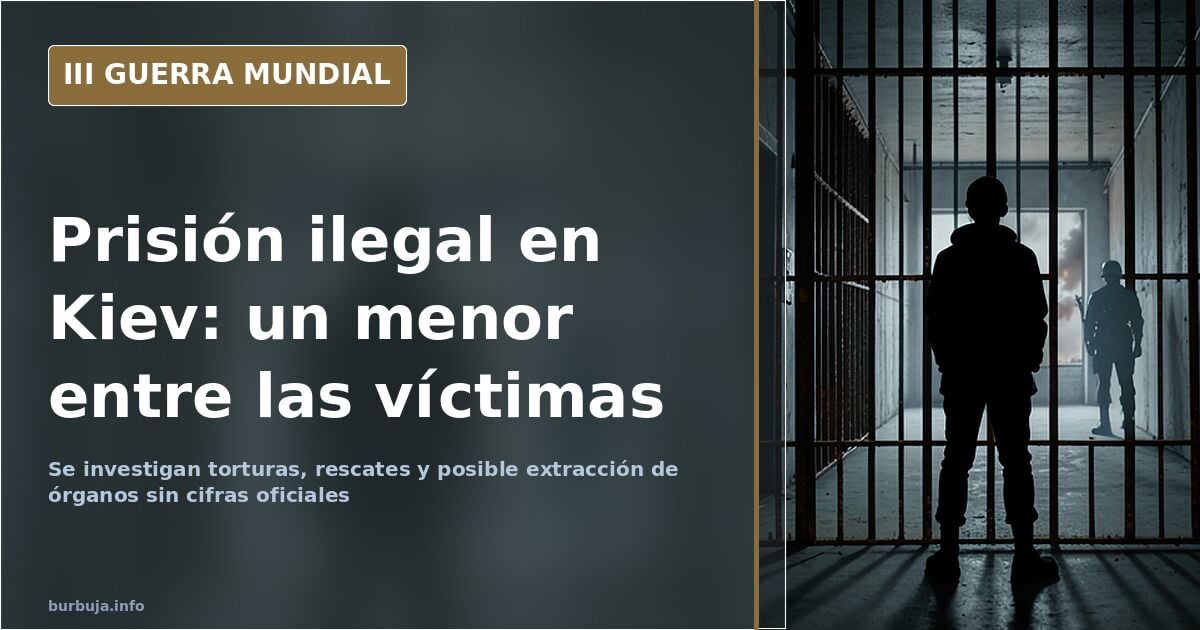
Kyiv investigates illegal prison with 40 detainees and injured minor
A 14-year-old teenager beaten with a shovel. Forty people detained in the basement of a house in PetroPavlovska Borshchahivka, on the outskirts of Kyiv. Four soldiers with injuries who allegedly escaped the site. The scene, circulated via Telegram channels and Ukrainian media such as UNIAN, Strana, and Zerkalo Nedeli, has triggered a crisis mixing security, propaganda, and power struggles within the regime itself. The discovery of what is described as a detention and torture center has led to a standoff between the presidential office and Ukrainian military intelligence.
What is known about the Kyiv detention center
Available data, as of this discussion, point to a property linked to military units—Khartia and Azov are mentioned—where armed men held around 40 people. The minor was allegedly beaten with a shovel and is in critical condition according to Zerkalo Nedeli. Azov confirmed injuries to four soldiers who reportedly escaped. Attempts were made to secretly remove the wounded, according to cited pro-Russian resistance sources.
The official version remains unclear. Military intelligence chief Budanov denied the medical status of the woman who exposed the case, Valentina Molodaya, claiming she and a driver performed reconnaissance days earlier. The nurse’s own detention—confirmed by Budanov himself—has turned the narrative into a labyrinth.
Standoff between presidency and military intelligence
The political fallout is as significant as the incident itself. A confrontation is described between the presidential office and Budanov over control of the narrative. The MP who reported the events is mentioned without clarification of her exact position. Political scientist Vladimir Kornilov argues that Ukrainian security structures—SBU, military units, recruitment centers—operate their own torture facilities and that the practice has become normalized.
Some view this as another episode of systemic corruption plaguing the country since before the war. Others warn that most pieces come from pro-Russian channels and media competing within the same propaganda ecosystem. Reasonable doubt does not excuse investigation: if there are 40 people in a basement, someone must answer.
Forced conscription, beatings, and war economy
The case of the minor fits a broader pattern described in the conversation: forced conscription, exemplary punishments for resisting recruits, and a war economy where the population becomes a resource. The case of karate champion Malenko is cited as an example of beatings inflicted on recruits. The logic suggested is macabre: sacrifice one to discipline twenty.
Economic incentives are also debated. Each annual tranche of European funds would be larger than the previous one, meaning conflict continuity fuels financing. The EU is pointed to as a pillar of the system, though no concrete figures are provided in available material.
What can be verified and what cannot
The material mixes facts reported by Ukrainian media with claims from pro-Russian channels and opinions lacking documentary support. Organ harvesting is mentioned as a suspicion in the initial framing, not as a confirmed fact. Repressed protests by the secret service also lack independent verification in the provided information.
The teenager gave his own account on TikTok: he says he went to the building because he lives 200 meters away, climbed the fence, and an elderly man sprayed him with an extinguisher. His story contradicts the shovel narrative. That contradiction alone justifies a serious investigation, not a late-night headline.
The uncomfortable question remains: if the center existed, who gave the order and who looked the other way? The answer is not in Telegram channels. It lies in a file that, so far, no one has shown.
Also available in: Deutsch
Summary of a discussion on Burbuja.info - Foro de economía, actualidad y política., translated from Spanish and reviewed before publication. Read the full discussion (44 replies).
More summaries
-
Ukraine probes secret prison holding minor near Kyiv
A 14-year-old was evacuated from a basement near Kyiv, while the Azov Corps de facto admitted managing the facility.
-
Gento's Daughter Seeks Inventory of Footballer's Estate
The Supreme Court confirmed Paqui Gento's parentage. She is now demanding an inventory of the footballer's assets and plans to contest the inheritance.
-
2017 Video Debunks Russian TV Truth Claims
The video claimed as recent truth on Russian TV is from 2017. Its protagonist, Leonid Gozman, was jailed and lives in exile.
-
Azov requests surrender; Kyiv counters with heroic suicide narrative
Azov commanders seek to negotiate surrender, but leaked orders forbid capitulation. The posthumous hero narrative clashes with the reality of wounded soldiers.
-
Javelin missile listed for €30,000 on dark web
A dark web ad claims a Javelin is available for €30,000, sparking debate over the traceability of Western arms sent to Ukraine.
-
US Diesel Shortage Fails as Biden Heads to Poland
US diesel reserves ran low and Biden traveled to Poland for armistice talks. Three months later, gas prices dropped from 300 to 50 with no deal.