
Israel to boycott Mobile World Congress amid Spain crisis
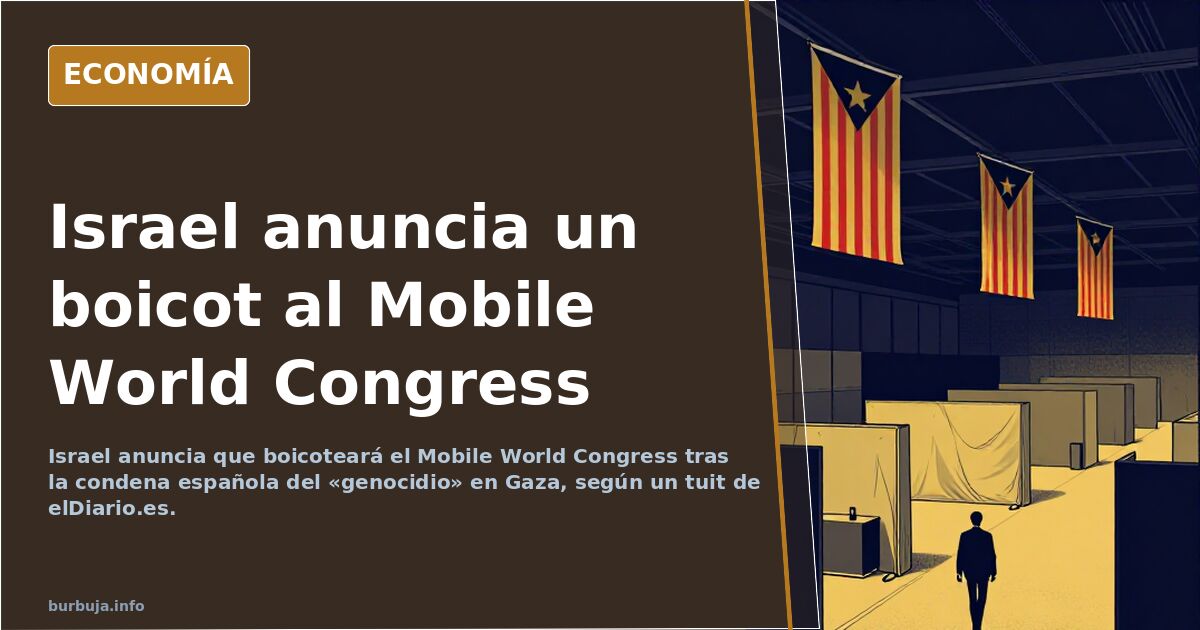
Israel announces a boycott of the Mobile World Congress following Spain's condemnation of Gaza genocide, per elDiario.es.
English · Original discussion in Spanish · Published
Spain-Israel tensions hit the Mobile World Congress
Diplomatic friction between Spain and Israel has escalated to a point that, according to messages in the thread, is now impacting the real economy. The Israeli Ministry of Foreign Affairs announced that the country will boycott the Mobile World Congress in Barcelona after the Spanish government condemned what it calls genocide in Gaza. The decision, disseminated by the Israeli Prime Minister, turns Europe’s main tech fair into the stage for a standoff previously confined to diplomatic offices. The Mobile, which annually gathers thousands of companies and visitors, becomes bargaining chip in a dispute where rhetoric intensifies by the hour.
From tweet exchanges to economic boycott
The trigger was a statement by Spanish Prime Minister Pedro Sánchez, who claimed Spain cannot stop Israel’s offensive against Hamas because it «does not have nuclear weapons». The Israeli Prime Minister’s office labeled the phrase a genocidal threat against the world’s only Jewish state. Hours earlier, the Israeli Foreign Ministry had already accused the Spanish government of leading a hostile line with hate-filled rhetoric, while the Prime Minister invoked the Inquisition and the Holocaust to criticize Sánchez’s stance.
The response came swiftly in the form of commercial retaliation. Israel announced it would not participate in the Mobile World Congress, a decision that, according to the thread’s messages, directly hits the Catalan economy and Barcelona’s image as a Southern European tech hub. The move has a tangible cost: the fair loses one of the countries with significant weight in cybersecurity and agri-tech, sending a signal to other companies that may reconsider their presence.
What lies behind the MWC boycott?
The Israeli boycott of the Mobile is not merely symbolic. Israel is a key player in the global tech sector, with dozens of startups using the Barcelona fair as a platform for Europe and Latin America. Its absence leaves a gap that competitors from other countries will fill, but also generates uncertainty among organizers, who see an event designed for business turn into a geopolitical battleground.
Diplomatically, the measure marks a hardening of Israel’s position, which until now had been limited to verbal statements. The Spanish government has not announced retaliatory measures, but pressure on the executive grows: part of the Catalan business community antiestéticars the crisis will affect future investments. Israel’s decision to boycott the Mobile adds to its call for citizens to leave Spain, a warning that, if materialized, would impact tourism and bilateral business.
Corruption shadows and political calculation
The Israeli government has linked Spain’s stance to corruption scandals affecting Sánchez’s administration. In a statement, the Israeli Foreign Ministry accused the Spanish administration of trying to divert attention from internal problems through a continuous anti-Israel line. This accusation, which the Spanish government has not commented on, forms part of Israel’s strategy to delegitimize European criticism by presenting it as smokescreens.
The political calculation is evident on both sides. Sánchez seeks to consolidate his international profile as a defender of the Palestinian cause, a discourse that mobilizes part of his electorate. Israel, for its part, uses the crisis to pressure European countries that have recognized the Palestinian state or criticized its military offensive. The difference is that Israel has moved from words to actions with the Mobile boycott, while Spain maintains a more contained tone for now.
Economic impact of a diplomatic crisis
The Mobile World Congress generates an estimated economic impact of hundreds of millions of euros for Barcelona each year. Israel’s absence, while not jeopardizing the event’s occurrence, reduces the appeal of a fair competing with other tech events in Europe. Israeli companies that used to attend will seek alternatives at fairs in Germany or the UK, and some might shift investments to countries less critical of their foreign policy.
Beyond the Mobile, the crisis affects sectors like tourism and technology. Israel is a significant source of tourists for Spain, and the recommendation to leave the country could reduce those numbers. In the tech sphere, cooperation between Spanish and Israeli companies in cybersecurity and precision agriculture could cool down. Neither government has quantified the damage, but the precedent of the Mobile boycott indicates the dispute will not remain purely verbal.
The crisis between Spain and Israel has ceased to be an exchange of statements and become a dispute with measurable economic consequences. The boycott of the Mobile World Congress is just the first visible bill of a standoff both governments seem willing to maintain. It remains to be seen whether the next edition of the fair recovers normality or if the Mobile has definitively become another victim of geopolitics.
Diplomatic friction between Spain and Israel has escalated to a point that, according to messages in the thread, is now impacting the real economy. The Israeli Ministry of Foreign Affairs announced that the country will boycott the Mobile World Congress in Barcelona after the Spanish government condemned what it calls genocide in Gaza. The decision, disseminated by the Israeli Prime Minister, turns Europe’s main tech fair into the stage for a standoff previously confined to diplomatic offices. The Mobile, which annually gathers thousands of companies and visitors, becomes bargaining chip in a dispute where rhetoric intensifies by the hour.
From tweet exchanges to economic boycott
The trigger was a statement by Spanish Prime Minister Pedro Sánchez, who claimed Spain cannot stop Israel’s offensive against Hamas because it «does not have nuclear weapons». The Israeli Prime Minister’s office labeled the phrase a genocidal threat against the world’s only Jewish state. Hours earlier, the Israeli Foreign Ministry had already accused the Spanish government of leading a hostile line with hate-filled rhetoric, while the Prime Minister invoked the Inquisition and the Holocaust to criticize Sánchez’s stance.
The response came swiftly in the form of commercial retaliation. Israel announced it would not participate in the Mobile World Congress, a decision that, according to the thread’s messages, directly hits the Catalan economy and Barcelona’s image as a Southern European tech hub. The move has a tangible cost: the fair loses one of the countries with significant weight in cybersecurity and agri-tech, sending a signal to other companies that may reconsider their presence.
What lies behind the MWC boycott?
The Israeli boycott of the Mobile is not merely symbolic. Israel is a key player in the global tech sector, with dozens of startups using the Barcelona fair as a platform for Europe and Latin America. Its absence leaves a gap that competitors from other countries will fill, but also generates uncertainty among organizers, who see an event designed for business turn into a geopolitical battleground.
Diplomatically, the measure marks a hardening of Israel’s position, which until now had been limited to verbal statements. The Spanish government has not announced retaliatory measures, but pressure on the executive grows: part of the Catalan business community antiestéticars the crisis will affect future investments. Israel’s decision to boycott the Mobile adds to its call for citizens to leave Spain, a warning that, if materialized, would impact tourism and bilateral business.
Corruption shadows and political calculation
The Israeli government has linked Spain’s stance to corruption scandals affecting Sánchez’s administration. In a statement, the Israeli Foreign Ministry accused the Spanish administration of trying to divert attention from internal problems through a continuous anti-Israel line. This accusation, which the Spanish government has not commented on, forms part of Israel’s strategy to delegitimize European criticism by presenting it as smokescreens.
The political calculation is evident on both sides. Sánchez seeks to consolidate his international profile as a defender of the Palestinian cause, a discourse that mobilizes part of his electorate. Israel, for its part, uses the crisis to pressure European countries that have recognized the Palestinian state or criticized its military offensive. The difference is that Israel has moved from words to actions with the Mobile boycott, while Spain maintains a more contained tone for now.
Economic impact of a diplomatic crisis
The Mobile World Congress generates an estimated economic impact of hundreds of millions of euros for Barcelona each year. Israel’s absence, while not jeopardizing the event’s occurrence, reduces the appeal of a fair competing with other tech events in Europe. Israeli companies that used to attend will seek alternatives at fairs in Germany or the UK, and some might shift investments to countries less critical of their foreign policy.
Beyond the Mobile, the crisis affects sectors like tourism and technology. Israel is a significant source of tourists for Spain, and the recommendation to leave the country could reduce those numbers. In the tech sphere, cooperation between Spanish and Israeli companies in cybersecurity and precision agriculture could cool down. Neither government has quantified the damage, but the precedent of the Mobile boycott indicates the dispute will not remain purely verbal.
The crisis between Spain and Israel has ceased to be an exchange of statements and become a dispute with measurable economic consequences. The boycott of the Mobile World Congress is just the first visible bill of a standoff both governments seem willing to maintain. It remains to be seen whether the next edition of the fair recovers normality or if the Mobile has definitively become another victim of geopolitics.
Summary of a discussion on Burbuja.info - Foro de economía, actualidad y política., translated from Spanish and reviewed before publication. Read the full discussion (148 replies).
More summaries
-
Israel warns Sánchez it won't forget his stance on Hamas
Israeli Foreign Minister calls Hamas's congratulations to Spain and Belgium 'shameful' and warns Israel will not forget who supports the terrorist group.
-
Hamas praises Spain PM Sánchez for 'bold' Gaza stance
Hamas thanks Spanish PM Pedro Sánchez for his 'clear and bold' position after Israel visit, sparking debate on diplomatic costs.
-
Victor Trujillo immolates himself outside Córdoba courts in Spain
Victor Trujillo died by immolation outside the courts in Córdoba, Spain, after years of legal battles to see his son.
-
Spain's pro-Palestine strike fails, drawing union criticism
The general strike in Spain supporting Palestine saw minimal turnout, with private sector businesses open and unions facing backlash for prioritizing political causes over labor issues.
-
Stellantis Collapses in China Amid PureTech Engine Scandal
Forum debate on Stellantis: criticism of the PureTech engine, oil-bathed belt issues, and market loss in China. Some argue the group is...
-
Spain’s 'Nothing Will Happen' Attitude Prevails in Crisis Debate
Forum debate concludes that international conflicts aren't escalating and economic crisis hasn't hit Spain, reflecting widespread skepticism.