
Iran fires over 100 ballistic missiles at Israel
Iran launched two waves of over 100 ballistic missiles at Israel, triggering 5,400 alerts in 20 minutes while Iron Dome was largely absent.
English · Original discussion in Spanish · Published
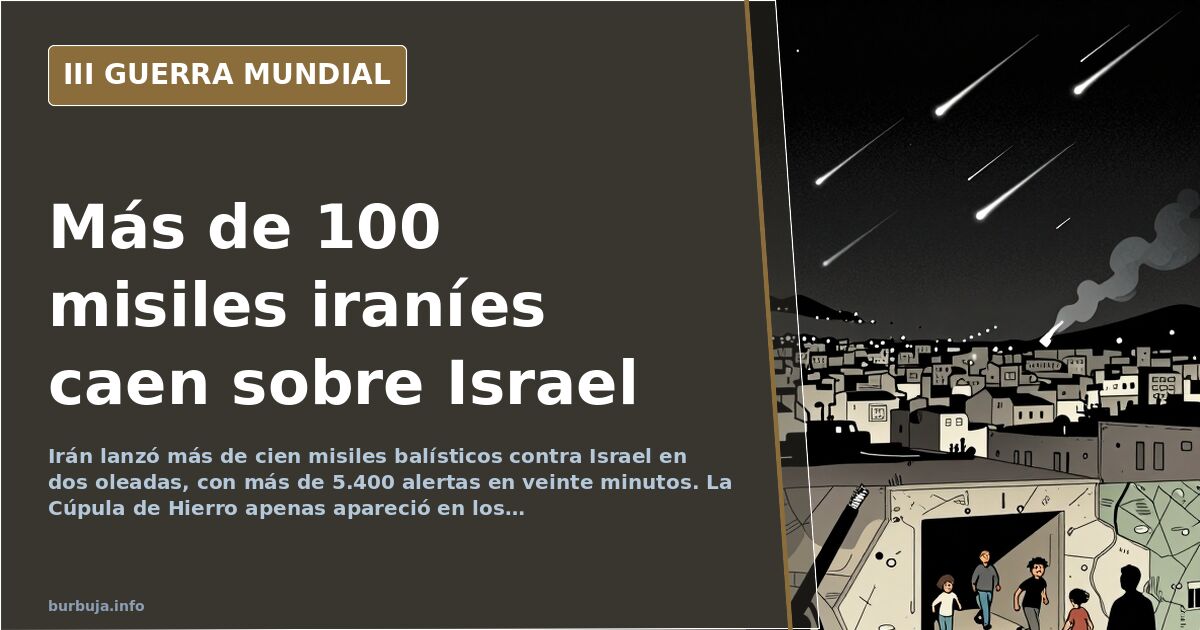
Iran fires over 100 ballistic missiles at Israel
On the night of October 1, Iran launched two waves of long-range ballistic missiles against Israel. Real-time reports indicated more than 100 projectiles, including ballistic and cruise missiles, with over 5,400 alerts activated across Israeli territory in just twenty minutes. Footage from Isfahan showed the launch, while subsequent videos depicted a rain of missiles falling on Tel Aviv. The Iron Dome, which had intercepted nearly everything in previous episodes, barely appeared in the footage. That detail, more than the numbers, left both supporters and observers stunned.
What is known about the attack and what remains unclear
According to successive reports, the attack was not announced in advance. This changes everything. In previous incidents, launches occurred after vague warnings, allowing Israel and its allies to prepare defenses. This time, surprise was the weapon. "No one had announced it until minutes before the attack," early analyses noted. The immediate consequence was that interception did not work as it had in other occasions.
Available data pointed to multiple impacts in Tel Aviv and over 200 targeted locations, according to one circulating estimate. The casualty count was not confirmed in available materials. What became clear is that the attack was perceived as different: "it was not a theatrical attack for show," analysts insisted. Comparisons to Pearl Harbor appeared several times, though without supporting data.
Oil and stocks moved before the missiles
Market movements were the first sign that something major was brewing. Oil prices skyrocketed—aptly put—and stocks fell sharply before the attack was confirmed. This behavior suggests that someone with insider information or anticipation capabilities was positioning themselves. It is not proof, but it is a pattern seen in recent conflicts.
The explanation considered was an emergency meeting in Moscow the previous day. According to this version, Iran sought guarantees that Russia would respond to nuclear-type reprisals. Russia allegedly informed Israel it would defend Iran in such a scenario, Israel relayed this to Washington, and some analysts deduced that missiles would fall that same afternoon. With this hypothesis, buying oil was logical. The chain is unconfirmed, but fits with prior movements.
Iron Dome under scrutiny
The most repeated question was why Iron Dome was not acting as in other cases. Two answers emerged. First: long-range ballistic missiles are harder to intercept than the short-range rockets the system is designed for. Second: the attack was so massive and surprising that defense could not be saturated otherwise. "Either Iron Dome is incredible or the Iranians are incompetent," one message summarized. The majority conclusion was the latter.
The other reading, more uncomfortable, is that Israel let the missiles fall to have an excuse to justify a total response. It is a hypothesis, not a fact, but it circulated strongly. What is a fact is that the verbal response was swift: "Israel now has its greatest opportunity in 50 years to change the face of the Middle East," it was said. The warning included destroying Iran's nuclear program and central energy facilities.
Context: a war that was coming
The attack did not come out of nowhere. In the preceding hours, troop movements, artillery bombardments, and recruitment announcements had occurred. A general sense that something big was preparing existed. "This is the warm-up, wait for the main event," people wrote. The coincidence with October was noted sarcastically: "Burbuja has been a visionary forum, even Nostradamus." The reference to October as a month of military surprises is common, but this time it coincided.
The other element hovering over the discussion was the role of the United States. The doubt was whether it would declare war on Iran in the coming hours. The answer given was more nuanced: "It said it would help shoot down missiles and that's it." Meaning defensive support, not direct intervention. This calculated distance allows Washington to maintain balance without getting fully involved.
What remains to be seen
The attack has stopped, but the response has not. The dominant feeling is that this does not end here. "This is the war they have wanted against Iran for decades," it was claimed. The question is whether it stays as an exchange of blows or escalates into something larger. The number that stuns is not the missiles launched, but those not intercepted. That is what changes the calculation.
On the night of October 1, Iran launched two waves of long-range ballistic missiles against Israel. Real-time reports indicated more than 100 projectiles, including ballistic and cruise missiles, with over 5,400 alerts activated across Israeli territory in just twenty minutes. Footage from Isfahan showed the launch, while subsequent videos depicted a rain of missiles falling on Tel Aviv. The Iron Dome, which had intercepted nearly everything in previous episodes, barely appeared in the footage. That detail, more than the numbers, left both supporters and observers stunned.
What is known about the attack and what remains unclear
According to successive reports, the attack was not announced in advance. This changes everything. In previous incidents, launches occurred after vague warnings, allowing Israel and its allies to prepare defenses. This time, surprise was the weapon. "No one had announced it until minutes before the attack," early analyses noted. The immediate consequence was that interception did not work as it had in other occasions.
Available data pointed to multiple impacts in Tel Aviv and over 200 targeted locations, according to one circulating estimate. The casualty count was not confirmed in available materials. What became clear is that the attack was perceived as different: "it was not a theatrical attack for show," analysts insisted. Comparisons to Pearl Harbor appeared several times, though without supporting data.
Oil and stocks moved before the missiles
Market movements were the first sign that something major was brewing. Oil prices skyrocketed—aptly put—and stocks fell sharply before the attack was confirmed. This behavior suggests that someone with insider information or anticipation capabilities was positioning themselves. It is not proof, but it is a pattern seen in recent conflicts.
The explanation considered was an emergency meeting in Moscow the previous day. According to this version, Iran sought guarantees that Russia would respond to nuclear-type reprisals. Russia allegedly informed Israel it would defend Iran in such a scenario, Israel relayed this to Washington, and some analysts deduced that missiles would fall that same afternoon. With this hypothesis, buying oil was logical. The chain is unconfirmed, but fits with prior movements.
Iron Dome under scrutiny
The most repeated question was why Iron Dome was not acting as in other cases. Two answers emerged. First: long-range ballistic missiles are harder to intercept than the short-range rockets the system is designed for. Second: the attack was so massive and surprising that defense could not be saturated otherwise. "Either Iron Dome is incredible or the Iranians are incompetent," one message summarized. The majority conclusion was the latter.
The other reading, more uncomfortable, is that Israel let the missiles fall to have an excuse to justify a total response. It is a hypothesis, not a fact, but it circulated strongly. What is a fact is that the verbal response was swift: "Israel now has its greatest opportunity in 50 years to change the face of the Middle East," it was said. The warning included destroying Iran's nuclear program and central energy facilities.
Context: a war that was coming
The attack did not come out of nowhere. In the preceding hours, troop movements, artillery bombardments, and recruitment announcements had occurred. A general sense that something big was preparing existed. "This is the warm-up, wait for the main event," people wrote. The coincidence with October was noted sarcastically: "Burbuja has been a visionary forum, even Nostradamus." The reference to October as a month of military surprises is common, but this time it coincided.
The other element hovering over the discussion was the role of the United States. The doubt was whether it would declare war on Iran in the coming hours. The answer given was more nuanced: "It said it would help shoot down missiles and that's it." Meaning defensive support, not direct intervention. This calculated distance allows Washington to maintain balance without getting fully involved.
What remains to be seen
The attack has stopped, but the response has not. The dominant feeling is that this does not end here. "This is the war they have wanted against Iran for decades," it was claimed. The question is whether it stays as an exchange of blows or escalates into something larger. The number that stuns is not the missiles launched, but those not intercepted. That is what changes the calculation.
Also available in: Deutsch
Summary of a discussion on Burbuja.info - Foro de economía, actualidad y política., translated from Spanish and reviewed before publication. Read the full discussion (110 replies).
More summaries
-
Iran Strikes Nevatim: The Cost of Replacing Unconfirmed F-35s
Iran’s attack on Israel hits Nevatim base, raising doubts about destroyed F-35s and Iron Dome effectiveness against ballistic missiles.
-
Hezbollah claims to destroy more Iron Dome batteries
A viral tweet claims Hezbollah is targeting Israel's Iron Dome ahead of total war. Forum users debate militia arsenals and missile threats.
-
Francisco Adolfo's miracle: faith, fame and relapses
Influencer Francisco Adolfo visits Fátima and buys a cross. Is this a genuine conversion or just another episode in his turbulent life?
-
Wagner Flag in Salamanca Sparks CNI Surveillance Debate
A Wagner Group flag displayed in Salamanca's Plaza Mayor ignites debate on Spanish intelligence monitoring and free speech limits.
-
Kenya and Saudi Arabia Agree to Trade Oil in Shillings, Not Dollars
Kenya and Saudi Arabia agreed to purchase oil using Kenyan shillings instead of dollars, according to a circulated message. The deal reignites debate on the...
-
Basque Nationalist Party Ignores Founder's Racist Quotes
PNV leader Aitor Esteban refused to refute racist writings by founder Sabino Arana, instead attacking Vox as fascist during a parliamentary debate.