
Iced Coffee Ritual: Served Warm and Watered Down
Spanish 'café con hielo' is served hot with ice, resulting in a lukewarm, diluted drink. Critics argue customers pay more for a beverage that fails to cool down.
English · Original discussion in Spanish · Published
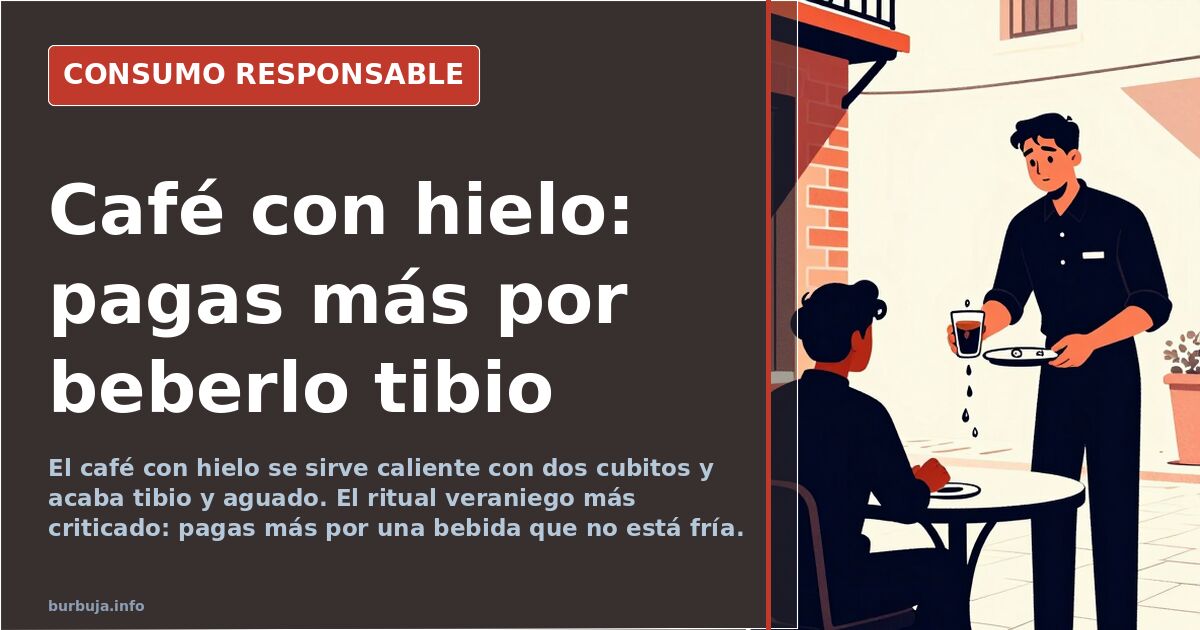
Iced Coffee: Paying More for a Lukewarm, Diluted Drink
As heat arrives, a ritual repeats itself in every bar: the waiter brings a freshly brewed coffee and a glass with two or three ice cubes. The customer pours the steaming liquid over the ice, stirs between the cubes—a gesture that mixes nothing—and drinks it almost immediately. Result: a coffee that is neither cold nor hot, but lukewarm, with diluted flavor and, moreover, more expensive than the usual espresso. This scene, repeated every summer on thousands of terraces, is the basis of a discussion open for 1,206 days with 135 replies.
The initial premise is blunt: if one seeks a cold drink, logic dictates serving pre-chilled coffee rather than forcing the customer to do the work with ice. Those who order it, argues the original poster, suffer from a kind of delay hard to classify.
Why Coffee Is Served Hot Instead of Cold
The first response appeals to hospitality common sense: if coffee were served cold, it likely wouldn't be freshly made. Hence, standard practice is to serve hot espresso and let the customer cool it. The problem, the author counters, is that it doesn't cool; it tempers. And the difference isn't semantic, it's physical.
Here enters the most repeated factor in the conversation: the amount of ice. With two cubes, the coffee drops only a few degrees and remains lukewarm. With four or five, things change. Some point directly to ice quality: homemade cubes from old trays are small and melt quickly, watering the drink without truly cooling it. Hospitality-grade ice, larger and denser, cools with less dilution. It’s the difference between an acceptable coffee and a mess tasting like coffee.
Options for Drinking Cold Coffee in Summer
The range of alternatives appearing in the conversation is broad. There is the Greek frappé, made from instant coffee whipped with ice until foamy, popular in Greece and Cyprus and spread elsewhere. There is the Italian cappuccino freddo, served in a large glass with foam and shaken, no floating cubes. There is the carajillo with ice, a fresh version of the classic with brandy or liqueur. And there is coffee granita with a splash of whiskey, claimed by some as the true solution.
Also appears the cheapest homemade recipe: half a glass of cold milk, half of cold water, and a teaspoon of instant coffee, stir and drink. Without paying at the counter. The conclusion drawn from these variants is that the issue isn’t drinking cold coffee, but how it’s prepared in most Spanish bars.
Torrefacto Coffee and 'Bar Paco' Culture
One of the most critical currents points to raw materials. In Spain, it is argued, torrefacto coffee—roasted with sugar—predominates, being more bitter and less nuanced than natural coffee. Defenders of this thesis claim that well-made iced coffee requires an espresso and a ristretto, about 45 and 25 milliliters respectively, with two large ice cubes to cool just enough while melting. With torrefacto and small cubes, the result is doomed.
Against this, some defend the neighborhood bar Paco, where an iced cortado costs one euro both winter and summer, and nobody worries about technical subtleties. The conversation then shifts to price: some stopped drinking café in bars when it rose to one euro, while others argue that in places with visible grinders and natural coffee, things change.
'Café del Tiempo': A Contradictory Name?
The term café del tiempo (weather coffee) generates its own sub-debate. It is argued that the expression designates summer coffee, i.e., seasonal warm-weather coffee. If one seeks precisely the opposite—refreshment—logic would demand coffee against the weather. The label, however, remains on menus.
The discussion closes, as usual, without agreement. Some argue everyone should order what they please if they pay; others maintain the ritual is a summer sham; and some simply ask not to be told how to drink their coffee. The only shared certainty is that, with two cubes and haste, iced coffee comes out lukewarm. And that nobody will stop ordering it because of that.
As heat arrives, a ritual repeats itself in every bar: the waiter brings a freshly brewed coffee and a glass with two or three ice cubes. The customer pours the steaming liquid over the ice, stirs between the cubes—a gesture that mixes nothing—and drinks it almost immediately. Result: a coffee that is neither cold nor hot, but lukewarm, with diluted flavor and, moreover, more expensive than the usual espresso. This scene, repeated every summer on thousands of terraces, is the basis of a discussion open for 1,206 days with 135 replies.
The initial premise is blunt: if one seeks a cold drink, logic dictates serving pre-chilled coffee rather than forcing the customer to do the work with ice. Those who order it, argues the original poster, suffer from a kind of delay hard to classify.
Why Coffee Is Served Hot Instead of Cold
The first response appeals to hospitality common sense: if coffee were served cold, it likely wouldn't be freshly made. Hence, standard practice is to serve hot espresso and let the customer cool it. The problem, the author counters, is that it doesn't cool; it tempers. And the difference isn't semantic, it's physical.
Here enters the most repeated factor in the conversation: the amount of ice. With two cubes, the coffee drops only a few degrees and remains lukewarm. With four or five, things change. Some point directly to ice quality: homemade cubes from old trays are small and melt quickly, watering the drink without truly cooling it. Hospitality-grade ice, larger and denser, cools with less dilution. It’s the difference between an acceptable coffee and a mess tasting like coffee.
Options for Drinking Cold Coffee in Summer
The range of alternatives appearing in the conversation is broad. There is the Greek frappé, made from instant coffee whipped with ice until foamy, popular in Greece and Cyprus and spread elsewhere. There is the Italian cappuccino freddo, served in a large glass with foam and shaken, no floating cubes. There is the carajillo with ice, a fresh version of the classic with brandy or liqueur. And there is coffee granita with a splash of whiskey, claimed by some as the true solution.
Also appears the cheapest homemade recipe: half a glass of cold milk, half of cold water, and a teaspoon of instant coffee, stir and drink. Without paying at the counter. The conclusion drawn from these variants is that the issue isn’t drinking cold coffee, but how it’s prepared in most Spanish bars.
Torrefacto Coffee and 'Bar Paco' Culture
One of the most critical currents points to raw materials. In Spain, it is argued, torrefacto coffee—roasted with sugar—predominates, being more bitter and less nuanced than natural coffee. Defenders of this thesis claim that well-made iced coffee requires an espresso and a ristretto, about 45 and 25 milliliters respectively, with two large ice cubes to cool just enough while melting. With torrefacto and small cubes, the result is doomed.
Against this, some defend the neighborhood bar Paco, where an iced cortado costs one euro both winter and summer, and nobody worries about technical subtleties. The conversation then shifts to price: some stopped drinking café in bars when it rose to one euro, while others argue that in places with visible grinders and natural coffee, things change.
'Café del Tiempo': A Contradictory Name?
The term café del tiempo (weather coffee) generates its own sub-debate. It is argued that the expression designates summer coffee, i.e., seasonal warm-weather coffee. If one seeks precisely the opposite—refreshment—logic would demand coffee against the weather. The label, however, remains on menus.
The discussion closes, as usual, without agreement. Some argue everyone should order what they please if they pay; others maintain the ritual is a summer sham; and some simply ask not to be told how to drink their coffee. The only shared certainty is that, with two cubes and haste, iced coffee comes out lukewarm. And that nobody will stop ordering it because of that.
Also available in: Deutsch
Summary of a discussion on Burbuja.info - Foro de economía, actualidad y política., translated from Spanish and reviewed before publication. Read the full discussion (135 replies).
More summaries
-
Torrefacto coffee: Spanish tradition or health risk?
Torrefacto vs. natural coffee: An analysis of acrylamide risks and the true quality of coffee in Spain.
-
Seven months into his own project, and just 30% of the time worked
A professional leaves his job for a project of his own and seven months later uses only 30% of his time. A look at tricks to beat laziness.
-
Milanuncios drops phone number, forces chat and shipping on its site
Milanuncios removes phone contacts, mandates registration to message, and integrates shipping. Sellers report a sharp drop in buyer inquiries.
-
Daily Driver Classics: From Lada Niva to Mercedes W124
Which affordable classics over 25 years old survive daily use, and which become maintenance nightmares?
-
Downsizing: 1930 V16 matches modern 1.4L output
Cadillac's 7.4-liter V16 produced power similar to today's 1.4 engines. Downsizing reflects a century of accumulated specific power, not just crisis.
-
Beachgoers Butcher Stranded Tuna in La Manga
Swimmers carved up a dead tuna on La Manga beach, sparking debate over food safety and anisakis risks.