
Hacendado and Casa Tarradellas pizza bases: same factory, different dough
Hacendado and Casa Tarradellas pizza bases come out of the same Spanish factory, yet the results in the oven are nothing alike. The key lies in the formulation.
English · Original discussion in Spanish · Published
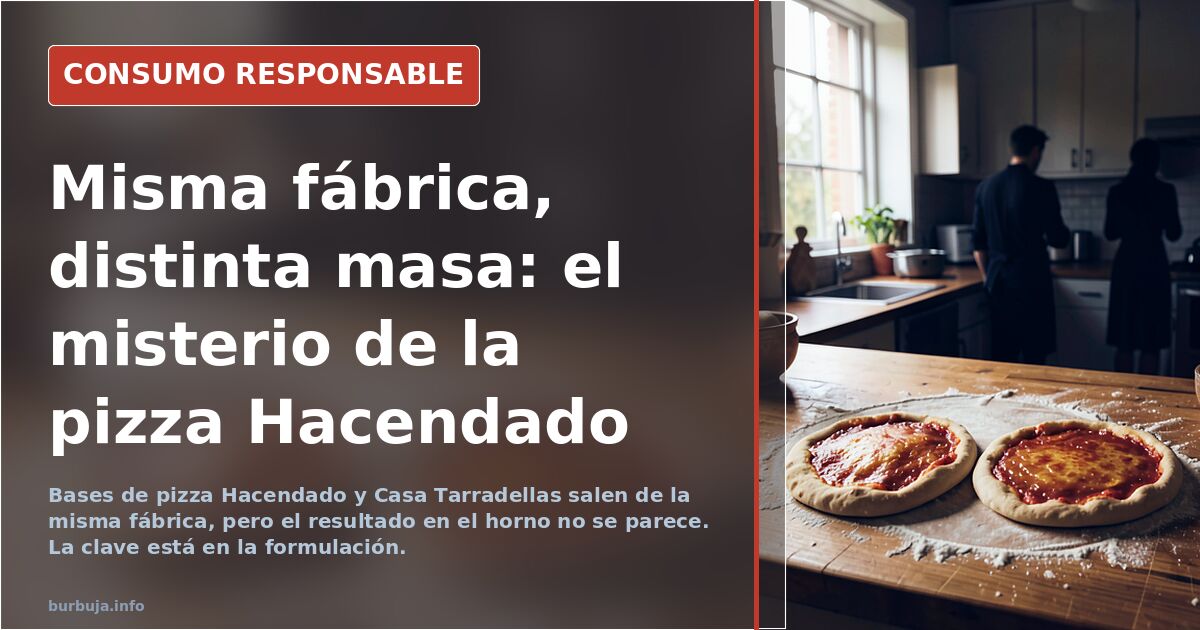
Same factory, different dough: the mystery of the Hacendado pizza base
A double pack of Hacendado pizza bases and a pack of Casa Tarradellas bases come out of the same factory. On paper, the same product. In the kitchen, according to the experience that sparked this discussion, two inedible results versus two decent pizzas. The paradox has a catch, and it is not exactly the label.
The starting point is a domestic disappointment: the author of the first post buys the store-brand bases convinced they are the same as Casa Tarradellas — which they are, originally — only to end up with a double pack that simply cannot be baked with dignity. Two bases thrown in the bin and a promise: never again. The immediate reaction feels like settling scores with the retailer and the manufacturer in equal measure.
Why does the Hacendado base taste different if Casa Tarradellas makes it?
Here the rift opens. One account claims the store brand is a carbon copy: only the roll of paper in the thermoforming machine changes. Another, from someone with hands-on experience in food plants, argues the opposite: changing the formulation of 4,000 kilos of dough is one of the easiest things to do, and the chains set different quality parameters for their own brands, verified through annual laboratory analyses.
The most uncomfortable explanation is the economic one. Store-brand lines compete fiercely in the comparison basket, and that pressure translates into cheaper recipes. Same supplier, two specifications, two prices. There is no need to sabotage anything: it is enough to adjust the percentage of semolina, the yeast or the fermentation time. The result shows up on the palate before it does on the label.
The calculation that debunks the store-bought base
The homemade alternative soon appears, with numbers attached. Flour at 0.49 euros a kilo, water, salt, a splash of oil and the beer you are drinking while you knead. Crushed tomato at 1.30 euros a kilo. The full tally, including yeast and resting times, leaves a cost per base that makes the shelf price look ridiculous, and whoever broke it down step by step insists the secret lies not in the recipe but in the kneading and the oven.
The problem, the more kitchen-savvy admit, is that homemade dough does not turn out like the pizzaiolo's. That is where haste comes in, the kind Ortega y Gasset diagnosed almost a century ago. The bread maker and batch freezing emerge as the middle-ground solution for those unwilling to give up their floury Saturday.
Store brand versus store brand: what changes and what does not
The discussion widens beyond pizza. Some argue that private-label products are identical to the branded ones and only the packaging changes, with production shifts assigned by brand. Others point out that the 24-roll toilet paper seems the same until you weigh it, that the store-brand tuna contains more shredded logs, and that sliced bread cannot stand comparison with the branded kind. The practical conclusion: distrust the packaging and read the ingredients.
Even so, the pizza base case remains unresolved. The same factory, two possible recipes, a consumer who notices the difference and a brand that does not explain it. How many more labels are telling the same story without anyone having run the oven test?
Also available in: Deutsch
Summary of a discussion on Burbuja.info - Foro de economía, actualidad y política., translated from Spanish and reviewed before publication. Read the full discussion (32 replies).
More summaries
-
Store-brand yogurts and ice cream: what the price hides
Lidl yogurts at 12 cents and ice cream with hydrogenated fats: the label decides the quality of store brands more than the price does.
-
OCU survey leaves Mercadona out of Spain's cheapest supermarkets
Spain's consumer organisation OCU ranks Alcampo, Lidl, Gadis Hiper and Carrefour as the cheapest for own-brand products, while Mercadona fails to make the list.
-
Spain's store-brand coffee rivals Lavazza and Illy
Lidl's private-label coffee in Spain costs around €5 per 500g, challenging premium brands like Lavazza. Blind tastings question the high price.
-
Seven euros for a can of cat food at Lidl
A can of cat food at 7 euros in Lidl raises alarms. The price per kilo exceeds 20 euros, more than many fresh foods.
-
Men's bags win the battle of the shoulder strap
The men's bag is gaining ground on the backpack: class, practicality and the old prejudice about manhood in the war of accessories.
-
Switching legal aid lawyers in Spain while keeping free justice
Spain's Law 1/1996 lets you give up your court-appointed lawyer while keeping fee waivers, expert witnesses and court agents. The process goes through the SOJ, but the outgoing lawyer may…