
Greek Yogurt: Starch Reveals the Truth
Strained yogurt has 8-10g protein per 100g; 'Greek-style' with cream has 3-4g. The label reveals all.
English · Original discussion in Spanish · Published
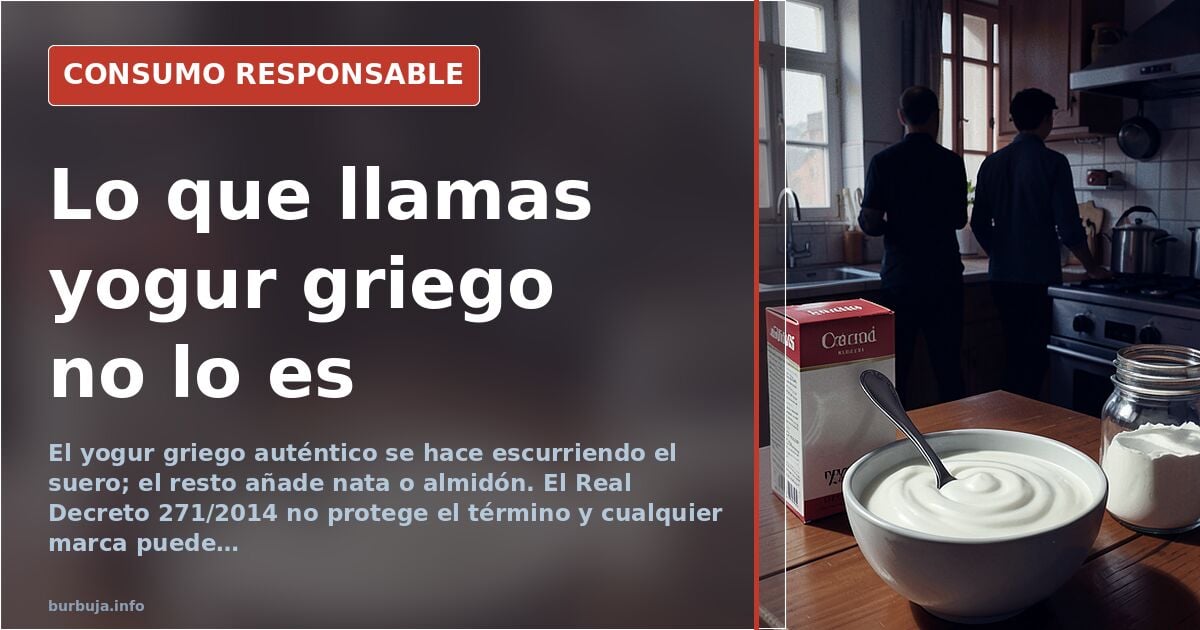
Oikos and starch: the label that exposes yogurt
Authentic Greek yogurt is made by draining whey: high protein, low fat, dense texture without additives. The rest is something else. In Spanish supermarkets, three tiers coexist under the same name, but only one withstands scrutiny of the labeling. According to analysis, the lowest tier imitates creaminess using starches and flours—yet it sells among the most expensive on the shelf. The trap isn't in the container: it's in the fine print.
What distinguishes strained yogurt from 'Greek-style'
The most reliable clue is protein content per 100 grams. A truly strained yogurt hovers around 8 to 10 grams; a regular yogurt or a 'Greek-style' one made with cream stays at 3 or 4. The second clue is the ingredient list: the good one contains milk, sometimes cream, and cultures. That's it. If you see starch, modified starch, gelatin, added milk proteins, or thickeners, the texture comes from chemistry, not straining.
Fat tells another story. 'Greek-style' yogurts with cream usually hover around 8-10%; whole-milk strained yogurt stays near 5%. Here we must clear up a misunderstanding: cream is no more 'natural' than starch. Both are added ingredients. The difference lies in what each aims to achieve. Cream cheapens the creaminess compared to the draining process; starch does so even more.
The legal loophole that allows everything
Spanish dairy legislation, specifically Royal Decree 271/2014, neither defines nor protects the term 'Greek yogurt'. There are no minimum manufacturing or nutritional requirements for this designation. Any brand can label its product as such without consequences. This gap explains why most products sold as Greek aren't made using the traditional method: the draining process increases production costs, and the legal wrapper imposes nothing.
Some nuance the picture. In Spain, plain natural yogurt from one of the most criticized brands doesn't use starches; however, they do use them in flavored varieties, like practically all others. This nuance matters because generic criticism falls apart when checking the label.
Alternatives: skyr, quark, and homemade yogurt
Skyr has slipped onto shelves as a Nordic relative of strained yogurt, offering more protein than conventional yogurt. One chain even gave it away free to promote awareness. Whipped cheese, French fromage frais, and quark also appear, common in discount chains, antiestéticaturing high protein profiles and affordable prices. For those wanting total control: homemade yogurt maker—whole milk, one plain yogurt per liter, ferment at low temperature, and drain whey in the fridge. It lasts about six days without losing flavor.
A complete calculation of protein per euro, brand by brand, reveals surprising differences. But that requires opening the fridge and reading.
The label never lies. The packaging, sometimes, does.
Also available in: Deutsch
Summary of a discussion on Burbuja.info - Foro de economía, actualidad y política., translated from Spanish and reviewed before publication. Read the full discussion (41 replies).
More summaries
-
Greek Yogurt Viral Recipe: The Math Behind the Calorie Count
Eating eight packs of Greek yogurt weekly equals 4 kg and over 700 daily kcal. Traditional versions contain 8-10% fat, while skyr or 0% options double protein.
-
Greek yogurt whey: from waste product to profitable ingredient
Straining Greek yogurt leaves 400 ml of whey per batch. Drinking it, making ricotta, cream cheese or replacing buttermilk: uses and recipes.
-
Danone: pricey yogurt, shrinking packs and shelves that stay stocked
Danone sells four custard cups for 2 euros and its Dan Up has shrunk from 750 to 550 grams, yet the shelf stays nearly full while store brands sell out.
-
Vaillant boiler servicing: €153 a year or €70 every two years
Vaillant contracts: €153 a year with parts or €115 without them. The mandatory inspection every two years costs €70. Is it worth it from year one?
-
DIA: Half-price beer, couscous deals and coupons
DIA offers half-price strong beer, couscous matching premium brands, and coupons cutting bills by 85%. Where the Spanish chain truly saves you money.
-
Spanish store-brand cocoa costs €1.87 for 800g, undercutting Cola-Cao and Nesquik
A forum user reports buying 800g of Alcampo's own-brand cocoa for €1.87 in Spain, sparking debate on price, composition, and taste versus major brands.