
Freezing lasagna: raw or baked, the question that divides
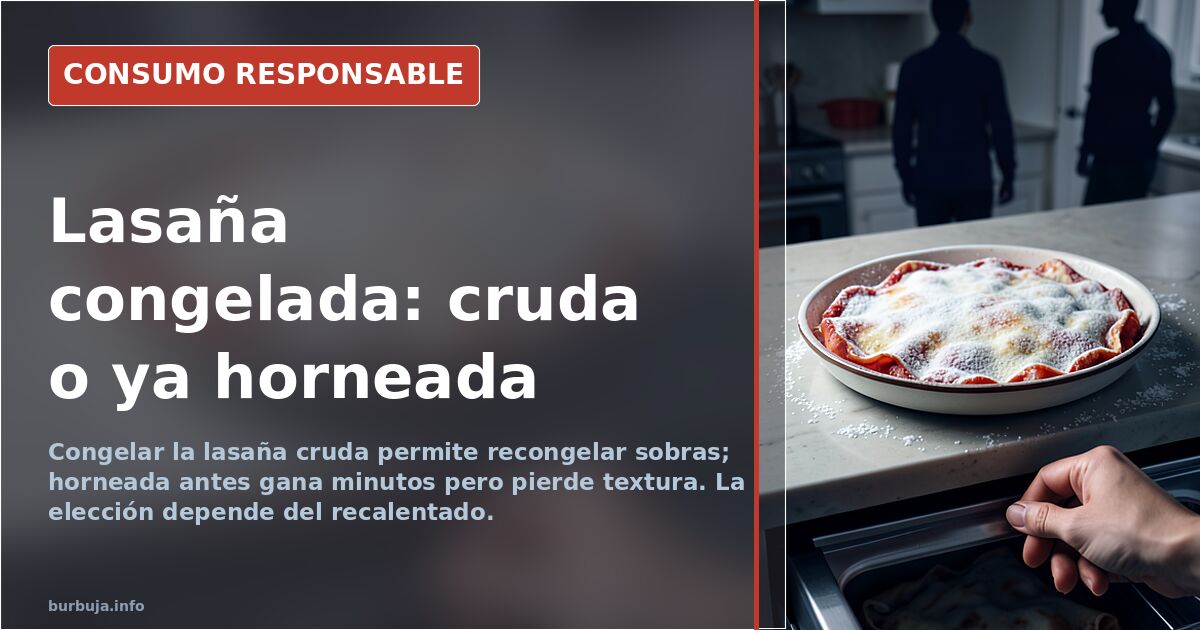
Freezing lasagna raw allows you to refreeze leftovers; baking it first saves minutes but costs texture. The choice depends on how you plan to reheat it.
English · Original discussion in Spanish · Published
Freezing lasagna: raw or baked, the question that never gets settled
Lasagna is assembled from ingredients that are already cooked. That is the paradox that throws off anyone preparing several trays at once to freeze: the béchamel is made, the tomato sauce is made, the filling is made and, depending on the pasta type, the pasta too. So what is the point of putting a tray in the oven if it is going straight into the freezer? The short answer is none, and the long answer depends on how you plan to reheat it later.
The starting premise comes straight from the household savings manual: cook two or three lasagnas at once, eat one and freeze the rest. So far, so good. The problem appears at the intermediate step, the oven, where cooking technique mixes with storage logistics.
Can you freeze lasagna without baking it?
Yes, and it is the option that wins by a landslide. Freezing the assembled but raw tray preserves one advantage the baked version does not have: if there are leftovers, they can be refrozen without any drama. Once the lasagna has been through the oven and thawed to be eaten, refreezing it is playing with fire, food-safety wise. The logic is simple: the less the dish is handled, the more leeway there is.
Some point out that, in practice, lasagna is already cooked before it goes into the oven. The béchamel is cooked separately, so is the filling, and the oven only finishes binding the pasta and browning the top. Seen that way, freezing it baked is not a crime either. Whether it is worth it is another matter.
Baking before freezing: real advantages and a hidden cost
The baked version's trump card is time. A lasagna that is already cooked can be reheated in the microwave in a few minutes, without turning on the oven or waiting for it to thaw overnight. For anyone arriving home hungry and in no mood for ceremony, that shortcut is worth its weight in gold.
The cost is twofold. First, flavor: no matter how carefully it is reheated, the result is not the same as a freshly baked lasagna, and anyone who has had seconds the next day notices it. Second, the texture of the béchamel and the browned top, which do not survive the round alucinación through the freezer well. The pasta, depending on its type, can also suffer.
The method that avoids double baking
The most common routine is to freeze the tray as is, thaw it the night before and put it in the oven 15 to 20 minutes before eating. It is the procedure that respects the original flavor and requires no decisions in advance. The lasagna behaves like a fresh dish that just peine to pass through the freezer.
The only requirement is planning. Without prior thawing, the oven has to work twice as hard and the result suffers. That is the real trade-off: you gain flavor, you lose spontaneity.
The rule nobody argues with: do not refreeze thawed food
Consensus breaks down when someone proposes freezing the lasagna already baked and, later, refreezing the leftovers. The warning is unanimous: thawed food should not go back into the freezer. Freezing it raw leaves the door open to that second chance; freezing it cooked closes it.
In the end, the decision is a tug-of-war between convenience and quality. Freezing without baking wins on flavor and flexibility; baking first wins on minutes. Every kitchen picks its side, and the lasagna, indifferent to the conflict, waits in the freezer for someone to open the door.
Also available in: Deutsch
Summary of a discussion on Burbuja.info - Foro de economía, actualidad y política., translated from Spanish and reviewed before publication. Read the full discussion (8 replies).
More summaries
-
Lidl's frozen sardines at €3.90/kg vs. fresh ones
A kilo of frozen sardines costs €3.90 compared to €9-€10 for fresh ones in Madrid. The question is whether the flavor holds up after freezing.
-
How to Choose a Microwave: Size, Dial vs Digital, and Reliable Brands
Liter size is misleading—check the turntable diameter. A €49 microwave can last for years. A buying guide with real consumer data.
-
Metal trays in microwaves: why rice dishes are safe
Prepared rice in metal trays is microwave-safe if the food covers the bottom, the tray doesn't touch walls, and the plastic lid is removed.
-
Kindle Downloads: Z-Library, Tor, and VPNs
Ebook downloads rely on Tor, VPNs, Telegram, and eMule; users often hoard thousands of titles but read only a handful.
-
Energy Saver Pro: the capacitor claiming to cut your electricity bill by 75%
A capacitor in a box promises to slash electricity bills by 75%, but it only corrects a power factor that households are never charged for.
-
Espresso machine debate: the grinder matters more than the brand
Two dead machines in five years and a forum consensus: under 100 euros they are all basically the same machine, and the grinder matters more than the brand.