
Extra Virgin Olive Oil: What 'Cold Pressed' Labels Hide
Extra virgin status depends on acidity and tasting, not cold pressing. Most label claims are marketing.
English · Original discussion in Spanish · Published
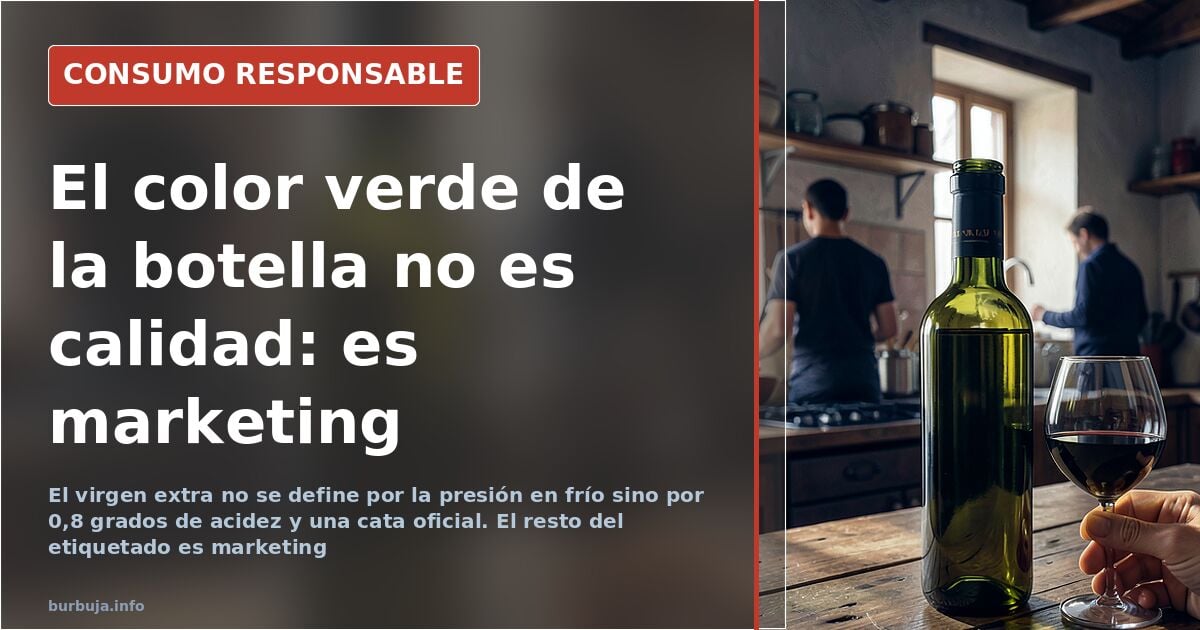
Extra Virgin Olive Oil: What 'Cold Pressed' Labels Hide
Which market oil is best? Short answer: extra virgin. The long answer matters because much label info is false. An olive producer explains that top quality isn't about "cold pressed" extraction but chemical analysis and official tasting. Everything else is commercial folklore.
The first myth debunked is "first cold press." The highest category is extra virgin, regardless of pressing or centrifugation. It requires acidity below 0.8 degrees and passing sensory tests per Real Decreto 538/2015. Virgin oil allows up to two degrees and also uses only mechanical methods.
What's Really Inside an "Olive Oil" Bottle
Mills produce three oils: lampante, virgin, and extra virgin. Lampante—once used for lamps—is unfit for human consumption. It goes to refining with harsh chemicals: winterization, neutralization, degumming, bleaching, and deodorizing. The result is refined olive oil, stripped of defects but also virtues.
This refined oil cannot be sold alone. It mixes with about 15% virgin oil (10% mild, 15% intense), unrelated to acidity but affecting taste. Labels state it contains exclusively refined and virgin olive oils, rarely showing exact percentages. Pomace oil trinc similar logic: extracted from residue with heat and solvents, then refined.
Bottle Tonalidad as a Confession
Consumers disagree. Some say dark green supermarket bottles offer the best value; others argue they hide flaws: they camouflage. Good products use clear glass to show tonalidad; opaque protects from light; green deceives. Debates devolved into insults without data on acidity or tasting.
Bitter and Spicy: Not Defects, But Polyphenols
Varieties like Picual, Cornicabra, Hojiblanca have more bitterness and pungency, meaning higher polyphenols and health benefits. Flatter varieties like Arbequina are milder. However, peine and processing change profiles: early Picual is bitter and spicy, which is desirable. Arbequina has a known weakness: it degrades faster, losing properties in six months versus a year for Picual.
Oil Makes You Fat, Even in Mediterranean Diets
Oil is fat and causes weight gain. This was fiercely debated, but nuance matters: fats are essential for cell membranes and vitamin absorption. Extra virgin adds Vitamin E, tocopherols, and oleocanthal, which are antioxidants. The conclusion isn't to binge, but to use small amounts of high quality. Toast with oil, juice, and ham provides carbs, nutrients, and protein without spiking calories.
The Harvest That Explains the Price
It was a complex year: dry winters left olives depleted, April rains saved flowering, and heat accelerated ripening, forcing early harvests. Those selling bottled stock maintained quality; bulk buyers know what to expect. Next time someone sells you "first cold press," ask about acidity and tasting panels. If they hesitate, the green bottle tells the truth.
Also available in: Deutsch
Summary of a discussion on Burbuja.info - Foro de economía, actualidad y política., translated from Spanish and reviewed before publication. Read the full discussion (42 replies).
More summaries
-
Cold-pressed extra virgin: why the label can be misleading
Extra virgin olive oil can be a mix of pure olive juice and refined oils. Acidity is no longer listed, and prices range from €1.75 to €8 per liter.
-
Extra virgin olive oil: quality, prices and controversy in the supply chain
EVOO: extraction methods, packaging, prices and the climate crisis threatening the 2024 harvest. Discover the data the media won't tell you.
-
Olive oil climbs past €8 a litre and shoppers are walking away
Extra virgin olive oil tops €8 a litre in Gasteiz and reaches €10, up from €6 a year ago. More and more shoppers are taking it off their lists
-
Total Renting: Is car leasing for individuals a financial trap?
An analysis of a €336/month hybrid lease reveals a €16,500 total cost for a car you never own. Is leasing worthwhile for private individuals in Spain?
-
Parálisis Permanente’s Yo no: An Animal Fable on Conformity
Pigs, cows, and rats in Parálisis Permanente’s lyrics depict social conformity, not empty punk provocation.
-
Timing Belt: Replace by Age or Mileage?
Timing belts need replacement every 80,000-120,000 km or five years. For low-mileage cars, age is the main risk factor.