
Cold-pressed extra virgin: why the label can be misleading
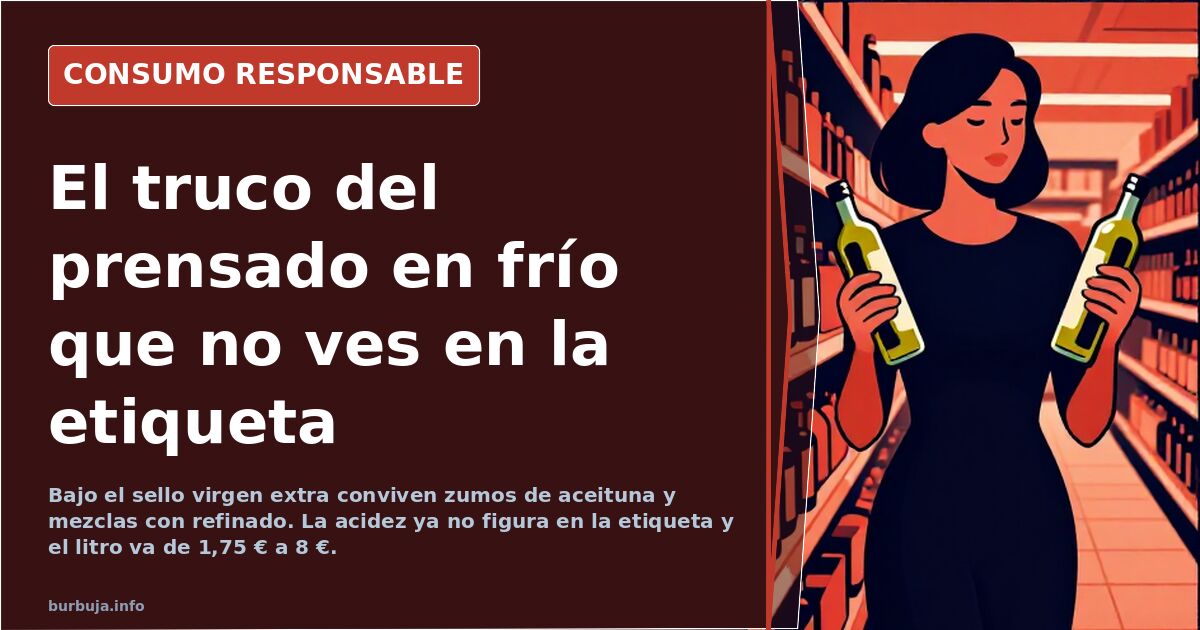
Extra virgin olive oil can be a mix of pure olive juice and refined oils. Acidity is no longer listed, and prices range from €1.75 to €8 per liter.
English · Original discussion in Spanish · Published
Buying Olive Oil Without Getting Ripped Off: Cold Pressing, Acidity, and Cooperatives
There's a phrase in small print on half the supermarket bottles that almost no one reads until after they've paid: 'refined oils and mechanical process.' In plain English, the bottle you're holding isn't pure olive juice. It's a blend. And that's where a debate that's been ongoing for over a decade begins: what truly is cold-pressed extra virgin olive oil, how can you recognize it, and why can a liter cost €1.75 or €8 without the label providing much clarity.
What 'Cold-Pressed' Really Means
The initial thought is simple: if an oil doesn't have the 'cold' mention on the packaging, it's because it wasn't cold-pressed. Hot pressing is reserved for second extractions, when there's no more juice to extract and heat is used to get the last bits. That's why it's repeated endlessly that EVOO is, at its core, olive juice: mechanical pressure and nothing more. Everything else, it's argued, is stretching the olive.
Olive pomace oil, extracted from the pit and residue, enters this discussion. Its acidity needs to be reduced because, otherwise, as the sector points out, it could approach toxic levels. The recommendation is to avoid refined oils and be wary of pomace oil, although here it's worth separating verifiable chemistry from olive oil passion.
Virgin vs. Extra Virgin: The Difference That Decides Your Purchase
Here the debate gets interesting. A shopper recounts finding a five-liter yellow jug labeled extra virgin that cited refined oils in small print. Panic ensued. They later had to correct themselves: under European regulations, extra virgin does not permit refining, so that oil was simply virgin. The practical conclusion is that the extra virgin seal does guarantee mechanical extraction; standard virgin does not. And it's not uncommon for both categories to share shelf space and price in a buy-three-get-one-free deal.
Another layer to this issue concerns green olives. An article by Professor Cocca argues that the trend of pressing unripe olives stems from industrial mechanical harvesting systems, and that black, ripe olives would be healthier. Not everyone agrees, but the fruit's role in the final quality is one of the few points where almost no one disagrees: you can't get good oil from bad olives.
Acidity: The Data Point That Disappeared from the Label
For years, acidity level was the buyer's thermometer. Lower acidity meant better oil; a two-degree level was considered problematic. The issue is that labeling regulations changed, and it's no longer mandatory to display the acidity level on the packaging, which many saw as a step back in transparency. Without that number, and without tasting, the consumer is at the mercy of marketing.
The Denomination of Origin (DO) then became the most common guarantee: it requires a maximum acidity of 0.2º, although some warn that DOs also come with their own costs.
Cooperatives and Mills: The Real Price Per Liter
The most common strategy is direct purchase. Compared to bulk oil sold at €1.75/l and bottled formats going for €2.65/l, cooperative bulk jugs go down to €3.25/l, and with shipping, around €4/l. At reference cooperatives like Bonarea, a five-liter jug costs around €19.30. At the premium end, a 2.5-liter can of Venta del Barón goes for €8/l, compared to €4/l for other references from the same producer. That's the gap being endlessly discussed.
Collective buying, orders among friends to share shipping costs (which decrease from the second box onwards), and even freezing a jug: the homemade recipe book is extensive. The complete calculation, item by item, reveals surprising differences.
Is It Worth Paying Double?
That's where everything gets stuck. One consumer admits that between an €8/l oil and a €4/l oil, their palate can't tell the difference, and therefore it's not worth paying double. Another warns that first-press juice loses its qualities and flavor over time, with exposure to light and ambient temperature. And a manual skeptic throws in the final punch: there's no evidence that EVOO is healthier than refined oil. The sector's indignant response is that the refined oil used in tuna or certain fried foods doesn't play in the same league.
The latest news shaking the sector is that origin guarantee has become a brand attraction: there are olive oil producers with their own products who have carved out a niche in local consumption, and cooperatives that ship directly to homes. The price per liter, meanwhile, still doesn't quite add up. And no one has explained why.
There's a phrase in small print on half the supermarket bottles that almost no one reads until after they've paid: 'refined oils and mechanical process.' In plain English, the bottle you're holding isn't pure olive juice. It's a blend. And that's where a debate that's been ongoing for over a decade begins: what truly is cold-pressed extra virgin olive oil, how can you recognize it, and why can a liter cost €1.75 or €8 without the label providing much clarity.
What 'Cold-Pressed' Really Means
The initial thought is simple: if an oil doesn't have the 'cold' mention on the packaging, it's because it wasn't cold-pressed. Hot pressing is reserved for second extractions, when there's no more juice to extract and heat is used to get the last bits. That's why it's repeated endlessly that EVOO is, at its core, olive juice: mechanical pressure and nothing more. Everything else, it's argued, is stretching the olive.
Olive pomace oil, extracted from the pit and residue, enters this discussion. Its acidity needs to be reduced because, otherwise, as the sector points out, it could approach toxic levels. The recommendation is to avoid refined oils and be wary of pomace oil, although here it's worth separating verifiable chemistry from olive oil passion.
Virgin vs. Extra Virgin: The Difference That Decides Your Purchase
Here the debate gets interesting. A shopper recounts finding a five-liter yellow jug labeled extra virgin that cited refined oils in small print. Panic ensued. They later had to correct themselves: under European regulations, extra virgin does not permit refining, so that oil was simply virgin. The practical conclusion is that the extra virgin seal does guarantee mechanical extraction; standard virgin does not. And it's not uncommon for both categories to share shelf space and price in a buy-three-get-one-free deal.
Another layer to this issue concerns green olives. An article by Professor Cocca argues that the trend of pressing unripe olives stems from industrial mechanical harvesting systems, and that black, ripe olives would be healthier. Not everyone agrees, but the fruit's role in the final quality is one of the few points where almost no one disagrees: you can't get good oil from bad olives.
Acidity: The Data Point That Disappeared from the Label
For years, acidity level was the buyer's thermometer. Lower acidity meant better oil; a two-degree level was considered problematic. The issue is that labeling regulations changed, and it's no longer mandatory to display the acidity level on the packaging, which many saw as a step back in transparency. Without that number, and without tasting, the consumer is at the mercy of marketing.
The Denomination of Origin (DO) then became the most common guarantee: it requires a maximum acidity of 0.2º, although some warn that DOs also come with their own costs.
Cooperatives and Mills: The Real Price Per Liter
The most common strategy is direct purchase. Compared to bulk oil sold at €1.75/l and bottled formats going for €2.65/l, cooperative bulk jugs go down to €3.25/l, and with shipping, around €4/l. At reference cooperatives like Bonarea, a five-liter jug costs around €19.30. At the premium end, a 2.5-liter can of Venta del Barón goes for €8/l, compared to €4/l for other references from the same producer. That's the gap being endlessly discussed.
Collective buying, orders among friends to share shipping costs (which decrease from the second box onwards), and even freezing a jug: the homemade recipe book is extensive. The complete calculation, item by item, reveals surprising differences.
Is It Worth Paying Double?
That's where everything gets stuck. One consumer admits that between an €8/l oil and a €4/l oil, their palate can't tell the difference, and therefore it's not worth paying double. Another warns that first-press juice loses its qualities and flavor over time, with exposure to light and ambient temperature. And a manual skeptic throws in the final punch: there's no evidence that EVOO is healthier than refined oil. The sector's indignant response is that the refined oil used in tuna or certain fried foods doesn't play in the same league.
The latest news shaking the sector is that origin guarantee has become a brand attraction: there are olive oil producers with their own products who have carved out a niche in local consumption, and cooperatives that ship directly to homes. The price per liter, meanwhile, still doesn't quite add up. And no one has explained why.
Summary of a discussion on Burbuja.info - Foro de economía, actualidad y política., translated from Spanish and reviewed before publication. Read the full discussion (110 replies).
More summaries
-
Rosemary Oil and Machines: The True Cost of Fighting Baldness
Rosemary oil, 80-minute massages, and €120 machines: the real expenditure on the war against baldness and why no one wins. Data and prices of the debate.
-
Should the consumption of newborn animals be banned?
The consumption of piglets and young lambs is polarizing. 'Cherry' chickens in supermarkets highlight the ethical debate with data and arguments on animal sacrifice.
-
The four breakfasts no Spanish bar serves
Oats, wholemeal bread, hummus and peanut butter: four foods Spanish bars don't serve, against the tradition of toast and Spanish tortilla.
-
Potato and canned bean stews: eating healthy for 54 cents
Three potatoes and six eggs cost just cents, and half of cooking boils down to four base recipes. Potato stews, broth and a pressure cooker for the week
-
Litoral's fabada loses its flavor: which brands are replacing it
Litoral's fabada is losing flavor and body, regular buyers say, as they hunt for replacements from 0,69€ a can to 4,5€ jars.
-
Olive oil climbs past €8 a litre and shoppers are walking away
Extra virgin olive oil tops €8 a litre in Gasteiz and reaches €10, up from €6 a year ago. More and more shoppers are taking it off their lists