
Expired herbal teas: what happens if you brew an old tea bag
A green tea two years past its date loses its properties and gains bitterness, according to one forum user. Virgin olive oil goes rancid, and insulin is no joke.
English · Original discussion in Spanish · Published
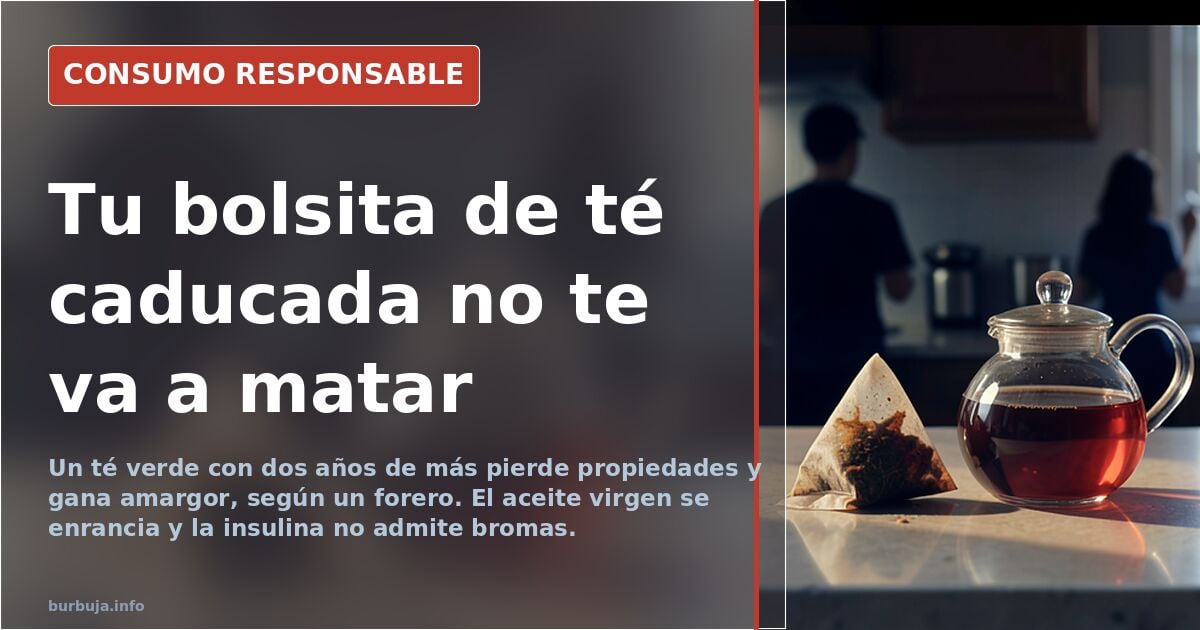
Expired herbal teas: nothing happens, but the flavor suffers
A green tea bag two years past its date, sitting in the cupboard. That's the case that started the conversation: someone drank it, noticed the flavor was "a bit stronger than usual," and here we are, still alive. The conclusion among those who replied is the same: an expired herbal tea won't kill anyone. At worst, it loses its properties and gains bitterness.
The topic, however, raises a more awkward question: why on earth do products that seem eternal carry an expiration date? Salt, sugar, flour, oil, medicines. The list was put on the table by the person who started the exchange, and they had good reason to be skeptical.
What really happens to an expired herbal tea
Dried herbs don't spoil overnight. What happens is more prosaic: the essential oils and aromatic compounds volatilize over time, and what's left is a flatter brew or, curiously, a more intense one. Someone described exactly that: a green tea two years overdue that tasted stronger than usual. It's not magic or poisoning: it's cupboard chemistry.
The consensus is clear. In the worst case, the tea bag will have lost its properties or its flavor will have worsened. Nothing more. There are no documented cases of poisoning from an old herbal tea, and the real risk is that it tastes like cardboard and you throw away money you already spent.
Oil does go rancid (but salt doesn't)
The conversation drifted toward other products with printed dates. Oil, and virgin olive oil in particular, is the serious case: it goes rancid, and that is a real deterioration in quality. Salt, sugar, or flour, on the other hand, last indefinitely if stored properly.
With medicines there's a nuance. The dominant view is that taking them expired poses no danger, but they lose effectiveness. And there are exceptions that are no laughing matter: insulin and other delicate drugs are excluded from that laxity. There, the date is not decorative.
Expiration dates as a commercial formality
An underlying suspicion hangs over the whole exchange: many dates respond more to commercial rotation logic than to verifiable health risk. It's not a far-fetched theory, but it's worth separating products. A dried herb is one thing; a dairy product or an injectable drug is another.
The exact point where this stalls is the usual one: nobody has done the test with a blind tasting of expired herbal teas. Meanwhile, that two-year-old green tea bag is still sitting in someone's cupboard, waiting for its chance.
Also available in: Deutsch
Summary of a discussion on Burbuja.info - Foro de economía, actualidad y política., translated from Spanish and reviewed before publication. Read the full discussion (6 replies).
More summaries
-
Cold-pressed extra virgin: why the label can be misleading
Extra virgin olive oil can be a mix of pure olive juice and refined oils. Acidity is no longer listed, and prices range from €1.75 to €8 per liter.
-
Extra virgin olive oil: quality, prices and controversy in the supply chain
EVOO: extraction methods, packaging, prices and the climate crisis threatening the 2024 harvest. Discover the data the media won't tell you.
-
Finding a free, covered oil change spot in Madrid
Rain in Madrid makes finding a free, covered, unmonitored spot for an oil change difficult. Users discuss garages and DIY options.
-
Spanish 1970s Cookies: The Lost Taste of Childhood
Iconic Spanish brands like Cuétara and Fontaneda have changed. Palm oil, mergers, and quality cuts explain the decline of a national staple.
-
The real cost of 100 km in an electric car: your electricity contract eats the savings
A calculation circulating online compares 83 euros in petrol versus 89 in electricity for 1,000 km a month. The contracted power and fixed charge decide the outcome.
-
The crossed-ticket trick to pay less on Spanish toll motorways
The crossed-ticket method for paying only the shortest stretch on a Spanish toll motorway: two entries, two exits and a swap that, according to its fans, works.