
El Corte Inglés Toy Catalog Sells Out, Sparks Resale
A second batch of El Corte Inglés toy catalog vanished in two days, with copies now appearing on resale platforms.
English · Original discussion in Spanish · Published
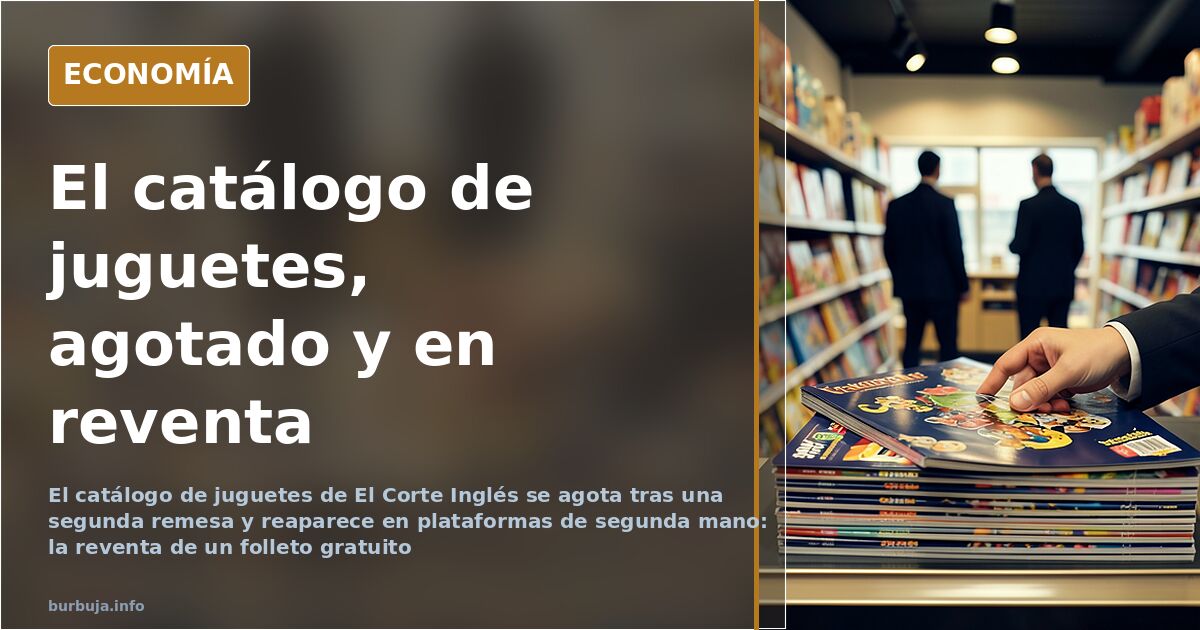
El Corte Inglés Toy Catalog Sells Out, Reappears in Resale
The El Corte Inglés toy catalog is no longer just a household reference; it has become a scarce asset. According to a customer who visited the store only to find empty shelves, a second distribution batch sold out within two days. What was once a December ritual—marking pages with excitement—has turned into a supply issue with long queues.
The immediate consequence has a specific name: resale. Copies unavailable at the mall appear on second-hand platforms, sparking collective amusement. That’s how desperate we are, summarizes the remark that kicked off the discussion. A free brochure has become merchandise.
Why a Once-Abundant Catalog Is Now Scarce
The first diagnosis circulating concerns management. Comparisons with DNI appointment slots—which are always impossible to secure—suggest the shortage is structural rather than accidental. If something sells out in two days and reappears at a premium on classifieds sites, someone is profiting from the scarcity.
The second interpretation points to timing. El Corte Inglés toy catalogs were childhood staples, items browsed until worn out. Reviving this paper format taps into profitable nostalgia: what is being sold isn’t the brochure, but the memory of when it mattered.
Kids Want Screens, Not Toys
There is a less flattering hypothesis for the retailer. If today’s children respond only to screens and ignore everything else, the printed catalog loses its original function and gains another: becoming a collector’s item for adults. Demand comes not from family living rooms, but from the second-hand market.
Budget constraints add to this. A Megazord won’t be bought if household finances don’t allow it, and jokes about needing spousal approval to purchase one hint at restrained consumption. The catalog runs out, but expensive toys remain unsold.
From Brochure to Street Vendor: The Resale Narrative
The conversation quickly turns sour. Speculation arises that toys end up on second-hand platforms, with ironic references to street vendors and debates over who buys versus who resells. This is where analysis gives way to prejudice, so it’s worth separating facts from conjecture: reselling a free brochure is verifiable; theories about who does it are unproven.
The most honest summary of the phenomenon is a casual remark: paying for a toy catalog is foolish. Yet people do pay. That’s the business.
Empty Shelves Photos and Unanswered Questions
The story includes photos of deserted shelves and a fundamental question no one answers: which location experienced this? The scene becomes dinner-table anecdote, mixing surprise with mockery, while the chain offers no public explanation for the shortage.
The paradox remains. A free catalog that sells out, gets resold, and generates more buzz than the toys it advertises. If scarcity persists, the next Christmas campaign might be measured in brochures per capita. Or perhaps a third batch will resolve it all, letting the issue fade into January oblivion.
Also available in: Deutsch
Summary of a discussion on Burbuja.info - Foro de economía, actualidad y política., translated from Spanish and reviewed before publication. Read the full discussion (14 replies).
More summaries
-
El Corte Inglés toy catalog resold on Wallapop
El Corte Inglés toy catalogs vanish from Spanish stores during Christmas, reappearing on Wallapop for resale.
-
El Corte Inglés restaurant: a 13 euro risotto sparks Madrid debate
A 13 euro mushroom risotto and 4.50 juice highlight a Madrid restaurant that divides opinion between a reliable bargain and an expensive relic.
-
Spain's housing decree wipes 2,417 rental listings off Madrid's market in one day
A count shared on forums shows Madrid's rental supply fell from 11,815 to 9,398 listings in a single day. Prices did not drop.
-
Forum debate: EV prices, battery life and grid strain
A user reports 7% degradation after six years and 120,000 km; others doubt the charging network and cost. Claims about China's electric adoption are also discussed.
-
Rumors Claim Israeli Vault Found at Santiago Peña's Home
A viral X post alleges police found a high-tech Israeli vault at former Paraguayan President Santiago Peña's mansion. No official confirmation exists.
-
Spanish wages lost 20% purchasing power in a decade
In Spain, 2026 salaries buy 20% less than in 2016. Inflation and housing costs drive this erosion of real income.