
Edible insects fail to take off as prices rival meat
Sales of edible insects have stalled in Spain: high prices compared with meat, cultural resistance and a pivot towards animal feed and processed foods.
English · Original discussion in Spanish · Published
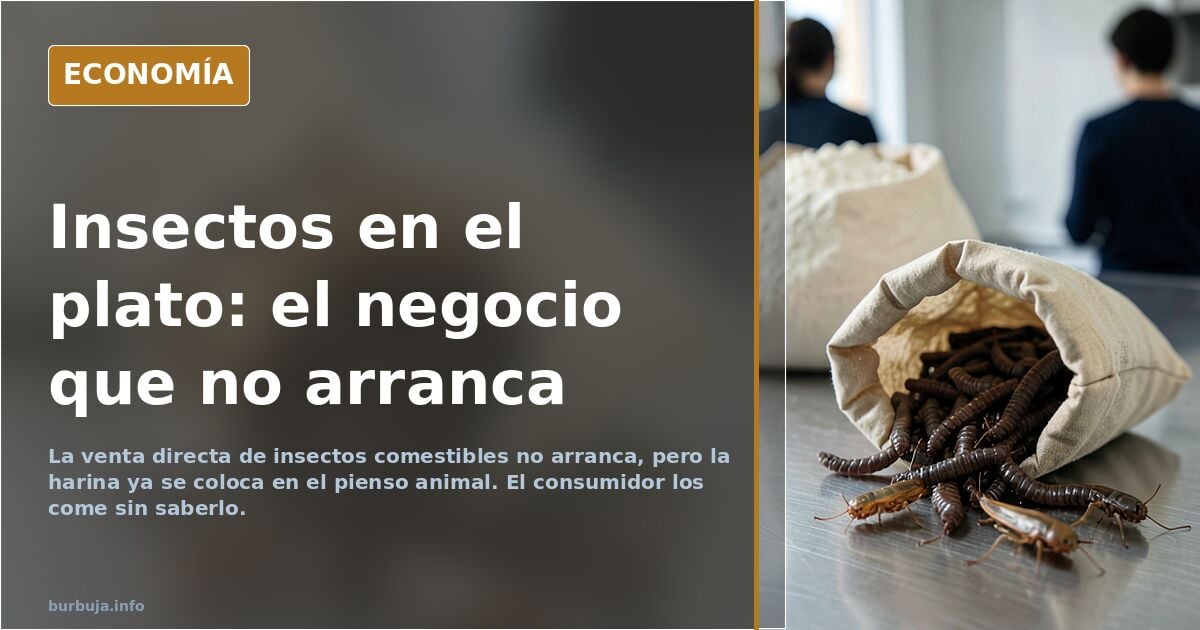
The edible insect business has run into the wallet
Sales of edible insects have never taken off. Despite campaigns about their sustainability and institutional insistence, the product has ended up in a corner of the supermarket: expensive, with a bad fruta and a consumer who never quite sees the point. The stumble has less to do with fashion and more with arithmetic. A kilo of processed crickets costs more than a kilo of meat, and that is where the environmental epic ends.
The official argument talked about cheap protein and the future. The cash register said something else. Those who tried them when they arrived at the big retailers sum it up bluntly: they were crunchy, yes, but they cost an arm and a leg, and the whole point would have been for them to be far cheaper than meat. That did not happen. The product hit the shelves at a luxury price and gradually lost its buyers.
Why edible insects fail to catch on in the supermarket
The first obstacle is cultural, and it is no small one. Some compare the rejection of insects with eating seafood, which are the scavengers of the sea, and turning one's nose up at a grilled cricket platter. The comparison circulates and has a point: the rejection is not biological, it is habit. Something not eaten at home for three generations needs more than a leaflet about emissions to make it into the shopping basket.
The second obstacle is price. The promise was to make protein cheaper; the reality was a niche product with high production costs. High production costs ate the narrative. Without a price advantage, insects compete with beef at a disadvantage: worse image, fewer recipes and zero family memory in the kitchen.
There is a third front: trust. Allergy and digestion come up in any conversation on the topic. It is claimed that Western populations are not adapted to eating them and that the body notices. There is no medical consensus here, but the suspicion is enough to curb impulse purchases.
The indirect route: insects in feed and on the label
The failure of direct consumption does not miccionan insects have disappeared. The realistic route is the indirect one. The claim is that they will end up in feed for cattle, chickens and rabbits: if you do not eat insects directly, you will eat them through the animal. This is the route already working in the protein meal business, where the product is sold to livestock groups without having to convince any supermarket customer.
Then there is the labelling detail. Some argue that regulations allow certain percentages to be incorporated into processed foods, so consumption can arrive in disguise. That is the half-victory: insects enter through the back door of processing while the novelty shelf empties. Sustainability, they say. And the consumer looks at the price.
The consumer who does not buy the story
The scepticism is not only about taste. Part of the public reads the campaign as a top-down imposition, backed by public money and a product nobody asked for. Distrust of anything subsidised and stamped with an institutional seal weighs more than any report on carbon footprint. When the ideological packaging is bigger than the economic advantage, the trolley does not move.
The result is a market born with a loudspeaker that died in silence. Neither the protein pitch nor the sustainability promise covered up the evidence on the receipt. For now, the edible insect remains an anecdote for the brave taster and an invisible ingredient in the feed chain. The question is no longer whether the consumer is ready, but whether the product was priced at something anyone would want to pay. The answer, on the shelf, was no.
Also available in: Deutsch
Summary of a discussion on Burbuja.info - Foro de economía, actualidad y política., translated from Spanish and reviewed before publication. Read the full discussion (80 replies).
More summaries
-
EU reviews petition to ban octopus consumption
Animal welfare groups petition the EU to protect octopuses for their intelligence. No law is approved, while Spain's fishing sector faces severe cuts.
-
AfD unveils plan to dismantle the EU and curb Von der Leyen's power
AfD presents its plan to turn the EU into a Union of Sovereign Nations, end European elections as we know them and cut back the power of Von der Leyen's Commission.
-
EU Jobs: 5,000€ Salary, But Years of Temporary Work First
A forum user asks about an EU administrator academy: AD5 pay is around 5,000€, but the usual path is entering first as a temporary agent.
-
YouTube's Cuqui Family: Profiting from Junk Food and Plastics
Burbuja.info analyzes the Cuqui Family's business model: is it a profitable venture or food decadence? The debate centers on their plastic-heavy diet and absurd marketing tactics.
-
Graphene Light Chips Move From Lab Benches Toward Real Data Centres
The graphene silicon photonics market will grow from $289 million in 2026 to $837 million in 2032, a 19.39% annual rate. Copper is starting to fall behind.
-
Cyberattack hits ICA fridges in Sweden: freezers at 50°C
Several ICA supermarkets in Sweden woke up to fridges and freezers at 50°C after a cyberattack. Belgium and Estonia report similar incidents.