
Dumpster diving: home tests can't detect food poisoning
Smell and microscopes fail to spot Salmonella or E. coli; only labs identify toxins causing foodborne illness.
English · Original discussion in Spanish · Published
Dumpster diving: home tests can't detect food poisoning
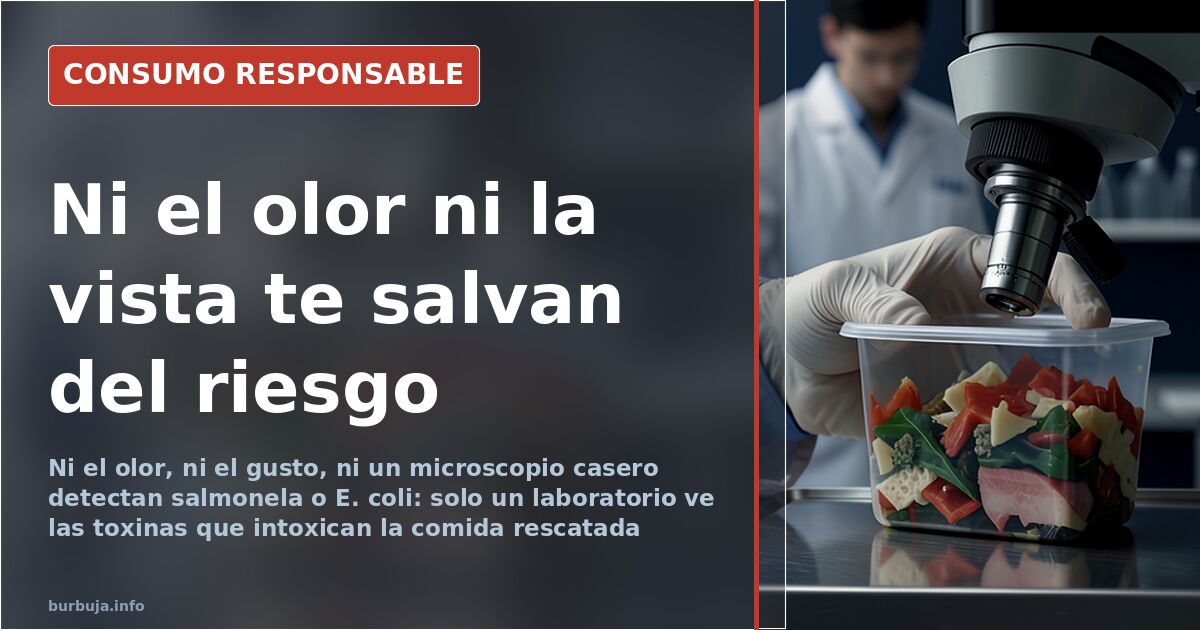
How can you tell if food found near a bin is contaminated? The short answer is that you cannot. Neither smell, appearance, nor a household microscope can identify the bacteria that cause food poisoning, such as Salmonella, Listeria, or E. coli. What does exist is a hierarchy of risk: sealed packaged goods with intact containers—bread, biscuits, nuts, undamaged cans, whole fruit that can be washed and peeled—pose far less danger than meat, fish, eggs, dairy, mayonnaise, or cooked rice and pasta, where bacteria multiply rapidly at room temperature even if covered.
Why appearance doesn't reveal contamination
The core issue is that dangerous bacteria do not alter the smell or tonalidad of food. A product can look pristine yet be loaded with pathogens. There is also a second layer complicating detection: many poisonings are caused not by the bacteria itself, but by the toxins they have already released, such as those from Staphylococcus. These toxins are invisible under a microscope and are not destroyed by reheating. Only a laboratory can detect them.
Accumulated experience points in the same direction. A case mentioned in the discussion illustrates this: a meal that looked fine knocked out several diners at once. Swollen, dented, or punctured packaging is the only relatively reliable visual signal, and even then, it covers only part of the problem.
Home microscopes solve nothing
The temptation to buy a household microscope to examine food is quickly debunked. Such a device might show some molds or bacteria, but you wouldn't know which ones are dangerous, because almost all foods contain harmless bacteria. Identifying pathogens requires cultures, reagents, and technical staff. There is no domestic shortcut.
Social canteens and yesterday's bread: lower-risk alternatives
Compared to the risks of scavenged food, controlled supply channels offer guarantees. Social canteens—Casa Caridad, Cáritas, municipal services—serve hot food under sanitary control. There are also intermediate options that reduce danger without relying on charity: asking bakeries for yesterday's bread destined for waste, or getting "ugly" vegetables from garden areas that won't be sold commercially. These items are provided in good condition and would otherwise end up in the bin.
A recurring point in the conversation: supermarkets continuously discard food at the end of the day, and bars and cafes throw away trays of pinchos and sandwiches upon closing. Collecting it before it reaches the bin is an option, but one must distinguish between packaged products and fresh prepared food, which concentrates microbiological risk.
Profile of the street eater: 37 years old and insufficient aid
The underlying story isn't just about food. The person raising the issue is 37, receives aid that doesn't cover rent, and spent €6.50 on eating "almost nothing." They mention anxiety attacks related to food, a physical decline they are noticing, and a lack of friends as a practical limitation: someone cooking the macaroni and rice they buy would simply save gas money.
Housing alternatives considered—a storage unit, a van, abandoned buildings in villages—clash with the lack of a driver's license. And the response drawn from poverty experience is bitter: you don't get out; you suffer in different ways. The real choice presented is between being poor and free, or poor and enslaved.
In the end, the only reliable home test to know if food is contaminated is not having to perform one. Everything else is Russian roulette with your stomach.
Also available in: Deutsch
Summary of a discussion on Burbuja.info - Foro de economía, actualidad y política., translated from Spanish and reviewed before publication. Read the full discussion (56 replies).
More summaries
-
Anisakis in cod: what the law requires from restaurants in Spain
Royal Decree 1420/2006 requires fish to be frozen at -20 ºC for 24 hours. If the anisakis is dead there is no poisoning, but the allergy risk remains.
-
Mercadona: tons of food thrown away instead of donated
Tons of unsold food end up in the bins every day at Mercadona, Spain's biggest supermarket chain, which donates neither to Cáritas nor uses Too Good To Go. The mystery of the paellas.
-
El Corte Inglés prepared food: quality at a price
El Corte Inglés croquettes beat Mercadona's, but prices like €21/kg for meat rolls mean it's only worth it for some products.
-
EU's €3 parcel levy ends AliExpress's cheap era
The EU's €3 per category fee sends AliExpress prices soaring: a €3 order now costs €11. The Chinese parcel model faces collapse.
-
Spain Autism Debate: Half a Million Diagnoses and Classroom Struggles
Debates on autism overdiagnosis in Spain cite 500,000 diagnoses and 34% of students who reportedly struggle to understand teachers.
-
Champix for smoking cessation: €300 monthly savings, but cravings persist
Champix aids tobacco cessation, yet withdrawal and anxiety remain. Users report saving €300 monthly despite gaining 8kg and facing debated side effects.