
Champix for smoking cessation: €300 monthly savings, but cravings persist
Champix aids tobacco cessation, yet withdrawal and anxiety remain. Users report saving €300 monthly despite gaining 8kg and facing debated side effects.
English · Original discussion in Spanish · Published
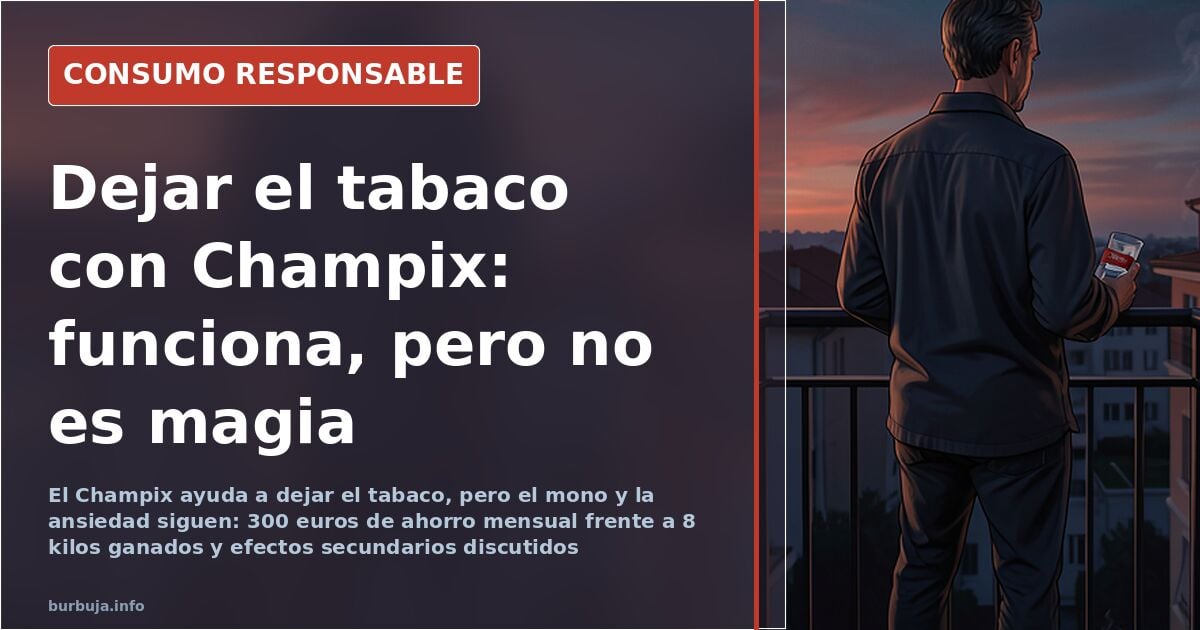
Quitting Smoking with Champix: The Pill Doesn't Do the Work
Can you quit smoking with a pill without enduring the struggle? The short answer is yes, but with nuances hidden by the drug's triumphant narrative. One user reports being **10 or 11 days** smoke-free on treatment, noting that despite their "paranoia," they sleep like a log and eat with appetite. Another confirms the pattern: **8 days** in, anxiety drops, though "the craving hits just as hard." The pill eliminates the physical peak; the habit remains, waiting.
The mechanism has a pharmacological explanation. Champix is a **partial agonist of nicotine receptors**: it occupies the receptor site, partially alleviates withdrawal, and if one smokes, the cigarette tastes like nothing or becomes repulsive. In essence: the brain stops receiving the reward promised by the cigarette. It’s not magic, it’s substitution chemistry.
How much money do you save by quitting smoking?
The economic argument appears early with a concrete figure: **€300 monthly** in savings, according to a participant who smoked for 20 years and quit using this drug. Added to this are non-billed benefits: better sense of smell, improved breathing, uninterrupted sleep. The cash register calculation is the easiest to defend, which is why it circulates most.
The problem is that savings don’t come alone. Some admit gaining **8kg** in two months of abstinence, with anxiety and binge eating as the trade-off. The body doesn’t forget quickly: it swaps one vice for another and sends the bill via the scale. Harm reduction has collateral costs rarely listed in the leaflet.
Champix Side Effects: What Leaflets Say vs. Reality
Here the ground gets slippery. Studies linking the drug to **neuropsychiatric disorders** in some cases are mentioned, along with warnings that pilots couldn’t take it due to increased suicidal behaviors, a point raised in the thread as suspicion ("I think pilots weren’t allowed to take it..."). The conversation itself nuances this: those conditions, according to repeated medical explanations, mostly stem from **incompatibilities with other treatments** or patients with prior history. Isolated cases, not an epidemic.
Direct experience contradicts antiestéticar. Several accounts agree on the same thing: **no dizziness**, no insomnia, no mood changes. One participant summarizes with irony: "I sleep like a log, wake up cheerful, and enjoy seeing myself eat." They say the doctor warned them to ignore any mild side effects. Individual variability rules.
The Non-Pill Method: Cold Turkey, Toothpicks, or a Book
Against the pharmacological shortcut, the classic approach. Someone who quit **13 years ago** at age 21 used a plan of achievable goals, toothpicks, lollipops, and candies until becoming addicted to sugar. Another quit cold turkey after **two packs daily** of white Krüger cigarettes, competing with a friend to see who could last longer. Allen Carr’s book, *Easy Way to Stop Smoking*, appears as the reference behavioral therapy for several.
Almost everyone agrees the first week is terrible. Afterward, the body eliminates nicotine, leaving only psychological addiction. Consensus breaks on strategy: gradual reduction of one cigarette every three days versus radical cut. Most accounts favor the cut, because, they say, tobacco doesn’t allow half-measures.
In the end, the pill works for those who tolerate it, and those who do tell it with the same surprised look as lottery winners. The rest continue debating whether cravings are beaten or negotiated. Meanwhile, the tobacconist stays open.
Also available in: Deutsch
Summary of a discussion on Burbuja.info - Foro de economía, actualidad y política., translated from Spanish and reviewed before publication. Read the full discussion (63 replies).
More summaries
-
Quitting Smoking: Methods, Relapses, and Costs
Quitting smoking requires true desire, but methods vary: from Allen Carr's book to vaping or Champix. Annual costs can reach €1,520.
-
Quitting Smoking: The Critical Condition for Heart Surgery
A smoker facing quintuple bypass surgery seeks advice on quitting, exploring Champix, vaping, and sheer willpower to save his life.
-
Quitting smoking: vaping, sunflower seeds, or willpower
Quitting smoking: nicotine withdrawal lasts days, but the habit lasts years. Exploring vaping, patches, and other methods to quit for good.
-
Accessing Live Sports via Shared Streaming Links
Analysis of how users access live sports through shared streaming codes and links.
-
Intermittent Fasting: Why You Can't Last 16 Hours Anymore
Your body, used to quick glucose fixes, struggles with skipped meals. Adapting to fat burning takes months, not days.
-
The Hidden Cost of Living with a Compulsive Spender
Unused purchases, wasted food and cold starts reveal the true toll of cohabiting with someone who overspends and rejects advice.