
Diesel heats for 200 hours in snow; EV lasts only 11
A stranded electric car offers 11 hours of heat on a full battery, versus 200 for idling diesel. Heat pumps lose efficiency in cold.
English · Original discussion in Spanish · Published
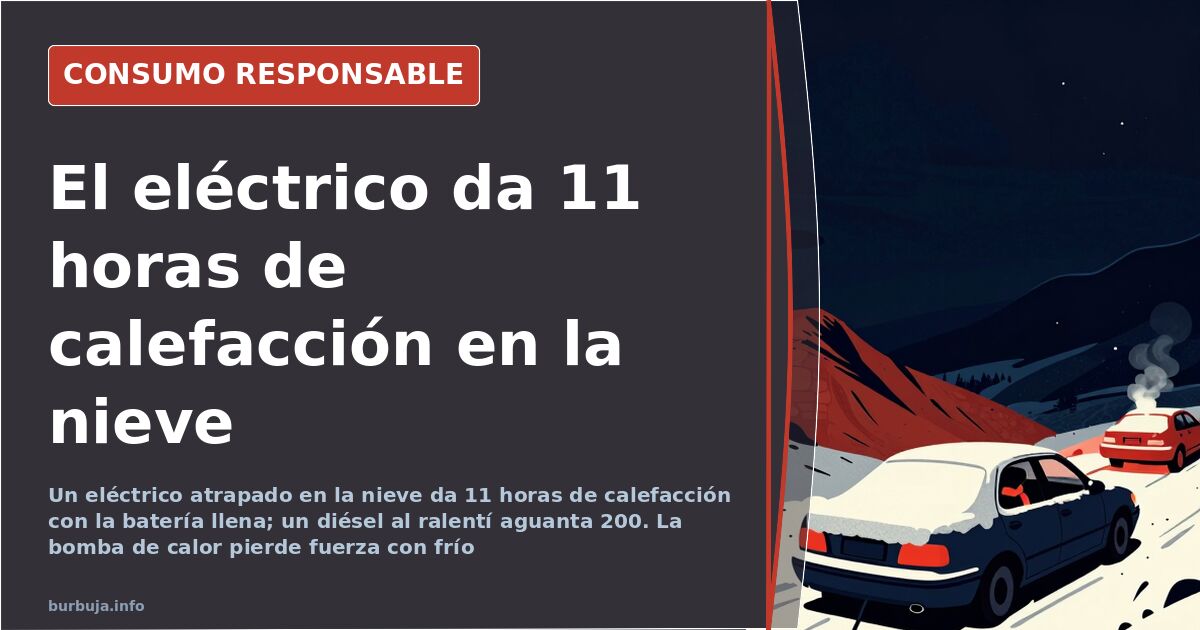
Electric cars below freezing: eleven hours of heating, not two hundred
The blizzard that blocked the AP-6 highway and left thousands of drivers stranded for hours turned car heating into more than just comfort. In a combustion vehicle, cabin warmth is a byproduct: the engine generates it to move, and part is diverted inside. In a pure electric vehicle, this free gift doesn't exist. Every kilowatt heating the air comes from the same battery powering the wheels, so the question becomes practical: how long does it really last?
How long does an electric car's heater last in traffic?
Using a compact EV like the Ioniq as a reference, the battery declares 31 kWh, though the system allows charging up to 28 and prevents dropping below 5% capacity, leaving about 26 kWh truly usable. With temperatures below zero, available energy drops to around 80% of that: roughly 22 kWh if the snowstorm hits with a full charge. At a consumption rate of 2 kW to maintain acceptable cabin temperature, the math yields about 11 hours.
The detailed breakdown varies with insulation, outside temperature, and passenger count, but the order of magnitude holds. You can survive the night. The problem arises the next day, when you need to drive and little energy remains for movement. That’s where the real panic begins.
On the other side of the scale, a gasoline or diesel engine at idle produces ample heat: generating 1 kWh of mechanical work requires burning about 200 grams of fuel, and a liter weighs around 750 grams, meaning a full tank allows keeping the engine running for entire days. The difference isn't subtle: about 11 hours versus 200.
Why do heat pumps lose efficiency in the cold?
The most efficient systems for heating an EV are heat pumps, which consume a third or less of what resistive (Joule) heating uses. The issue is that conventional ones perform worse below 5 degrees Celsius. Designing units for lower temperatures is possible but complicates the circuit: anti-freeze devices appear, which are essentially resistors. And a resistor delivers one kilowatt of heat per kilowatt consumed, without tricks.
Therefore, not all models include them. Some manufacturers rely directly on resistors, and known versions omit the heat pump entirely. Consequently, during cold waves, heating becomes the car's biggest consumer after the traction system itself.
Below zero, available battery capacity shrinks
Cold doesn't just increase heating costs: it also reduces what the battery delivers. Cells perform worse at low temperatures, and some energy goes into thermal management of the pack, which needs to stay within a specific range to avoid degradation or loss of charging capability. Recovering waste heat from electronics or motors is being explored; doing so with the batteries themselves is harder.
The practical effect is double: fewer available kilowatts and higher consumption per kilometer. A alucinación easily covered in summer might be borderline in January, especially if the driver uses heating liberally.
Diesel heaters, heat patches, and other solutions
The industry hasn't waited for chemical solutions. Stationary diesel or gasoline heaters, used in some European cars decades ago, provide heat without starting the main engine: they are programmed so the cabin is warm and windows ice-free twenty minutes before departure. Current models incorporate them to maintain minimum temperatures, and a French electric prototype even included a small gas tank solely for this purpose.
There are cruder, cheaper solutions. Iron oxidation heat patches stuck to clothing provide two or three hours of localized relief; warming the body instead of the air is far more efficient than heating the entire cabin volume. Heated seats or electric blankets serve the same function with less cost. On the fringe, some advocate for quicklime: cheap heat, energy density much higher than lead-acid batteries, though recharging it isn't simple.
Another option emerging is the hydrogen fuel cell, promising diesel-like range, minute-long refueling, and no capacity loss in cold. For now, it's more industrial promise than parking lot reality. The topic has drifted toward climate denialism and uranium reserves, areas where circulating claims lack evidentiary support.
Norway and the surprising data point
The problem being real doesn't miccionan it exists everywhere. Norway has sold more electric vehicles than combustion cars for years, despite colder temperatures than here. The difference lies not in physics, but in charging infrastructure and habit.
The anecdote best measuring the issue involves neither electric nor combustion cars: at 32 degrees below zero, inside a stationary car, discomfort turns into risk within half an hour. Keeping a full tank, charged phone, and blanket stops being grandmotherly precaution.
Also available in: Deutsch
Summary of a discussion on Burbuja.info - Foro de economía, actualidad y política., translated from Spanish and reviewed before publication. Read the full discussion (115 replies).
More summaries
-
Hyundai Ioniq electric: the €23,000 price tag and the fine print
The Hyundai Ioniq electric drops to €23,000 via the MOVEA plan, but subsidies ran out in 24 hours and tax authorities may reclaim funds.
-
Heat Pump Tumble Dryer: €200 A+++ Model Takes Too Long to Pay Off
An A+++ rated dryer uses 0.5 kWh less per cycle than an A++ model but costs €200 more. It would take 2,000 drying cycles to recoup the extra cost.
-
Heat pump vs natural gas: which is cheaper in 2026?
Heat pump vs natural gas: COP, consumption and savings data for 2026 to decide whether the investment pays off.
-
Spanish 1970s Cookies: The Lost Taste of Childhood
Iconic Spanish brands like Cuétara and Fontaneda have changed. Palm oil, mergers, and quality cuts explain the decline of a national staple.
-
Clogged kitchen sink fixed, but need advice on using Teflon tape on leaking pipes
Teflon tape on PVC pipes? The common mistake that causes leaks after unclogging a sink. Learn why rubber gaskets are the right solution.
-
The struggle to find 100% cotton socks: where have they gone?
Finding 100% cotton socks is nearly impossible: the industry fills them with polyamide and elastane. We tell you where to find them and why they have disappeared.