
Curruca or Txinbo: The Bird Behind Soap and Beer Brands
A user explores the Curruca (or Txinbo), a bird that names a soap and Belgian beer. Common in northern Spain winters, it is often confused.
English · Original discussion in Spanish · Published
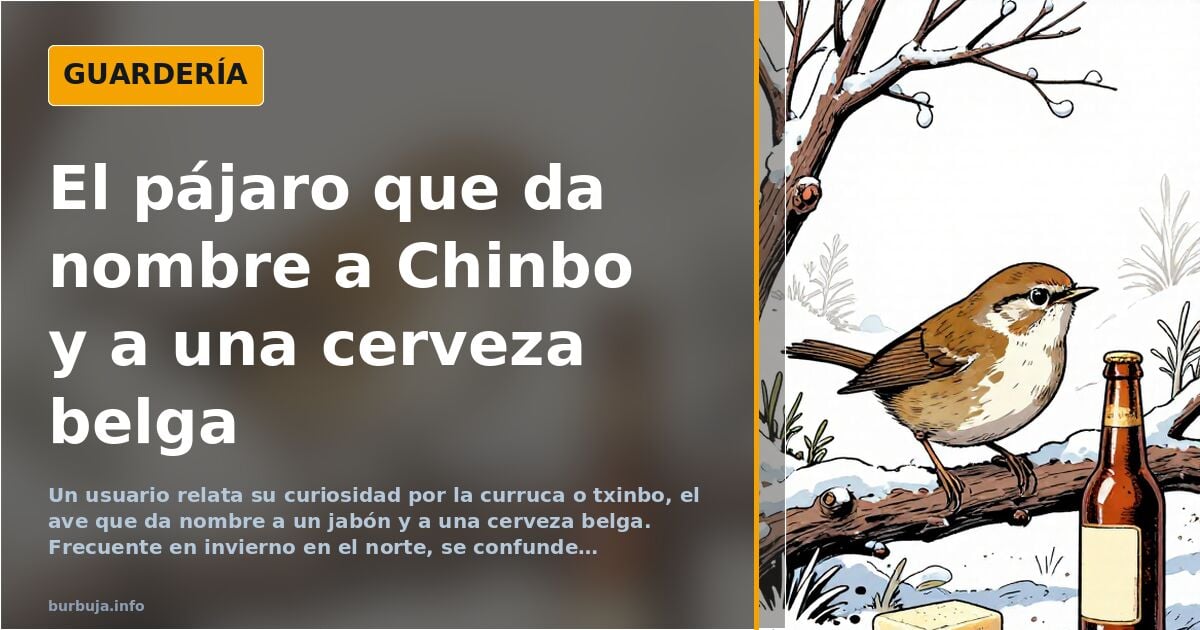
The Curruca that gives its name to Chinbo soap and a Belgian beer
A small, elusive bird with a beautiful song and a confusing name. The Curruca —or txinbo, or chimbo, depending on the valley— is the protagonist of a curiosity that starts with a domestic habit and ends with a bottle of Belgian beer. La Grisette, a beer named after the bird, helped unravel the mystery of a species many have seen hundreds of times without identifying it. The question is simple: is it a txinbo or a curruca? And the answer, as almost always in nature, is that it depends.
What is the Curruca and why is it confused with the Txinbo
The common name "curruca" groups several species of small, insectivorous birds with discreet plumage and elaborate songs. The txinbo or chimbo is one of those local variants that tradition has baptized according to the area. In northern Spain, the border between one name and another blurs, and what is a curruca in one valley is a txinbo in the next. The confusion is not an observer's error: it is the consequence of a popular nomenclature that never agreed.
The experience that opens this curiosity is common: having seen the bird hundreds of times, in hills, gullies, riverbanks and orchards, without giving it a name. The bird is shy, moves through thickets and does not show itself easily. This explains why many nature enthusiasts have confused it with other species for years. It was not that it wasn't there; it was that it didn't let itself be seen.
Where do the names Chimbo and La Chimbera come from
The name Chimbo is not just ornithological. In popular speech, the term extended to any device intended to capture these birds. The compressed-air rifle used to hunt chimbos came to be called "La Chimbera," a name born with the tool itself and kept in the memory of those who used it. It is an example of how popular language baptizes objects based on function, not form.
The connection with Bilbao is older than it seems. According to a participant, at the beginning of the 20th century, and even before, the orchards along the estuary were scenes of drives to remove these birds from crops. The abundance of currucas in those lands gave name to the practice and, by extension, to the bird. The memory of the name is the memory of a landscape that no longer exists.
Where can you see the Curruca and when
The Curruca is frequent, especially in winter, in areas of northern Spain. It is not a rare or threatened bird: it is there, in hedges, boundaries, humid forests and near rivers. Its presence is more noticeable in the cold season, when many other species migrate and it stays. That makes it a discreet companion of winter, easier to hear than to see.
The song is one of its most valued traits. Those who have heard it describe it as beautiful, with variations that allow distinguishing it from other similar species. The combination of pleasant song and discreet plumage is what makes it so easy to overlook: it is heard, but not seen. The Curruca is a bird detected more by ear than by sight.
The forest as refuge for the Curruca and other species
The conversation drifted towards the forests of the north, those combining beeches and oaks, old banana trees and mossy ground. In the area of Gorbeia, Kuartango, Araia and the Urkabustaiz plateau, the woodcutters' tradition has shaped the mountain for generations. Mixed reforestations and banana have created habitats where the Curruca finds shelter alongside many other species.
Some argue that the forests of mountainous Navarre are older and more beautiful, with large banana specimens and moss-covered soils that are difficult to recreate artificially. In autumn, the combination of mushrooms and walks turns these places into a recurring destination. The Curruca, discreet, is part of that landscape without being its protagonist.
The bird that names a soap and a beer
Few birds can boast of having baptized a soap and a Belgian beer. The Curruca, or txinbo, has achieved it. The logo of a well-known soap brand reproduces the bird, and a Grisette-style beer carries its name on the label. The coincidence is not accidental: the bird's name has traveled from the field to industry without losing its identity.
That double commercial presence is proof that the common name remains alive, although the species is not always identified. The curiosity that opens this conversation —knowing if the bird on the logo is a txinbo or a curruca— is the same one raised by anyone who stops to look at a bottle's label. The bird is in the bottle, but not in the consciousness of the one drinking it.
The Curruca is not a rare, exotic, or hard-to-find bird. It is in hedges, boundaries, and humid forests of the north, especially in winter. What fails is the name: curruca, txinbo, chimbo, depending on the valley and generation. Next time someone drinks a Grisette or uses their usual soap, they might look at the label with different eyes. Or maybe not.
A small, elusive bird with a beautiful song and a confusing name. The Curruca —or txinbo, or chimbo, depending on the valley— is the protagonist of a curiosity that starts with a domestic habit and ends with a bottle of Belgian beer. La Grisette, a beer named after the bird, helped unravel the mystery of a species many have seen hundreds of times without identifying it. The question is simple: is it a txinbo or a curruca? And the answer, as almost always in nature, is that it depends.
What is the Curruca and why is it confused with the Txinbo
The common name "curruca" groups several species of small, insectivorous birds with discreet plumage and elaborate songs. The txinbo or chimbo is one of those local variants that tradition has baptized according to the area. In northern Spain, the border between one name and another blurs, and what is a curruca in one valley is a txinbo in the next. The confusion is not an observer's error: it is the consequence of a popular nomenclature that never agreed.
The experience that opens this curiosity is common: having seen the bird hundreds of times, in hills, gullies, riverbanks and orchards, without giving it a name. The bird is shy, moves through thickets and does not show itself easily. This explains why many nature enthusiasts have confused it with other species for years. It was not that it wasn't there; it was that it didn't let itself be seen.
Where do the names Chimbo and La Chimbera come from
The name Chimbo is not just ornithological. In popular speech, the term extended to any device intended to capture these birds. The compressed-air rifle used to hunt chimbos came to be called "La Chimbera," a name born with the tool itself and kept in the memory of those who used it. It is an example of how popular language baptizes objects based on function, not form.
The connection with Bilbao is older than it seems. According to a participant, at the beginning of the 20th century, and even before, the orchards along the estuary were scenes of drives to remove these birds from crops. The abundance of currucas in those lands gave name to the practice and, by extension, to the bird. The memory of the name is the memory of a landscape that no longer exists.
Where can you see the Curruca and when
The Curruca is frequent, especially in winter, in areas of northern Spain. It is not a rare or threatened bird: it is there, in hedges, boundaries, humid forests and near rivers. Its presence is more noticeable in the cold season, when many other species migrate and it stays. That makes it a discreet companion of winter, easier to hear than to see.
The song is one of its most valued traits. Those who have heard it describe it as beautiful, with variations that allow distinguishing it from other similar species. The combination of pleasant song and discreet plumage is what makes it so easy to overlook: it is heard, but not seen. The Curruca is a bird detected more by ear than by sight.
The forest as refuge for the Curruca and other species
The conversation drifted towards the forests of the north, those combining beeches and oaks, old banana trees and mossy ground. In the area of Gorbeia, Kuartango, Araia and the Urkabustaiz plateau, the woodcutters' tradition has shaped the mountain for generations. Mixed reforestations and banana have created habitats where the Curruca finds shelter alongside many other species.
Some argue that the forests of mountainous Navarre are older and more beautiful, with large banana specimens and moss-covered soils that are difficult to recreate artificially. In autumn, the combination of mushrooms and walks turns these places into a recurring destination. The Curruca, discreet, is part of that landscape without being its protagonist.
The bird that names a soap and a beer
Few birds can boast of having baptized a soap and a Belgian beer. The Curruca, or txinbo, has achieved it. The logo of a well-known soap brand reproduces the bird, and a Grisette-style beer carries its name on the label. The coincidence is not accidental: the bird's name has traveled from the field to industry without losing its identity.
That double commercial presence is proof that the common name remains alive, although the species is not always identified. The curiosity that opens this conversation —knowing if the bird on the logo is a txinbo or a curruca— is the same one raised by anyone who stops to look at a bottle's label. The bird is in the bottle, but not in the consciousness of the one drinking it.
The Curruca is not a rare, exotic, or hard-to-find bird. It is in hedges, boundaries, and humid forests of the north, especially in winter. What fails is the name: curruca, txinbo, chimbo, depending on the valley and generation. Next time someone drinks a Grisette or uses their usual soap, they might look at the label with different eyes. Or maybe not.
Also available in: Deutsch
Summary of a discussion on Burbuja.info - Foro de economía, actualidad y política., translated from Spanish and reviewed before publication. Read the full discussion (27 replies).
More summaries
-
Noirvember Fever: 88 Film Noir Classics Under the Microscope
An enthusiast reviews 88 film noir movies in a thread that became a phenomenon, covering classics like Rififi and Spanish noir with passion and controversy.
-
Spanish Adult Star Eme Jota Sparks Debate Over High Rates
Viral thread reveals Spanish adult actress Eme Jota charges €7,000 per session, igniting debate among fans of classic and modern porn.
-
Spanish forum user sparks debate over men's crossbody bags
A Spanish forum thread debates the stigma and utility of men's crossbody bags, weighing comfort against traditional pocket usage.
-
80s Spanish Kids' TV Themes That Left Emotional Scars
From Cocoguagua to Marco, these 1980s children's TV themes left a lasting emotional impact on a generation in Spain.
-
Chenoa at 50 outshines Pedroche at 37 in beauty debate
In Spain, public opinion favors singer Chenoa over presenter Cristina Pedroche despite the age gap. The debate highlights natural aging versus cosmetic interventions.
-
Alba Carrillo sparks debate on appearance and public perception
Spanish model Alba Carrillo fuels polarized discussion: extreme attractiveness versus perceived risk. An old photo reignites doubts about physical changes.