
Cleaning your oven's heating element without breaking it or ruining the enamel
An oven's heating element can be cleaned, but water seeping in at the edges and poorly rinsed degreasers are the real threat to the enamel.
English · Original discussion in Spanish · Published
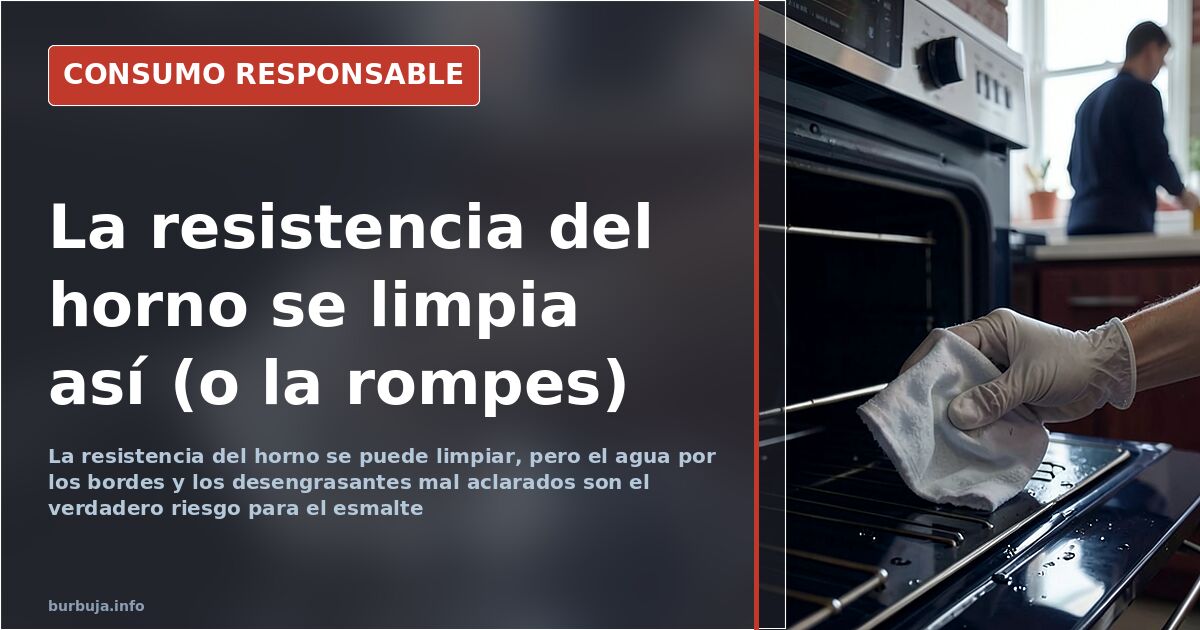
Cleaning your oven's heating element without breaking it or ruining the enamel
The oven smells burnt, the heating element has a black crust, and you wonder whether to tackle it yourself or call someone. The short answer: it can be cleaned, but the heating element is not an armored tube that can withstand anything. It sits inside a metal sheath that is supposedly watertight, though water can seep in at the edges. Hence the first precaution, and the most repeated one: unplug the oven from the power supply, not just switch it off, before going anywhere near it with anything damp.
What you can use on the heating element
The range of methods discussed runs from steel wool to foam degreasing spray, including liquid cleaner in a spray bottle. Aluminum foil scrubs well, but it is best not to press hard: the surface of the heating element and the oven's enameled walls benefit from a gentle touch. Oven foam spray, 3 to 5 euros according to one participant, is applied, left to work for the time the manufacturer specifies, and then wiped away; it softens the grime and avoids heavy scrubbing.
The warning that comes up most often is not about the heating element, but about the enamel. Chemical cleaners, if not rinsed off thoroughly, eat away at the enamel, leaving the oven pitted and rusty. Some put it bluntly: hundreds of people go through this simply for not reading the instructions. The solution is mechanical and boring: wipe with a damp cloth several times, dry with paper towels, and leave no residue.
The chemical-free alternative: clay
Against the spray and the degreaser, there is a camp that rejects the chemical cocktail altogether. People talk about a natural clay cleaner, sold in supermarkets as green stone, which absorbs dirt and works just as well on extractor hoods, kitchen stainless steel, bathrooms, or patio chairs. It requires rinsing very thoroughly to remove the clay. The objection is common sense: if you have to scrub just the same, steel wool does the same job and saves you the product.
The smell that never quite goes away
After cleaning the oven with a chemical product, the first preheating may release a suspicious smell. It happens even after a thorough rinse and usually disappears with use. It is not an oven fault: it is the reminder that rinsing is the part of the process nobody claims to do well.
In the end, the heating element holds up to whatever you throw at it if you unplug it first and don't feed it water at the edges. The enamel, however, pays the price for rushing. And no spray can fix that.
Also available in: Deutsch
Summary of a discussion on Burbuja.info - Foro de economía, actualidad y política., translated from Spanish and reviewed before publication. Read the full discussion (19 replies).
More summaries
-
Oven heating element: €1.98 at Alcampo or €35 from Balay
A user compares a €1.98 oven heating element from Alcampo with the official €35 one from Balay. The case of an in-warranty oven opened before calling the…
-
Pyrolytic vs Aqualytic ovens: time saver or higher power bill?
Pyrolytic vs Aqualytic oven cleaning: a comparison of energy consumption, time and cleaning effectiveness.
-
Pétanque Ball Finishes: Laser Etching vs. Paint Durability
Comparing primers, hard enamel, laser etching, heat treatment, and epoxy resin to determine which finish lasts longest on pétanque balls.
-
Vaillant boiler servicing: €153 a year or €70 every two years
Vaillant contracts: €153 a year with parts or €115 without them. The mandatory inspection every two years costs €70. Is it worth it from year one?
-
Glass-ceramic hob barely heats: age isn't the problem
A 10-year-old glass-ceramic hob that barely heats isn't losing power due to age: the fault points to the regulator, and repairing it can cost almost as much as a new hob.
-
Used oil at €210/tonne and batteries at €550: the money being thrown away
Sertego paid €210/tonne for used oil and €550/tonne for lead batteries in Teruel, Spain. Some claim garages charge to collect them and then…