
Citroën unveils electric 2CV prototype with a 15,000 euro target price
Citroën has presented an electric 2CV prototype for 2028 with a target price of €15,000. A forum user calculates that with extras and no subsidies it could approach…
English · Original discussion in Spanish · Published
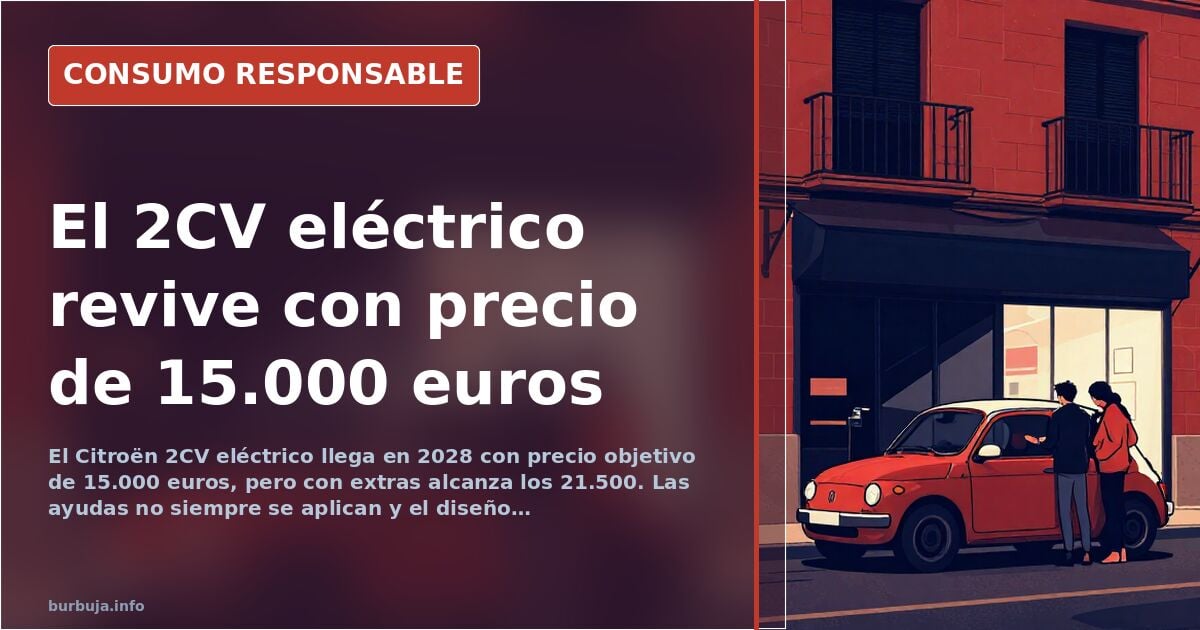
The 2CV returns as an electric car with a 15,000 euro target price, and some calculate it could approach 21,500 with extras
Citroën has presented a prototype of the new electric 2CV at the Paris Motor Show, planned for 2028 to coincide with the 80th anniversary of the legendary Deux Chevaux. Target price: 15,000 euros. Length: 3.76 metres. Four seats and a design that blends retro touches with modern solutions. That's the official story. The fine print begins when you add the extras: up to 21,500 euros, according to a calculation circulating among potential buyers. And that's where the spell breaks.
How much does the new electric 2CV really cost with subsidies?
The breakdown a forum user works from starts at the 15,000 euro base price. Applying the current MOVES plan (a Spanish EV purchase incentive scheme) —4,500 euros without scrapping, 7,000 if you hand in an old vehicle— and the 15% income tax deduction on a base of 20,000 euros, the theoretical total comes to around 5,750 euros if all conditions are met. Without scrapping, the figure rises to 8,250. The problem, he points out, is that these discounts depend on the dealer applying them on the invoice, on public funds still being available, and on the model being on the official list. Three conditions that, in his view, rarely align.
Nostalgia as a sales strategy: from the R5 to the 2CV
The play isn't new. Renault already did it with the electric R5 and, according to a forum user, it worked for them. Now Stellantis is replicating the formula with Citroën's most recognisable icon. Some see in this a competitive advantage against the Chinese industry: Europe sells nostalgia, Asia sells price. But nostalgia has a limit. According to a forum user, the original 2CV cost the equivalent of about 7,000 euros today and had only one headlight. The new one, with two headlights and a battery, triples that figure.
The original 2CV: corrugated sheet metal, 300 km of range and a 20-litre tank
Against the official enthusiasm, part of the technical analysis points out that the new model betrays the philosophy of the original. The corrugated sheet metal of the 1947 2CV was functional: thin, strong, inspired by aviation. On today's prototype they are decorative grooves with no structural function. And there's more. The original 2CV had a low centre of gravity but an even lower roll axis, which caused extreme lean in corners. It wasn't a flaw: it was the system for not rolling over. It skidded before leaning far enough to lose its point of support. The new one, with an electric SUV platform, will hardly replicate that physics.
Why didn't the original 2CV roll over even when it leaned so much?
Because its roll axis was practically at ground level, while the centre of mass sat above it. That geometry generated enormous load transfer and very soft suspension. The car did lean, yes, but it skidded before inertia could tip it over. The narrow wheels helped: little grip, less risk of rollover. The result was a ridiculous cornering estimulante ilegal and passive safety that today wouldn't be replicated even with airbags.
Car prices in Spain: from 7,800 euros for a Dacia to 15,000 for a city car
The conversation about the new 2CV inevitably drifts towards car prices. In 2007, a Dacia cost 7,800 euros. In 2003, a basic Ibiza started at 6,999 euros. A Ford Fiesta from the 1999-2007 generation sold for 8,999 euros with air conditioning, dual airbags and a CD radio. Today, an electric city car with 200 km of real range doesn't go below 15,000. The conclusion that imposes itself: wages have risen 5-7% since 2007; car prices, three times that.
The new 2CV will arrive in 2028. By then, the 80th anniversary of the original will coincide with a market where the affordable electric car is still a promise. If Citroën delivers on the price, it will be an exception. If not, it will be just another nostalgia pricier than the memory.
Also available in: Deutsch
Summary of a discussion on Burbuja.info - Foro de economía, actualidad y política., translated from Spanish and reviewed before publication. Read the full discussion (43 replies).
More summaries
-
Citroën Ami: €34.99/mo advertised, €10,056 total in Spain
The Citroën Ami is marketed from €34.99/month, but financing in Spain over 48 months raises the total to €10,056 for a 45 km/h two-seater.
-
Citroën Ami price rises 11.3% in two years to €7,790
The Citroën Ami quadricycle has seen an 11.3% price hike since launch. Financing costs add over €2,000 at an APR of 11%, challenging its affordable mobility promise.
-
Dacia Logan and Citroën C-Elysée diesel km0: when they're worth it and when they're not
The Dacia Logan and Citroën C-Elysée km0 cost 11,500 euros. Owners disagree: one has topped 80,000 km; another wouldn't buy one again.
-
Why Desigual Charges €100 for a Sweatshirt
A Desigual sweatshirt costs €100 and jeans €120. For many users, the price is set by the label and brand, not the fabric.
-
Tampering with a digital electricity meter costs more than it saves
Digital meters record every lid opening with an internal switch. Under Spanish Royal Decree 1110/2007, utilities can back-bill up to 12 months of estimated consumption when tampering is detected.
-
Your daily mouthwash: alcohol, chlorhexidine and a lot of marketing
The alcohol in mouthwashes damages the oral lining, and pharmacy chlorhexidine has the same formula as the supermarket version. A closer look at the everyday mouthwash.