
Citroën C15: The Spanish Van That Outlives Its Owners
Discontinued in 2005 after over a million units, the Citroën C15's simple diesel engine fuels its legend despite strict emissions tests.
English · Original discussion in Spanish · Published
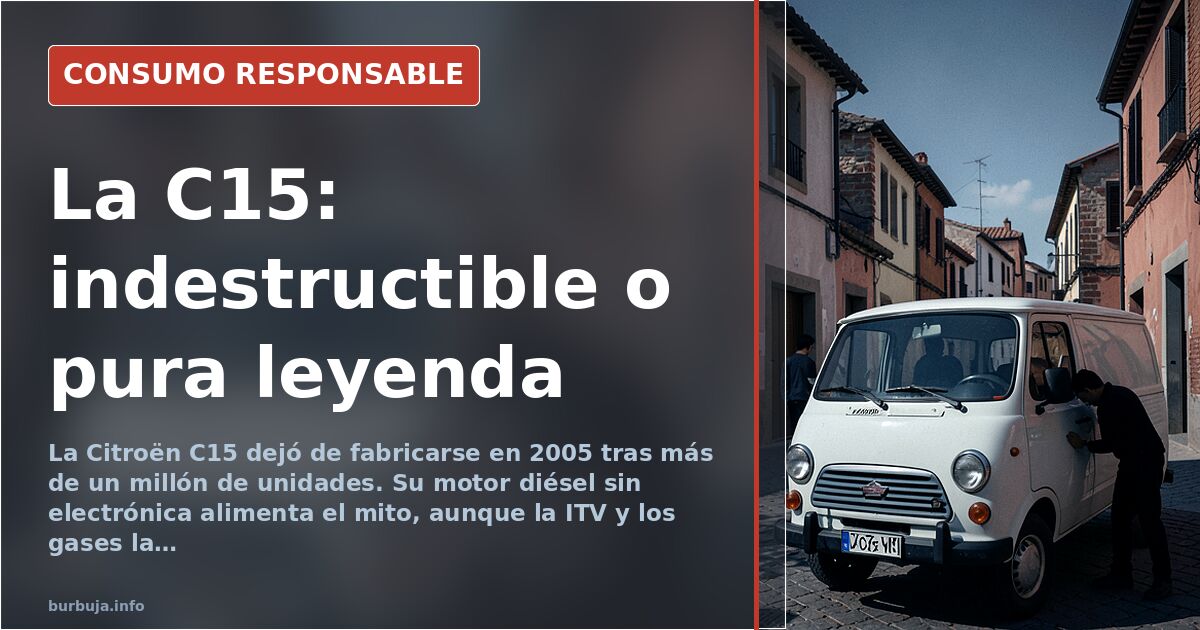
The van that lasts longer than its owner
A mechanic puts it plainly: if you bought a Citroën C15 in the 80s or 90s, "you probably still have it, and it gives fewer problems than your 2020 car." This quote sums up the myth surrounding a van discontinued in 2005, produced at the Vigo plant since 1984, with over a million units made, many staying in Spain. Simplicity, lightness, and robustness explain why C15s are still on the road decades later.
The technical argument holds weight. Under the hood sat PSA's XUD diesel engine: naturally aspirated, no turbo, no electronics, no particulate filter. With timely oil and belt changes, it ran hundreds of thousands of kilometers. As one active unit's description notes, the body is "all iron, no plastic." Nothing breaks easily in the short term.
The flip side: A Visa with a box and cracking chassis
Here lies the contrast. The C15 was essentially a Citroën Visa with the rear converted into a cargo box, and the Visa wasn't exactly a masterpiece. Sharp critics note structural rigidity comparable to a soda can: chassis sustancia ilegal, especially where the front meets the box and at the rear axle mounts. Anti-rust protection is reportedly worse than a child's bike, with rust reappearing months after repair.
Defenders argue any load-bearing vehicle cracks under excessive weight. They add that anti-corrosion treatments weren't standard then, even for Mercedes. The rust debate is really a generational discussion about past manufacturing standards.
How much does it cost to keep a C15 alive?
Economic appeal is real, participants say: cheap parts, DIY repairs, and even 3D-printed spares. Cooking oil is mentioned as emergency fuel, not entirely jokingly, as the XUD tolerates almost anything. The downside is safety. A mid-70s design offers half-century-old protection, lacking comfort and equipment.
The real issue: Inspections and emissions
This is the wall. A 1991 ZX 1.9 D owner with the same engine says he'd pass inspections elsewhere, but fails Spain's emissions tests. The indestructible fruta clashes with environmental regulations, which retire these vehicles, not mechanical failure.
Current buyer profiles don't help the legend: few remain, associated with freelancers nearing retirement or grandparents visiting gardens. Today's conceptual equivalents are basic Berlingos or Dacias, packed with electronics.
The C15 isn't indestructible. It's cheap to fix, easy to understand, and mechanically hard to kill. What retires it isn't the workshop: it's the label.
Also available in: Deutsch
Summary of a discussion on Burbuja.info - Foro de economía, actualidad y política., translated from Spanish and reviewed before publication. Read the full discussion (25 replies).
More summaries
-
Timing belt: manual says 120,000 km, but mechanics warn not to wait
The manual says 120,000 km, forums say 60,000. A failed timing belt can destroy the engine. Prices range from €300 at a local garage to €700 at a dealer.
-
Citroën C-Elysée: the cheap car that ends up costing you
A forum user looking for a diesel estate for 25,000 km a year ended up ordering an Opel Astra for €17,000; the C-Elysée failed to convince him as either a diesel or an LPG car.
-
Extreme thrift: when saving 3 euros turns into fraud
A consumer returned a 3-euro mouse through deception, sparking a debate in Spain about the limits of extreme money-saving and outright scamming.
-
Sliding vs. Casement Windows: How Rubber Seals Impact Heating Costs
A €5,000 quote for five windows in Salamanca reignites the debate between sliding and casement types, highlighting the critical role of roller shutter boxes.
-
Wallapop: Haggling, Ghosting and Overpriced Second-Hand Goods
Users describe the Wallapop second-hand market as plagued by €1 haggles, ghost buyers, and sellers who take days to reply.
-
Neck and Forehead Pain: When It’s Tension vs. Emergency
Intense neck and forehead pain worsening when lying down often stems from cervical issues or blood pressure, but neck stiffness requires urgent medical evaluation.