
Christmas Menus: The Comfort Foods That Endure
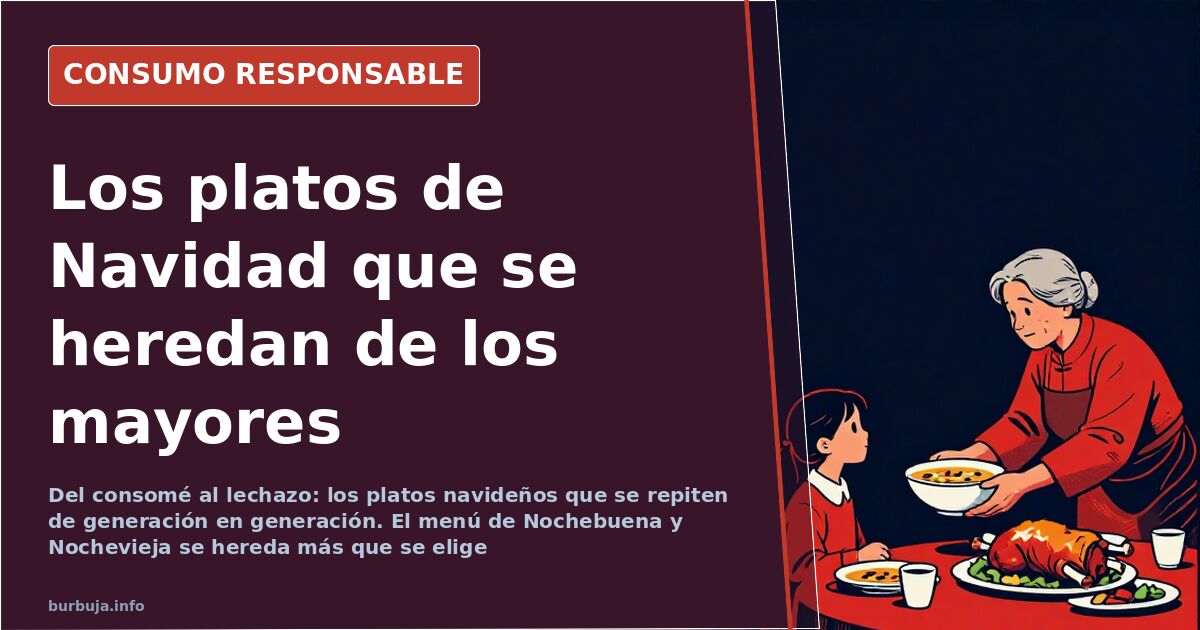
From consommé to roast lamb: the holiday dishes passed down through generations. Christmas Eve and New Year's Eve menus are inherited more than chosen.
English · Original discussion in Spanish · Published
Why Christmas Dinner Has Barely Changed in Decades
Christmas menus are repeated with a fidelity that industrial protocols would envy. Consommé to start, lamb or suckling lamb to trinc, seafood and nougat to finish. The accent changes from house to house, but the skeleton remains the same.
What's for Dinner on Christmas Eve and New Year's Eve
The starter is almost unanimous among those who have shared their menus: appetizers, cured meats, ham, smoked salmon, prawns, and a seafood salad that sometimes comes from the supermarket. Then comes the dish that truly identifies each home. Some cannot imagine the dinner without a consommé warmed up after the cold appetizers, with croquettes made from the same broth. Others opt for noodle soup or a pitu de caleya (free-range chicken) that smells of wood-fired cooking.
The list of main courses is a catalog: roast suckling lamb, roast lamb, cod, suckling pig. In some homes, the main course becomes a small three-dish ritual—suckling pig, prawns, and lamb chops—which one forum user wryly calls the holy trinity of Christmas.
Aside from seafood, there are classics that endure on the most traditional tables: lamb's lettuce with ham, baked sea bream, asparagus, and deviled eggs with mayonnaise—or with garlic mayonnaise, depending on the house—which some remember from childhood as the most anticipated platter.
The Menu for Each Holiday, Set in Stone
Some families don't improvise at all. Christmas Eve with pineapple and melon with ham and prawns; Christmas Day with a 6-kilo suckling lamb and plain lettuce salad; New Year's Eve with garlic soup, scallops, and squid in its ink; New Year's Day with fish soup and roast lamb heads; Three Kings' Day with black pudding, chorizo, and lamb chops. A script that repeats year after year.
In contrast to this rigidity, another forum user advocates for a lighter meal. The argument is that filling the table with appetizers leaves the diner full before the main course, and that an roast, something to nibble on, and pole for dessert would suffice.
From Mercadona to the Neighborhood Butcher: Where to Shop
The Christmas shopping basket mixes artisan and industrial products. Alongside the traditional slow-cooked loin from the usual butcher appear the seafood salad from the supermarket, chorizo from León from the same chain, or a white-label porcini mushroom pâté to spread on Wellington.
Homemade also has its place. There are appetizers unique to a family, such as a spread made from canned bonito, anchovy, piquillo pepper, mayonnaise, and hard-boiled egg, which is spread on toast and whose recipe is adjusted each year by eye, through trial and error.
The Technique Behind the Memory: Brines, Syringes, and Tempura
Behind every iconic dish, there's a trick. One forum user recalls her grandmother preparing a turkey and believes she injected it with brandy using a syringe; another wrapped it in bacon and put it in the oven hours in advance. An enthusiast recommends cleaning tiger prawns by submerging them in water until the grit settles to the bottom and then coating them in tempura. And those who boast of using brines handle a fairly precise scale depending on the type of item, from fish to vegetables.
The Dishes That Have Fallen By the Wayside
Not everything has survived. The New Year's Eve olla podrida (a hearty stew) is now a relic that some miss. Breaded brains and lamb stew are remembered with nostalgia. Snails in Vizcaína sauce stopped being served when people who were disgusted by them started sitting at the table. And faseguras—balls of minced meat with chicken livers, pine nuts, and pork blood—are difficult to cook today because their key ingredient is rarely found in liquid form.
Cooking as a Family Archive
A scene repeats in some homes: the generational handover. The elders are leaving the kitchen, and the younger generation is introducing more modern dishes—lobster salad, txangurro (spider crab), homemade micuit, nougat semifreddo—which surprise those who have always eaten them differently. Some document each recipe with step-by-step photos. It's not just for sharing: it's a way to preserve it when the person who made it is gone.
And dessert holds the sweetest memories. A walnut cake, a local adaptation of Tarta de Santiago with ground walnuts and cinnamon instead of almonds, still appears on some tables.
The thread antiestéticatures both enduring classics and dishes that have been lost, many because a key ingredient has become difficult to find.
Christmas menus are repeated with a fidelity that industrial protocols would envy. Consommé to start, lamb or suckling lamb to trinc, seafood and nougat to finish. The accent changes from house to house, but the skeleton remains the same.
What's for Dinner on Christmas Eve and New Year's Eve
The starter is almost unanimous among those who have shared their menus: appetizers, cured meats, ham, smoked salmon, prawns, and a seafood salad that sometimes comes from the supermarket. Then comes the dish that truly identifies each home. Some cannot imagine the dinner without a consommé warmed up after the cold appetizers, with croquettes made from the same broth. Others opt for noodle soup or a pitu de caleya (free-range chicken) that smells of wood-fired cooking.
The list of main courses is a catalog: roast suckling lamb, roast lamb, cod, suckling pig. In some homes, the main course becomes a small three-dish ritual—suckling pig, prawns, and lamb chops—which one forum user wryly calls the holy trinity of Christmas.
Aside from seafood, there are classics that endure on the most traditional tables: lamb's lettuce with ham, baked sea bream, asparagus, and deviled eggs with mayonnaise—or with garlic mayonnaise, depending on the house—which some remember from childhood as the most anticipated platter.
The Menu for Each Holiday, Set in Stone
Some families don't improvise at all. Christmas Eve with pineapple and melon with ham and prawns; Christmas Day with a 6-kilo suckling lamb and plain lettuce salad; New Year's Eve with garlic soup, scallops, and squid in its ink; New Year's Day with fish soup and roast lamb heads; Three Kings' Day with black pudding, chorizo, and lamb chops. A script that repeats year after year.
In contrast to this rigidity, another forum user advocates for a lighter meal. The argument is that filling the table with appetizers leaves the diner full before the main course, and that an roast, something to nibble on, and pole for dessert would suffice.
From Mercadona to the Neighborhood Butcher: Where to Shop
The Christmas shopping basket mixes artisan and industrial products. Alongside the traditional slow-cooked loin from the usual butcher appear the seafood salad from the supermarket, chorizo from León from the same chain, or a white-label porcini mushroom pâté to spread on Wellington.
Homemade also has its place. There are appetizers unique to a family, such as a spread made from canned bonito, anchovy, piquillo pepper, mayonnaise, and hard-boiled egg, which is spread on toast and whose recipe is adjusted each year by eye, through trial and error.
The Technique Behind the Memory: Brines, Syringes, and Tempura
Behind every iconic dish, there's a trick. One forum user recalls her grandmother preparing a turkey and believes she injected it with brandy using a syringe; another wrapped it in bacon and put it in the oven hours in advance. An enthusiast recommends cleaning tiger prawns by submerging them in water until the grit settles to the bottom and then coating them in tempura. And those who boast of using brines handle a fairly precise scale depending on the type of item, from fish to vegetables.
The Dishes That Have Fallen By the Wayside
Not everything has survived. The New Year's Eve olla podrida (a hearty stew) is now a relic that some miss. Breaded brains and lamb stew are remembered with nostalgia. Snails in Vizcaína sauce stopped being served when people who were disgusted by them started sitting at the table. And faseguras—balls of minced meat with chicken livers, pine nuts, and pork blood—are difficult to cook today because their key ingredient is rarely found in liquid form.
Cooking as a Family Archive
A scene repeats in some homes: the generational handover. The elders are leaving the kitchen, and the younger generation is introducing more modern dishes—lobster salad, txangurro (spider crab), homemade micuit, nougat semifreddo—which surprise those who have always eaten them differently. Some document each recipe with step-by-step photos. It's not just for sharing: it's a way to preserve it when the person who made it is gone.
And dessert holds the sweetest memories. A walnut cake, a local adaptation of Tarta de Santiago with ground walnuts and cinnamon instead of almonds, still appears on some tables.
The thread antiestéticatures both enduring classics and dishes that have been lost, many because a key ingredient has become difficult to find.
Summary of a discussion on Burbuja.info - Foro de economía, actualidad y política., translated from Spanish and reviewed before publication. Read the full discussion (305 replies).
More summaries
-
Four Roses at Mercadona: Value for Money and the Caramel Trick
Is the Four Roses bourbon at Mercadona worth it? We analyze its authenticity, the role of E150a caramel coloring, and compare it to other spirits.
-
Lidl's frozen sardines at €3.90/kg vs. fresh ones
A kilo of frozen sardines costs €3.90 compared to €9-€10 for fresh ones in Madrid. The question is whether the flavor holds up after freezing.
-
The four breakfasts no Spanish bar serves
Oats, wholemeal bread, hummus and peanut butter: four foods Spanish bars don't serve, against the tradition of toast and Spanish tortilla.
-
Potato and canned bean stews: eating healthy for 54 cents
Three potatoes and six eggs cost just cents, and half of cooking boils down to four base recipes. Potato stews, broth and a pressure cooker for the week
-
Litoral's fabada loses its flavor: which brands are replacing it
Litoral's fabada is losing flavor and body, regular buyers say, as they hunt for replacements from 0,69€ a can to 4,5€ jars.
-
Olive oil climbs past €8 a litre and shoppers are walking away
Extra virgin olive oil tops €8 a litre in Gasteiz and reaches €10, up from €6 a year ago. More and more shoppers are taking it off their lists