
Cheap or brand-name Pergo: what the laminate's AC rating reveals
The AC3, AC4 and AC5 rating of laminate flooring explains the price better than the brand: from 3 to 27 euros per square metre for the same type of MDF board.
English · Original discussion in Spanish · Published
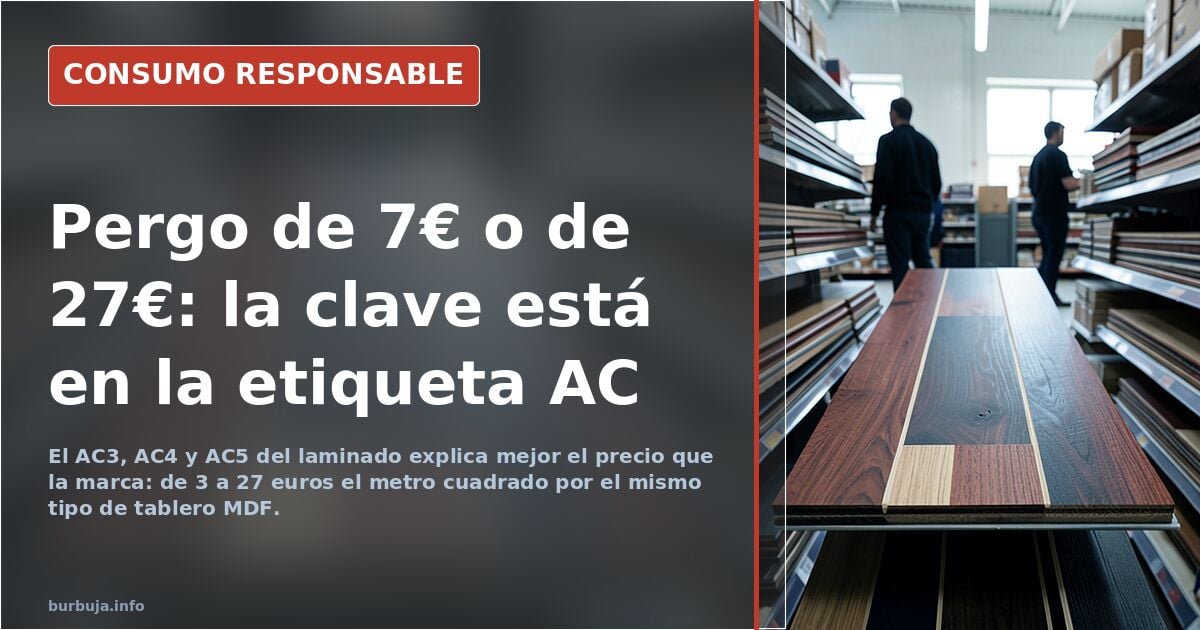
Pergo at 7 euros or 27: the AC label matters more than the brand
Laminate flooring can cost 3 euros per square metre at a big DIY store or 27 at the brand's official distributor. Between these two extremes, an individual buyer stands staring at the boxes without knowing what they are really paying for. The most common answer is not in the logo: it is in a two-character reference on the product sheet, the AC rating, which measures hardness and resistance to wear.
The scale is simple and explains much of the price. An AC3 is associated with second homes with little use; an AC4 is considered sufficient for a main residence; an AC5 is the most resistant grade and is recommended for bars, shops and high-traffic areas. Below that, AC2 does not appear in any serious recommendation. That single letter and number separate a floor that lasts for years from one that starts to come apart within the first one.
What cheap laminate really costs
The sticker price is misleading. Someone installed an AC5 own-brand floor from a big-box store at 11 euros per square metre and, two years later, the floor began to separate at specific points, chip at the edges and lift where a can had fallen. The bottom line: 2,000 euros between materials and installation, and now the prospect of tearing it all out and going back to ceramic tiles. Cheap ended up expensive, as it almost always does.
Against that case, another user tells the opposite story: a budget AC3, with dogs and dirt coming into the house, still looks like new after four years. And a third says that in a bar with heavy daily traffic, an own-brand laminate held up for three years without a problem. Individual experience, here, counts for little: it depends on the installation, the use and luck.
The brand matters less than the salesperson claims
Someone who spent years manufacturing laminate flooring makes it clear: from AC3 upwards there is more than enough resistance for a home. The brand is not the decisive factor because they all use similar processes; what changes are the designs. What really ruins a floor is installing it badly: inadequate underlay, insufficient expansion joints or a poorly fitted click system. The board is MDF, wood fibre with glues, and it expands and contracts just like wood.
Hence the gaps between planks that appear in winter: if the edge breaks during installation, the pieces separate when the material shrinks. And water between the joints, when mopping, is the other great enemy. A light design hides scratches; a dark, glossy one magnifies them and gives away that it is not real wood.
What to check before paying 27 euros for Pergo
The advice that keeps coming up: look for good brands at a good price, end-of-line clearance stock if it appears, and push the salesperson hard. The difference between a 5-euro laminate and a high-end one is compared to that between flea-market clothes and department-store clothes. It can be real. But the AC rating, the type of joint and a careful installation weigh more than the name on the box.
The question remains open at the exact point where the price stops buying quality and starts buying a logo. No one has yet put a number on what separates one from the other.
Also available in: Deutsch
Summary of a discussion on Burbuja.info - Foro de economía, actualidad y política., translated from Spanish and reviewed before publication. Read the full discussion (14 replies).
More summaries
-
Ikea or Leroy Merlin kitchen: assembly is what decides the price
Forum debate: Ikea stands out for hardware and warranty, Leroy Merlin for variety, Bricomart for price. The real cost depends on who assembles the units.
-
Game, Leroy Merlin and the quiet war on cash
In Spain, retailers and banks push digital payments by reducing staffed counters. While law mandates accepting cash, practice makes it increasingly difficult.
-
Soy milk: it tastes like horchata, but the real debate is elsewhere
Soy milk doesn't taste like milk: it tastes like horchata. The real debate is about hidden sugar, phytoestrogens and a price ranging from 60 cents to 1.50 euros.
-
Turbo trainer or exercise bike: the gear that ends up as a clothes rack
Turbo trainer, exercise bike or gym: prices range from 100 to 6,000 euros, but the deciding factor is the willpower not to end up using it as a clothes rack.
-
Van Van 125: 2,200 euros for a bike that won't exceed 90 km/h
The Suzuki Van Van 125 tops out at 90 km/h and costs around 3,000 euros new. The second-hand market and maintenance are key factors before buying.
-
Nescafé, Fairy and Coca-Cola: the products no one can replace
Nescafé, Fairy, Coca-Cola and Match 3 hold out against store brands. Instant coffee, dish soap and razor blades are the products nobody swaps.