
Turbo trainer or exercise bike: the gear that ends up as a clothes rack
Turbo trainer, exercise bike or gym: prices range from 100 to 6,000 euros, but the deciding factor is the willpower not to end up using it as a clothes rack.
English · Original discussion in Spanish · Published
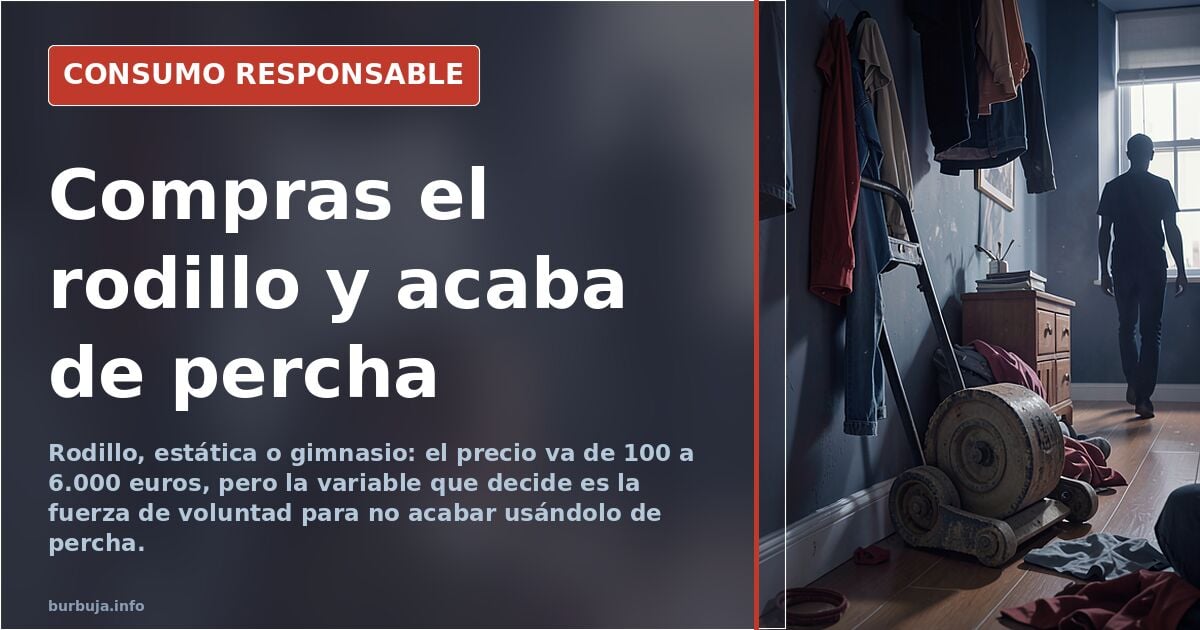
Turbo trainer or exercise bike: the 325-euro machine that ends up as a clothes rack
Training at home on a bike isn't a purchasing decision, it's a test of will. The warning is unanimous and comes before any model recommendation: riding a turbo trainer instead of heading outdoors demands enormous willpower, because, in the words of one user, it's "a real drag." Anyone who hasn't measured that variable before paying the bill will end up with a several-hundred-euro gadget holding the laundry.
The first dilemma is technical: exercise bike or turbo trainer. The exercise bike has a scale problem. Either you buy a very good machine — which takes up a huge amount of space and costs a fortune — or working out becomes an endless series of repairs and adjustments. And here comes the awkward fact: if you intend to exercise seriously, the reasonable range is six days a week, one hour a day. Three days of half an hour, accumulated experience holds, is worth absolutely nothing.
The turbo trainer wins on technical merit
With that starting point, the turbo trainer wins out among those who have tried both systems. Within turbo trainers there are variants: the roller type, suited to road bikes, with a mat on the floor to keep the neighbours happy. Then there's the technology layer, which is where the spending either skyrockets or pays off, depending on who you ask.
Here appears the proper name of the debate: Bkool, presented as Spanish technology, 325 euros delivered to your door, interactive, with variable resistance depending on the route. The sales pitch is textbook: it costs a third of what the competition charges. Against that, Decathlon's low-cost option, 100 euros, which isn't too noisy and offers variable resistance — enough, the argument goes, for training without great ambitions. The gap between 100 and 325 euros is the gap between sweating and pretending to climb a mountain pass.
The treadmill and the joints factor
The thread veers sideways into home running, and there the criteria change in nature. Physiotherapists advise against treadmills, although the quality of the machine changes everything. A 6,000-euro treadmill is not the same as a 200-euro one: the surface you run on varies in its ability to absorb impact. The conclusion is nuanced: a professional treadmill is better than asphalt, because it absorbs shock better; but running on sand or trails always beats the best treadmill. The startling figure is the price: the 200 to 6,000 euro range is no whim, it's the difference between caring for and punishing your joints.
The gym as the cheap way out
The most sceptical voice doesn't question the model, it questions the category. After trying a turbo trainer and an exercise bike at home, the verdict is blunt: unbearable because it's boring, and the machine ends up as the coat rack where your partner hangs their clothes, on top of the space it takes up. The market observation that trinc is the finishing touch: among people nearby, everyone ends up selling the damn turbo trainer.
The proposed alternative is crushing in its logic for anyone who values consistency over ownership: the gym. Cheaper in the long run, with treadmill, elliptical, rowing machine, weights and stretching all within an hour, and injuries kept at bay. The extra incentive — the sight of the instructor — doesn't come in the Bkool brochure.
What to buy depending on how much boredom you can take
Reduced to numbers, the decision has three doors. A hundred euros for anyone who wants to try without commitment and accepts basic variable resistance. Three hundred and twenty-five for anyone who has their computer in the same room and wants interactivity to fight the tedium. And the monthly gym fee for anyone who knows themselves well enough to know that their turbo trainer will be, in three weeks, a luxury coat rack.
The prediction, with reservations: the second-hand turbo trainer market will remain well stocked. Nobody buys exercise equipment thinking about day 40, and that is exactly the day that decides whether the purchase was an investment or a decoration.
Also available in: Deutsch
Summary of a discussion on Burbuja.info - Foro de economía, actualidad y política., translated from Spanish and reviewed before publication. Read the full discussion (6 replies).
More summaries
-
The gym exodus: Is working out at home more cost-effective?
Ditching the gym for a home setup: initial costs around €2,500, but over five years you save more than €3,000 in fees.
-
Using a bike pump on your car: Decathlon's warning explained
A €30 floor pump handles 10 bar while a car needs just 2.5. Decathlon's warning is about the gauge lacking certification, not any real risk.
-
Home Gym vs. Laziness: A Routine That Actually Works
The hassle of commuting drives people to build home gyms in garages or living rooms, prioritizing discipline over equipment.
-
Carrefour ends double refund for pricing errors
Carrefour no longer refunds double the difference for overcharges, limiting compensation to the simple amount as per new store policies.
-
Gas: 10,000 kWh in two months for a 120 m² flat in Tres Cantos, Spain
A 120 m² flat in Tres Cantos, Madrid, used 952 m³ of gas in two months, nearly 10,000 kWh, and the supplier sees no problem. How to audit your boiler.
-
Savings won't get you unemployment benefits, but they can cost you the subsidy
Spain's contributory unemployment benefit ignores your savings, but the means-tested allowance imputes income on your assets. The line between the two systems decides whether you get paid.