
Bystander returns stolen phone, fears legal backlash
A bystander recounts stopping a robbery against a minor in Spain and expresses fear of legal consequences for intervening.
English · Original discussion in Spanish · Published
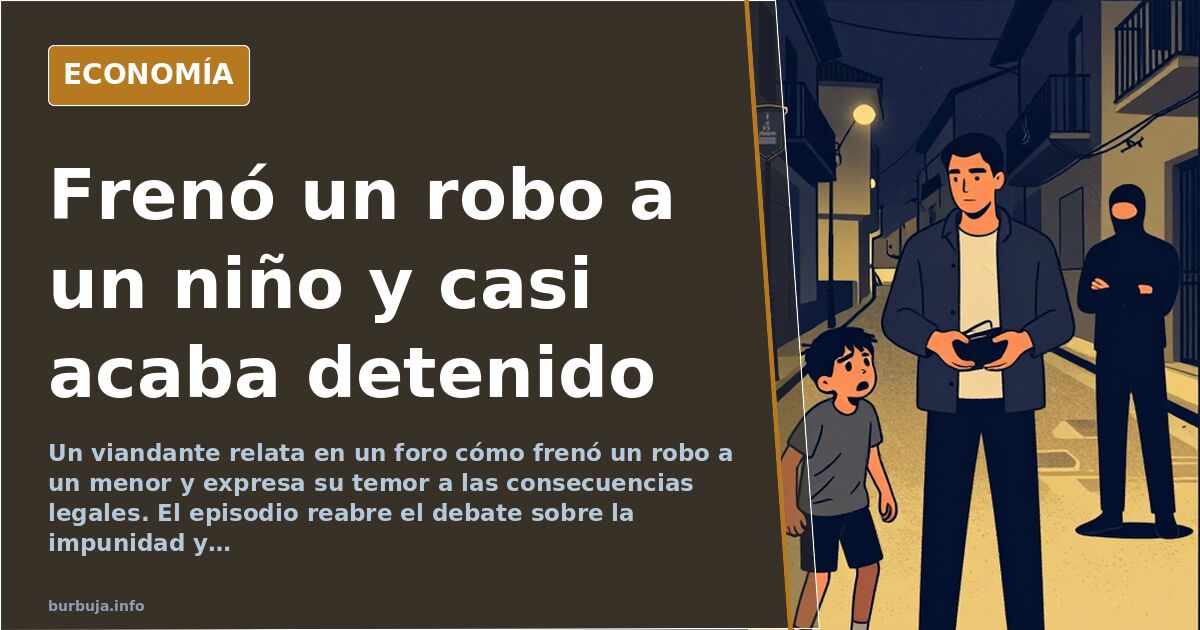
Stopped a robbery on a minor and the law left him alone facing the risk
A middle-aged man walks through a school zone in the mid-afternoon. He sees a group of four children, around ten years old, struggling with another taller, blond boy. They are pulling his coat off, have emptied his wallet onto the ground, and one of them is running around with his mobile phone while the owner, humiliated, shouts at him to give it back. The scene, described in detail on an economics forum, is that of a robbery with violence in broad daylight.
The account does not stop there. The aggressor with the phone hides behind a doorway and, as the passerby walks past, asks if the other boy is trinc him. This brazenness triggers something in the adult: he grabs the kid by the chest, snatches the phone, and returns it to the minor. The child bursts into tears, picks up his books from the ground, and runs home. The aggressors insult the man; one tries to chase the victim, and another spits at him without hitting. The poster admits he nearly lost his temper and ended up arrested himself. The question he raises —how long are we going to tolerate this?— sums up the unease felt by part of society watching violence among minors become normalized.
What exactly peine in the school scene
The account describes an episode of bullying involving theft. Four minors surround another, strip his clothes, throw his notebooks on the ground, and take his phone. The victim cries, screams, and does not defend himself. The aggressor holding the phone shows it off in front of his face and runs when the owner tries to get it back. It is the classic pattern of bullying with a property component: humiliating and stripping simultaneously.
The man witnessing the scene does not intervene initially. He walks past. Only when the aggressor hides and asks if he is being trinc does he decide to act. He grabs the kid, takes the phone, and gives it back to the minor. Then he tells him to pick up his things. The child, tearful, thanks him and flees home. The aggressors respond with insults and a spit that misses its target. The poster admits he almost bashed one of their heads against the curb. He didn't. But the anger remained etched in him.
Juvenile justice laws and the antiestéticar of intervening
The episode uncovers a recurring debate: the feeling that legislation protects the aggressor and leaves those who want to help defenseless. Several comments point out that touching a minor, even to defend another, exposes you to legal consequences. One participant says the Civil Guard (Guardia Civil) warned him about this personally. That perception, whether true or exaggerated, fuels passivity.
The discussion shifts toward the Juvenile Justice Law and its application. Some argue the norm was designed to protect childhood but has ended up generating impunity. Others recall that violence among kids always existed, but previously it was resolved with fights and without judicial intervention. The change in legal framework, they argue, has moved the conflict to courts and left schools without tools. Teachers, they say, look the other way for antiestéticar of retaliation.
The role of schools and institutional passivity
Several messages point to teaching staff. They are accused of not reporting cases of student-on-student violence to avoid tarnishing the school's statistics. The phrase summarizing this criticism is that schools stay silent like murcias (a derogatory term implying cowardice or complicity). The initial poster adds that in his own school days he saw a group stoning even the parents of a bullied child, and no one did anything. His conclusion is that people are zascandil at all levels.
Against that interpretation, other messages focus on the police response. It is criticized that State Security Forces and Bodies (Fuerzas y Cuerpos de Seguridad del Estado) limit themselves to filing reports and that aggressors return to high school the next day without consequences. One participant recounts that at his son's school, two boys beat up a classmate after a football argument, and the victim ended up in hospital. To the aggressors, he says, only fell a few days suspension from class.
Educational community response and media silence
The thread also addresses media coverage. It is argued that news outlets will not cover the incident with the same intensity if the aggressor and victim belong to different groups. The complaint is that there is a double standard when labeling violence. Several messages ask that school bullying be discussed without adjectives and that ethnicity cease to be used as an explanatory category.
In parallel, some participants share personal experiences of self-defense. One recounts that as a child, someone tried to steal his roller skates in the park, and he responded with a blow that deterred the attackers. Another remembers defending a homeless person from a gang of teenagers and saving the situation thanks to his intimidating presence. The shared conclusion is that self-defense worked before but now generates legal risk.
What data says about violence among minors
The material provides no official figures. Participants speak from memory and specific cases. There are no statistics from the Ministry of Interior or the Ombudsman (Defensor del Pueblo) in the thread. That absence of data is itself a datum: the debate moves in perception and anecdote. The only repeated figure is four aggressors and one victim. And the age of ten, the approximate age of those involved.
The discussion drifts toward immigration. Part of the messages links street violence with the presence of unaccompanied foreign minors. Another part rejects that association and labels it racist. The exchange becomes tense and loses any empirical anchor. No data supports either thesis or the contrary in the available material.
Antiestéticar of going out and the sense of impunity
The closing of the thread returns to the beginning. Several messages express antiestéticar that the situation will worsen and that older adults are not prepared to defend themselves. One participant says he doesn't want to be afraid every time he walks the dog or goes to buy bread. Another points out that the law is designed to tie the hands of the heterosenshetero white male. The conversation ends without concrete proposals.
The initial poster insists that the media will hide the incident. His final sentence is a question: how long? There is no answer. The blond boy picked up his books and went home crying. The man who helped him kept the kid's face burned into his memory. And with the doubt of whether it will be worth intervening next time. That is the open question.
A middle-aged man walks through a school zone in the mid-afternoon. He sees a group of four children, around ten years old, struggling with another taller, blond boy. They are pulling his coat off, have emptied his wallet onto the ground, and one of them is running around with his mobile phone while the owner, humiliated, shouts at him to give it back. The scene, described in detail on an economics forum, is that of a robbery with violence in broad daylight.
The account does not stop there. The aggressor with the phone hides behind a doorway and, as the passerby walks past, asks if the other boy is trinc him. This brazenness triggers something in the adult: he grabs the kid by the chest, snatches the phone, and returns it to the minor. The child bursts into tears, picks up his books from the ground, and runs home. The aggressors insult the man; one tries to chase the victim, and another spits at him without hitting. The poster admits he nearly lost his temper and ended up arrested himself. The question he raises —how long are we going to tolerate this?— sums up the unease felt by part of society watching violence among minors become normalized.
What exactly peine in the school scene
The account describes an episode of bullying involving theft. Four minors surround another, strip his clothes, throw his notebooks on the ground, and take his phone. The victim cries, screams, and does not defend himself. The aggressor holding the phone shows it off in front of his face and runs when the owner tries to get it back. It is the classic pattern of bullying with a property component: humiliating and stripping simultaneously.
The man witnessing the scene does not intervene initially. He walks past. Only when the aggressor hides and asks if he is being trinc does he decide to act. He grabs the kid, takes the phone, and gives it back to the minor. Then he tells him to pick up his things. The child, tearful, thanks him and flees home. The aggressors respond with insults and a spit that misses its target. The poster admits he almost bashed one of their heads against the curb. He didn't. But the anger remained etched in him.
Juvenile justice laws and the antiestéticar of intervening
The episode uncovers a recurring debate: the feeling that legislation protects the aggressor and leaves those who want to help defenseless. Several comments point out that touching a minor, even to defend another, exposes you to legal consequences. One participant says the Civil Guard (Guardia Civil) warned him about this personally. That perception, whether true or exaggerated, fuels passivity.
The discussion shifts toward the Juvenile Justice Law and its application. Some argue the norm was designed to protect childhood but has ended up generating impunity. Others recall that violence among kids always existed, but previously it was resolved with fights and without judicial intervention. The change in legal framework, they argue, has moved the conflict to courts and left schools without tools. Teachers, they say, look the other way for antiestéticar of retaliation.
The role of schools and institutional passivity
Several messages point to teaching staff. They are accused of not reporting cases of student-on-student violence to avoid tarnishing the school's statistics. The phrase summarizing this criticism is that schools stay silent like murcias (a derogatory term implying cowardice or complicity). The initial poster adds that in his own school days he saw a group stoning even the parents of a bullied child, and no one did anything. His conclusion is that people are zascandil at all levels.
Against that interpretation, other messages focus on the police response. It is criticized that State Security Forces and Bodies (Fuerzas y Cuerpos de Seguridad del Estado) limit themselves to filing reports and that aggressors return to high school the next day without consequences. One participant recounts that at his son's school, two boys beat up a classmate after a football argument, and the victim ended up in hospital. To the aggressors, he says, only fell a few days suspension from class.
Educational community response and media silence
The thread also addresses media coverage. It is argued that news outlets will not cover the incident with the same intensity if the aggressor and victim belong to different groups. The complaint is that there is a double standard when labeling violence. Several messages ask that school bullying be discussed without adjectives and that ethnicity cease to be used as an explanatory category.
In parallel, some participants share personal experiences of self-defense. One recounts that as a child, someone tried to steal his roller skates in the park, and he responded with a blow that deterred the attackers. Another remembers defending a homeless person from a gang of teenagers and saving the situation thanks to his intimidating presence. The shared conclusion is that self-defense worked before but now generates legal risk.
What data says about violence among minors
The material provides no official figures. Participants speak from memory and specific cases. There are no statistics from the Ministry of Interior or the Ombudsman (Defensor del Pueblo) in the thread. That absence of data is itself a datum: the debate moves in perception and anecdote. The only repeated figure is four aggressors and one victim. And the age of ten, the approximate age of those involved.
The discussion drifts toward immigration. Part of the messages links street violence with the presence of unaccompanied foreign minors. Another part rejects that association and labels it racist. The exchange becomes tense and loses any empirical anchor. No data supports either thesis or the contrary in the available material.
Antiestéticar of going out and the sense of impunity
The closing of the thread returns to the beginning. Several messages express antiestéticar that the situation will worsen and that older adults are not prepared to defend themselves. One participant says he doesn't want to be afraid every time he walks the dog or goes to buy bread. Another points out that the law is designed to tie the hands of the heterosenshetero white male. The conversation ends without concrete proposals.
The initial poster insists that the media will hide the incident. His final sentence is a question: how long? There is no answer. The blond boy picked up his books and went home crying. The man who helped him kept the kid's face burned into his memory. And with the doubt of whether it will be worth intervening next time. That is the open question.
Summary of a discussion on Burbuja.info - Foro de economía, actualidad y política., translated from Spanish and reviewed before publication. Read the full discussion (146 replies).
More summaries
-
Spain hits record cocaine seizures amid Guardia Civil fleet crisis
Spain has recorded a historic high of over 100 tonnes of cocaine seized, while 40% of the Guardia Civil's patrol boats remain out of service.
-
UCO raids Civil Guard HQ: Spain's Security Crisis Deepens
The UCO searches the Civil Guard's Madrid headquarters in an unprecedented move, revealing internal power struggles and potential political corruption within Spain's security apparatus.
-
Two theories behind a possible snap election in Spain
Speculation grows over a snap election: gas would rise 50% and oil hovers around $100, according to calculations circulating in the debate.
-
Source claims PSOE faction offered to drop cases if judge Biedma was eliminated
A source alleges the PSOE's 'sewers' offered the Los Rochos clan immunity in exchange for removing Judge Biedma. The UCO reports surveillance on the magistrate.
-
Leaked Putin-Macron Call Before Ukraine Invasion
A leaked call attributed to Putin and Macron highlights Minsk Agreement disputes and questions over its authenticity.
-
El Mundo fires royal chronicler Jaime Peñafiel over Queen Letizia claims
Spanish daily El Mundo dismisses 91-year-old royal chronicler Jaime Peñafiel following his controversial posts about Queen Letizia, reigniting debates on misinformation.