
Burger King Side Prices Rise 30% in Spain
A forum user claims Burger King side dishes rose 30% in Spain: nuggets jumped from €4.50 to over €6, fries from €3 to over €4. Shrinkflation also impacts…
English · Original discussion in Spanish · Published
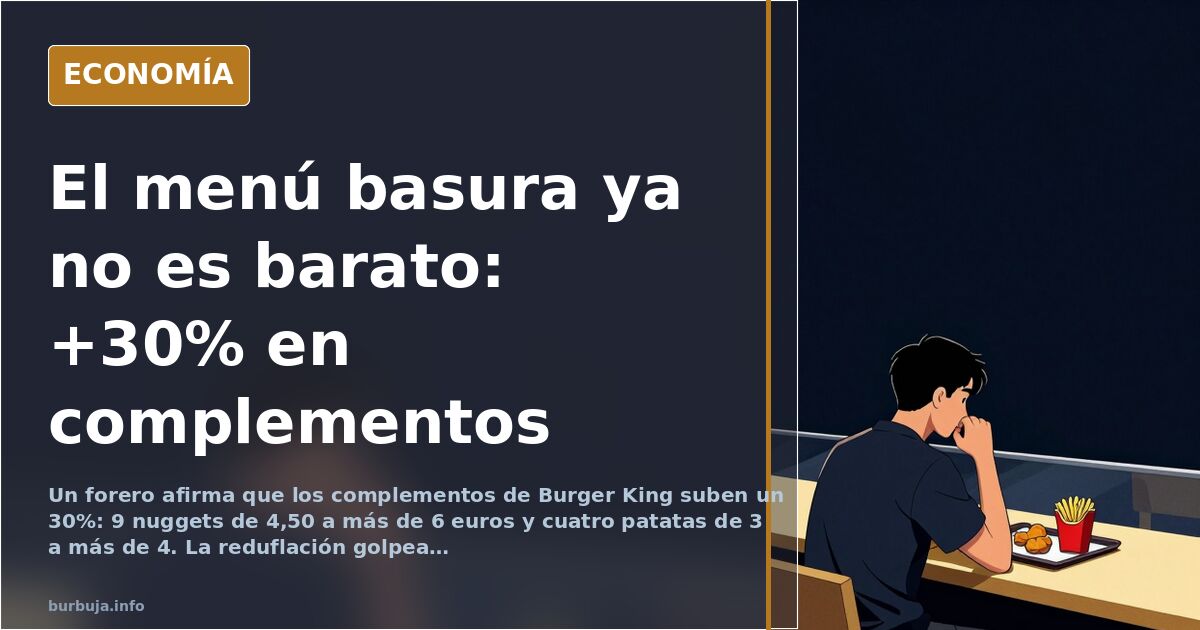
Forum user reports 30% price hike on Burger King sides: nuggets jump from €4.50 to over €6
The cost of side dishes at Burger King has skyrocketed, according to a forum user starting this discussion. An order of nine nuggets has gone from costing €4.50 to over €6, and four fries have risen from €3 to over €4. The increase is around 30% across all sides, based on the breakdown shared here. This is compounded by shrinkflation in ice cream and turrón (Spanish nougat): less product for the same money, or more money for less product. The complaint isn't whimsical; it's the latest episode of a loss of purchasing power that has already hit housing, cars, and graphics cards.
What exactly went up at Burger King
The reference menu no longer exists. The €1 mini-burger has disappeared, according to one participant, and the sides that once rounded out a cheap meal now cost as much as a restaurant dish. The prices discussed are from 2024 and place the total far above what it was just two years ago. Comparison with competitors saves no one: McDonald's is singled out by a user as the most expensive in the sector, with ketchup described as colored water.
Some argue the problem isn't Burger King, but the model itself. Junk food is no longer cheap and now competes on price with the 'menú del día' (daily lunch set) of a neighborhood bar, which averages around €15. The recurring sarracena: we are getting poorer, and even the affordable junk has become unaffordable.
Shrinkflation not reflected in CPI
Suchard chocolate turrón has reduced its quantity by around 30%, according to direct observation by a participant. This doesn't appear in the price index. Official inflation measures the price of the package, not the amount inside. The result is a hidden increase that macro data misses and consumers pay without seeing it reflected in statistics.
The discussion shifts to the CPI and its credibility. TV says inflation is under control; the shopping basket says otherwise. The gap between the official narrative and the supermarket receipt is, for many, proof that indicators measure poorly or only what is convenient.
Macro calculation: money supply, productivity, and velocity
The most technical explanation in the conversation points to the narrowing distance between M1 and M2. There is significant dis-saving, money velocity is increasing, and Eurozone productivity remains stagnant. With M2 running wild since the pandemic, the result is that side dish prices seem almost cheap, according to one participant. The full calculation, broken down item by item, shows a surprising difference.
Against this monetary reading, another current reduces everything to fiscal policy: deficit, debt, public spending, and taxes. The conclusion is the same via different paths: if prices haven't risen yet, they will; if not, quality or quantity will drop. It is argued that the population fails to connect causes and consequences.
Alternatives: homemade burger and chicken at €6/kg
The most repeated response isn't a boycott, but a recipe. Buying chicken breast at €6 per kilo, breading it or grilling it, and assembling a burger at home with twice-ground meat. It comes out cheaper and healthier, according to a user. The problem arises with children: they see the ingredients and struggle to eat it, preferring the dubious-origin burger from the fast-food joint. Salt is also cited as another factor.
The practical consensus is clear: you can live without eating that junk. What you cannot do is ignore the price. And there the analysis stalls: if junk food costs as much as real food, the sector's competitive advantage disappears. With these differentials, consumption should plummet. Yet lines remain.
Key Data
The cost of side dishes at Burger King has skyrocketed, according to a forum user starting this discussion. An order of nine nuggets has gone from costing €4.50 to over €6, and four fries have risen from €3 to over €4. The increase is around 30% across all sides, based on the breakdown shared here. This is compounded by shrinkflation in ice cream and turrón (Spanish nougat): less product for the same money, or more money for less product. The complaint isn't whimsical; it's the latest episode of a loss of purchasing power that has already hit housing, cars, and graphics cards.
What exactly went up at Burger King
The reference menu no longer exists. The €1 mini-burger has disappeared, according to one participant, and the sides that once rounded out a cheap meal now cost as much as a restaurant dish. The prices discussed are from 2024 and place the total far above what it was just two years ago. Comparison with competitors saves no one: McDonald's is singled out by a user as the most expensive in the sector, with ketchup described as colored water.
Some argue the problem isn't Burger King, but the model itself. Junk food is no longer cheap and now competes on price with the 'menú del día' (daily lunch set) of a neighborhood bar, which averages around €15. The recurring sarracena: we are getting poorer, and even the affordable junk has become unaffordable.
Shrinkflation not reflected in CPI
Suchard chocolate turrón has reduced its quantity by around 30%, according to direct observation by a participant. This doesn't appear in the price index. Official inflation measures the price of the package, not the amount inside. The result is a hidden increase that macro data misses and consumers pay without seeing it reflected in statistics.
The discussion shifts to the CPI and its credibility. TV says inflation is under control; the shopping basket says otherwise. The gap between the official narrative and the supermarket receipt is, for many, proof that indicators measure poorly or only what is convenient.
Macro calculation: money supply, productivity, and velocity
The most technical explanation in the conversation points to the narrowing distance between M1 and M2. There is significant dis-saving, money velocity is increasing, and Eurozone productivity remains stagnant. With M2 running wild since the pandemic, the result is that side dish prices seem almost cheap, according to one participant. The full calculation, broken down item by item, shows a surprising difference.
Against this monetary reading, another current reduces everything to fiscal policy: deficit, debt, public spending, and taxes. The conclusion is the same via different paths: if prices haven't risen yet, they will; if not, quality or quantity will drop. It is argued that the population fails to connect causes and consequences.
Alternatives: homemade burger and chicken at €6/kg
The most repeated response isn't a boycott, but a recipe. Buying chicken breast at €6 per kilo, breading it or grilling it, and assembling a burger at home with twice-ground meat. It comes out cheaper and healthier, according to a user. The problem arises with children: they see the ingredients and struggle to eat it, preferring the dubious-origin burger from the fast-food joint. Salt is also cited as another factor.
The practical consensus is clear: you can live without eating that junk. What you cannot do is ignore the price. And there the analysis stalls: if junk food costs as much as real food, the sector's competitive advantage disappears. With these differentials, consumption should plummet. Yet lines remain.
Key Data
- 9 nuggets: from €4.50 to over €6, per forum user
- 4 fries: from €3 to over €4, per forum user
- Sides: 30% price increase, per forum user
- Suchard chocolate turrón: 30% quantity reduction, per participant
- Chicken: €6 per kilo on the day, per forum user
- Bar daily menu: €15 average, per forum user
Also available in: Deutsch
Summary of a discussion on Burbuja.info - Foro de economía, actualidad y política., translated from Spanish and reviewed before publication. Read the full discussion (129 replies).
More summaries
-
Suchard nougat reveals Spain's hidden inflation
Suchard nougat shrinks from 300g to 140g while prices stay similar. Shrinkflation and cocoa costs drive perceived inflation beyond official CPI data.
-
Portugal: Tent Living Emerges Amid Rent Crisis
A TVE report highlights tent settlements in Portugal driven by unaffordable rents, contrasting with Spanish wage levels.
-
Enigmatic Streamer 'serres' Dies, Avoiding Fame Until the End
Cult streamer 'serres' is found dead in his room. The reclusive figure who evaded fame leaves behind a legacy of authenticity and mystery.
-
Abascal backs Trump's tariffs on Europe
VOX leader Abascal accepts US tariffs hurting Spanish exporters, sparking debate over national interest alignment.
-
Hungary bans Pride events; Spain urges EU action
Hungary passed a ban on Pride celebrations. Spanish PM Sánchez calls for EU intervention, highlighting the bloc's inconsistent stance on national sovereignty.
-
Spain’s Tax Agency Targets Wedding Gifts as Donations
The Spanish tax authority is scrutinizing wedding gifts, treating cash envelopes and transfers as taxable donations, causing concern among newlyweds.