
Abascal backs Trump's tariffs on Europe
VOX leader Abascal accepts US tariffs hurting Spanish exporters, sparking debate over national interest alignment.
English · Original discussion in Spanish · Published
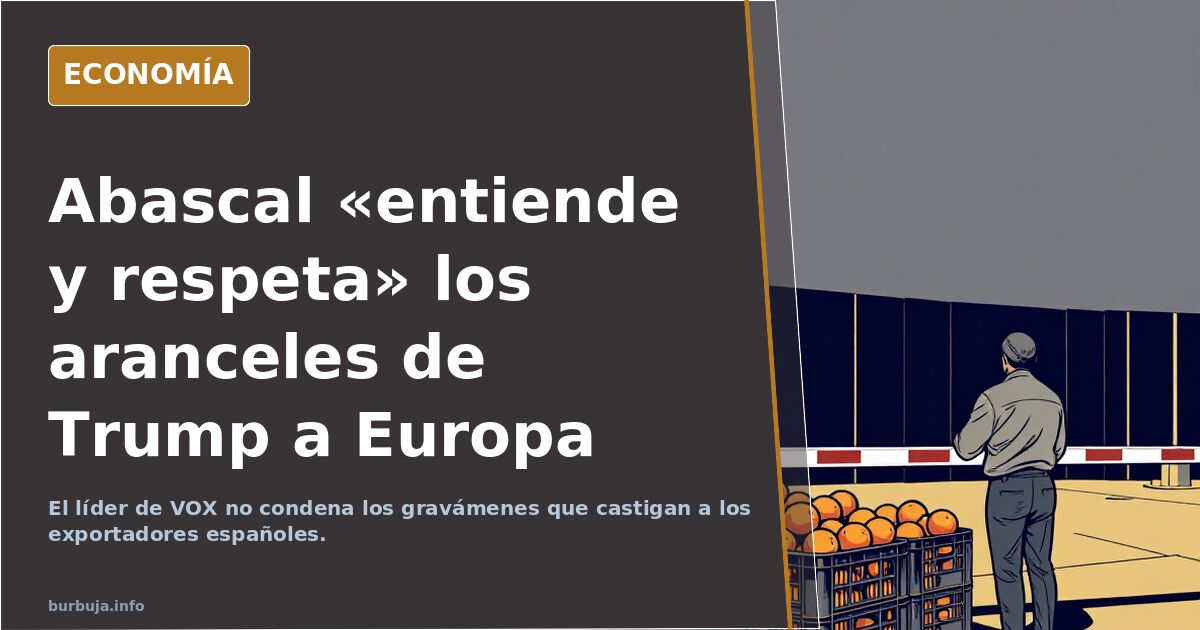
Abascal backs Trump's tariffs on Europe
There is a simple way to know if a European leader understands the geopolitical board or is still playing checkers: ask them about Trump's tariffs. Santiago Abascal responded with an "I understand and respect" stance which, in plain terms, means the VOX leader does not intend to side with Brussels when Washington tightens the screws. This short, nuanced-free phrase ignited a discussion far beyond the individual: does a Spanish politician defend Spain's interests when aligning with those taxing our exports?
The response is far from unanimous. And that is where it gets interesting.
What Abascal said exactly and why it matters
The VOX leader expressed that he "understands and respects" the US administration's tariff policy against European products. It is not a condemnation, nor a reservation, nor a "but." It is acceptance. In a context where the EU faces a package of duties on its exports, this position places VOX in an uncomfortable spot regarding the patriotic narrative the party usually sells.
Here lies the trap: defending Spain's interests and applauding tariffs that punish Spanish producers do not fit well in the same sentence. The olive oil sector, for example, exports volumes to the US that cannot be compensated by domestic American production. A 20% duty on this product does not protect any Iowa farmer; it simply makes the bottle more expensive on the shelf and less competitive against other oils.
The realpolitik argument: everyone defends their own
One school of analysis argues that Trump is doing what any president would do: defending the interests of his voters. He owes nothing to Spain, nothing to the EU, and acts accordingly. Under this logic, the King of Segarro defends Segarro's interests, and Trump defends the US's. No one is scandalized by the former.
The problem with this reasoning is confusing description with justification. That Trump acts according to his interests does not automatically make it correct for a Spanish leader to applaud him. The relevant question is not what Trump wants, but what Spain gains when its political class divides between those negotiating with Brussels and those cheering from the stands.
The real cost for Spanish exporters
Tariffs are not a diplomatic gesture: they are a tax paid by the importer and passed on to the final consumer. When the US taxes a European product, the Spanish exporter has three options: absorb the margin, raise prices, or find another market. None are free.
In the case of olive oil, according to calculations circulating in the debate, the US consumes hundreds of thousands of tons annually and produces only a fraction of its needs. The tariff will not replace this consumption with local production; it will increase the product's price by 20% for the American buyer. The first loser is the consumer there. But the Spanish exporter also loses volume if the price becomes prohibitive.
The sustancia ilegal between salon patriotism and trade policy
Part of VOX's electorate has expressed disillusionment with this drift. Not because of the tariffs themselves, but because of what they reveal: a party presenting itself as a defender of the nation that, when faced with commercial truth, turns a blind eye or directly applauds those taxing us. This criticism is not new. Some stopped voting for them after seeing promises to challenge election results amount to nothing.
The party leadership argues that requesting and reviewing ballots was a titanic task requiring months of exclusive dedication. It may be true. But the voter who feels deceived rarely distinguishes between logistical impossibility and lack of will.
What VOX actually defends in trade policy
Reviewing the program, VOX advocates for tax cuts, elimination of subsidies, border control, and bureaucratic simplification. In trade policy, the line is blurrier. Aligning with Trump during a tariff war is not a liberal position; it is a geopolitical stance prioritizing ideological harmony over export interests.
And here is the knot: can a patriotic party applaud measures harming domestic producers? The answer depends on how one defines "nation." If it is a cultural construct, anything goes. If it is a real economy with companies selling abroad, the margin narrows.
The EU as scapegoat and autarky as fantasy
The old ghost of autarky has appeared in the discussion. Some argue that the autarkic period led to the subsequent economic miracle and that Spain should look less at Brussels and more at itself. The problem with this narrative is confusing cause with coincidence: the development boom of the sixties came from openness and agreements with international bodies, not isolation.
Others have pointed out that leaving the euro to return to the peseta would turn Spain into a country with the monetary relevance of a provincial promissory note. This is no exaggeration: market size and currency credibility determine financing costs. Playing at autarky in a world of global supply chains is like turning off the router to save electricity.
The elephant in the room: who benefits from the tariff?
The question no one fully answers is who really benefits from this standoff. Trump says he protects his industry. Brussels says it defends theirs. Meanwhile, Spanish exporters watch the calendar. And VOX, which could have used the platform to demand compensation or negotiation, opted for "I understand and respect."
It might be ideological consistency. It might be electoral calculation. It might be simple intellectual laziness. What it certainly is not, however, is a closed defense of Spanish interests in a commercial conflict that directly affects us. And that, in a party that built its brand on defending the national, is a contradiction that cannot be covered up with a bracelet.
Will the patriotic narrative survive the next tariff?
There is a simple way to know if a European leader understands the geopolitical board or is still playing checkers: ask them about Trump's tariffs. Santiago Abascal responded with an "I understand and respect" stance which, in plain terms, means the VOX leader does not intend to side with Brussels when Washington tightens the screws. This short, nuanced-free phrase ignited a discussion far beyond the individual: does a Spanish politician defend Spain's interests when aligning with those taxing our exports?
The response is far from unanimous. And that is where it gets interesting.
What Abascal said exactly and why it matters
The VOX leader expressed that he "understands and respects" the US administration's tariff policy against European products. It is not a condemnation, nor a reservation, nor a "but." It is acceptance. In a context where the EU faces a package of duties on its exports, this position places VOX in an uncomfortable spot regarding the patriotic narrative the party usually sells.
Here lies the trap: defending Spain's interests and applauding tariffs that punish Spanish producers do not fit well in the same sentence. The olive oil sector, for example, exports volumes to the US that cannot be compensated by domestic American production. A 20% duty on this product does not protect any Iowa farmer; it simply makes the bottle more expensive on the shelf and less competitive against other oils.
The realpolitik argument: everyone defends their own
One school of analysis argues that Trump is doing what any president would do: defending the interests of his voters. He owes nothing to Spain, nothing to the EU, and acts accordingly. Under this logic, the King of Segarro defends Segarro's interests, and Trump defends the US's. No one is scandalized by the former.
The problem with this reasoning is confusing description with justification. That Trump acts according to his interests does not automatically make it correct for a Spanish leader to applaud him. The relevant question is not what Trump wants, but what Spain gains when its political class divides between those negotiating with Brussels and those cheering from the stands.
The real cost for Spanish exporters
Tariffs are not a diplomatic gesture: they are a tax paid by the importer and passed on to the final consumer. When the US taxes a European product, the Spanish exporter has three options: absorb the margin, raise prices, or find another market. None are free.
In the case of olive oil, according to calculations circulating in the debate, the US consumes hundreds of thousands of tons annually and produces only a fraction of its needs. The tariff will not replace this consumption with local production; it will increase the product's price by 20% for the American buyer. The first loser is the consumer there. But the Spanish exporter also loses volume if the price becomes prohibitive.
The sustancia ilegal between salon patriotism and trade policy
Part of VOX's electorate has expressed disillusionment with this drift. Not because of the tariffs themselves, but because of what they reveal: a party presenting itself as a defender of the nation that, when faced with commercial truth, turns a blind eye or directly applauds those taxing us. This criticism is not new. Some stopped voting for them after seeing promises to challenge election results amount to nothing.
The party leadership argues that requesting and reviewing ballots was a titanic task requiring months of exclusive dedication. It may be true. But the voter who feels deceived rarely distinguishes between logistical impossibility and lack of will.
What VOX actually defends in trade policy
Reviewing the program, VOX advocates for tax cuts, elimination of subsidies, border control, and bureaucratic simplification. In trade policy, the line is blurrier. Aligning with Trump during a tariff war is not a liberal position; it is a geopolitical stance prioritizing ideological harmony over export interests.
And here is the knot: can a patriotic party applaud measures harming domestic producers? The answer depends on how one defines "nation." If it is a cultural construct, anything goes. If it is a real economy with companies selling abroad, the margin narrows.
The EU as scapegoat and autarky as fantasy
The old ghost of autarky has appeared in the discussion. Some argue that the autarkic period led to the subsequent economic miracle and that Spain should look less at Brussels and more at itself. The problem with this narrative is confusing cause with coincidence: the development boom of the sixties came from openness and agreements with international bodies, not isolation.
Others have pointed out that leaving the euro to return to the peseta would turn Spain into a country with the monetary relevance of a provincial promissory note. This is no exaggeration: market size and currency credibility determine financing costs. Playing at autarky in a world of global supply chains is like turning off the router to save electricity.
The elephant in the room: who benefits from the tariff?
The question no one fully answers is who really benefits from this standoff. Trump says he protects his industry. Brussels says it defends theirs. Meanwhile, Spanish exporters watch the calendar. And VOX, which could have used the platform to demand compensation or negotiation, opted for "I understand and respect."
It might be ideological consistency. It might be electoral calculation. It might be simple intellectual laziness. What it certainly is not, however, is a closed defense of Spanish interests in a commercial conflict that directly affects us. And that, in a party that built its brand on defending the national, is a contradiction that cannot be covered up with a bracelet.
Will the patriotic narrative survive the next tariff?
Also available in: Deutsch
Summary of a discussion on Burbuja.info - Foro de economía, actualidad y política., translated from Spanish and reviewed before publication. Read the full discussion (128 replies).
More summaries
-
Trump Warns of Invoking Insurrection Act in Minnesota
Trump threatens to invoke the Insurrection Act in Minnesota amid ICE unrest. Detentions lack due process, sparking debate on economic costs.
-
Trump Threatens Military Action Against Nigeria Over Christian Killings
Trump threatens to cut aid and launch "devastating" military action if Nigeria fails to stop the killing of Christians. The country is Africa's top oil producer.
-
Blue Face on Spanish Show Horizonte Sparks Murder Accusations
Bea Talegón's blue face on Horizonte triggers murder accusations online after Maricarmen's death, boosting viewership.
-
Spain's 2023 Food Drive Begins with Fewer Donors
Food prices rose 28.4% since Sept 2021, causing Spain's 2023 food drive to start with fewer willing donors.
-
Vega of OT: Appearance Debate and Mental Health
Former Operación Triunfo contestant Vega reappears, sparking debate on aging, mental health, and the cost of pursuing an artistic career.
-
Viral Claim: Spanish Median Bank Balance Hits €8,000
A viral post claims the median bank balance for Spaniards is €8,000, with stark age gaps. Critics argue this metric ignores real wealth.