
Broken pressure cooker: fix the handle or buy a new one
A broken bakelite handle forces a decision between repairing a 20-year-old pressure cooker or buying a new one with triple safety valve.
English · Original discussion in Spanish · Published
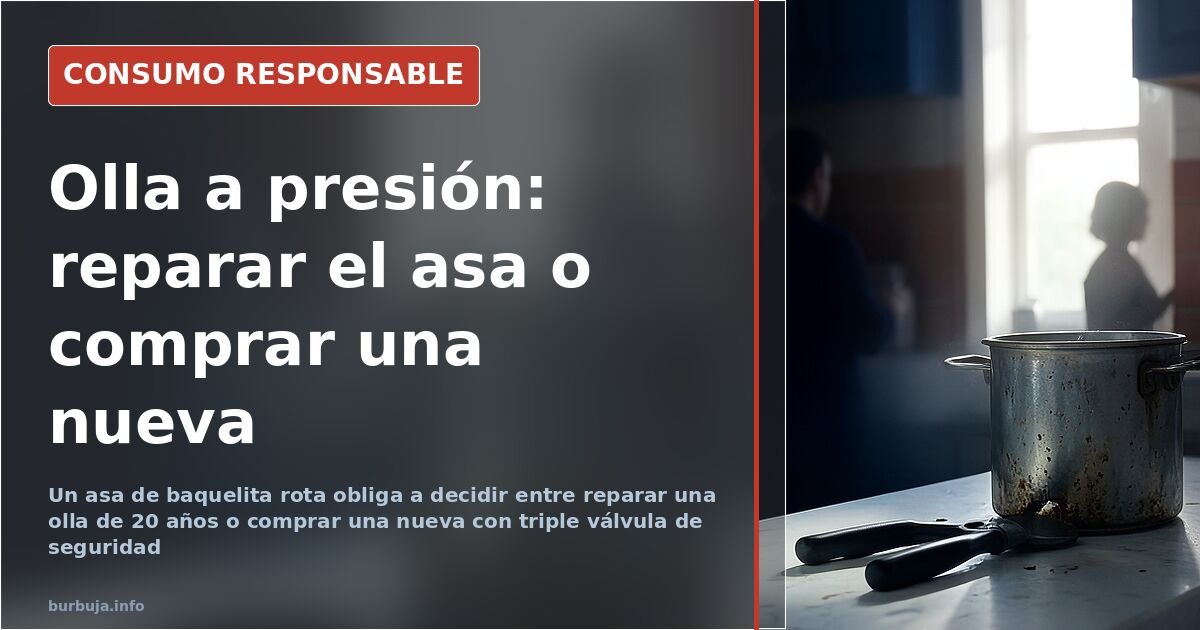
Pressure cooker: when a broken handle decides between repair or replacement
A pressure cooker with two decades of service, a bakelite handle crumbling in your hands, and an awkward question: fix it or throw it away? The owner was clear from the very first post: he leans towards buying a new one. And not out of consumerist whim, but because the broken handle was what acted as the lock. Without it, the pot doesn't seal. No seal, no pressure. And without pressure, all that's left is an old gadget taking up cupboard space.
The replies are almost unanimous, and not out of misguided stinginess. Safety comes first. Several stories of cookers that burst — one after 40 years of service, another that, according to one forum member's account, left his vvife inches away from widowhood — turn the debate about saving money into a debate about risk. The conclusion that prevails: when the appliance has a single safety valve and twenty years on the clock, replacing the handle is the cheap part of the problem.
The price of not taking risks: 30 euros versus an explosion
The figures in the conversation are disarmingly modest. A new, safe cooker can be had for just over 30 euros, as one forum member points out. The three spare handles for the old one, if they could even be found, would cost between 30 and 40 euros, according to an estimate circulating in the thread. And the valves would be extra. The maths leaves little room: repairing a 20-year-old cooker costs more than buying a new one with a triple safety valve.
Some point out that hardware stores and appliance shops can identify brands and locate spare parts with relative ease. The problem is that this cooker has no visible brand or model. Hunting for a handle blind, as the owner himself puts it, is a matter of "a great deal of luck". And even if it were found, the rest of the handles and gaskets would start to fail "sooner rather than later".
Are modern pressure cookers safe?
Yes, and the argument is repeated insistently among participants: today's models include at least three safety measures, up to 14 in some electric models according to one forum member. An escape valve, a second one that kicks in if the first gets blocked, and a system that deforms the lid before the pot bursts. Some even claim it's impossible to open them while there's pressure inside: the mechanism forces you to release the pressure first.
Accident stories provide the counterpoint. One cooker that exploded after four decades of service. Another that burst in a kitchen and left a lasting scare. The practical conclusion: maintenance — clean valves, checked gaskets, replacement as soon as anything fails — is what separates a useful tool from a household explosive. And that applies to the cooker as much as to the trusty old moka pot, which can also give you a fright if the filter gets clogged.
Which cooker to buy: from the basic model to the electric one
The range on offer goes from the traditional 30-euro model to the programmable electric cooker that cooks on its own. The brands that come up again and again: Magefesa, WMF, Fissler, Kuhn. The prevailing logic is not to skimp on an appliance that works with pressure and heat: some argue that spending 30 euros on a dubious-brand cooker is saving in the wrong place.
The electric option is gaining fans for its convenience: you can program them, they make sponge cakes and omelettes, and they barely use any power thanks to their thermos effect. Defenders of the traditional kind, on the other hand, value sturdiness and manual control. The buyer in this case went for a WMF Perfect, with a ring system that indicates the exact pressure, and found it on Amazon for half the price it sells for at El Corte Inglés.
The energy savings hardly anyone disputes
Beyond the scare, there's an economic argument running through the whole conversation: a pressure cooker cuts energy consumption to a quarter, according to one forum member. It cooks faster, preserves nutrients better and lowers the bill. For anyone watching every euro, it's a kitchen staple, not a luxury.
The question that remains is the usual one: how much is the peace of mind of knowing the pot on your stove won't fail worth? At today's prices, considerably less than it might seem.
Also available in: Deutsch
Summary of a discussion on Burbuja.info - Foro de economía, actualidad y política., translated from Spanish and reviewed before publication. Read the full discussion (39 replies).
More summaries
-
El Corte Inglés delivers in 3 hours, undercutting Amazon by €30
Smartwatch delivered in three hours and €30 cheaper than Amazon: cases challenging El Corte Inglés' expensive reputation.
-
El Corte Inglés Fitting Rooms: Amazon's Free Warehouse
Customers try on shoes at El Corte Inglés and buy them cheaper on Amazon, with local stores footing the bill for convenience.
-
Ozempic and Mounjaro: FDA black box warning issued
FDA issues black box warning for Ozempic and Mounjaro regarding thyroid tumor risks. Analysis of weight regain, side effects, and natural alternatives.
-
A bank transfer made on Friday afternoon may not arrive until Tuesday
A customer sends a transfer on a Friday afternoon and the money arrives on Tuesday: value dates, SEPA rules and why banks stretch the deadlines.
-
Dehumidifiers: how they make your home feel warmer and dry laundry
A 300-400W dehumidifier can improve how warm a room feels and dry clothes, but it doesn't replace heating. Power consumption and starting humidity levels matter.
-
Hooking a solar inverter to your consumer unit: the mistake that can burn the house down
Forum users warn that an inverter with a schuko plug cannot feed the consumer unit of an off-grid home; they call for terminal lugs, fuses and earthing