
Bread makers: Lidl's model is the one forums recommend most
Cooking forums recommend the Lidl bread maker, with a 3-year warranty and German manufacturing, ahead of Carrefour's. Some say the bread…
English · Original discussion in Spanish · Published
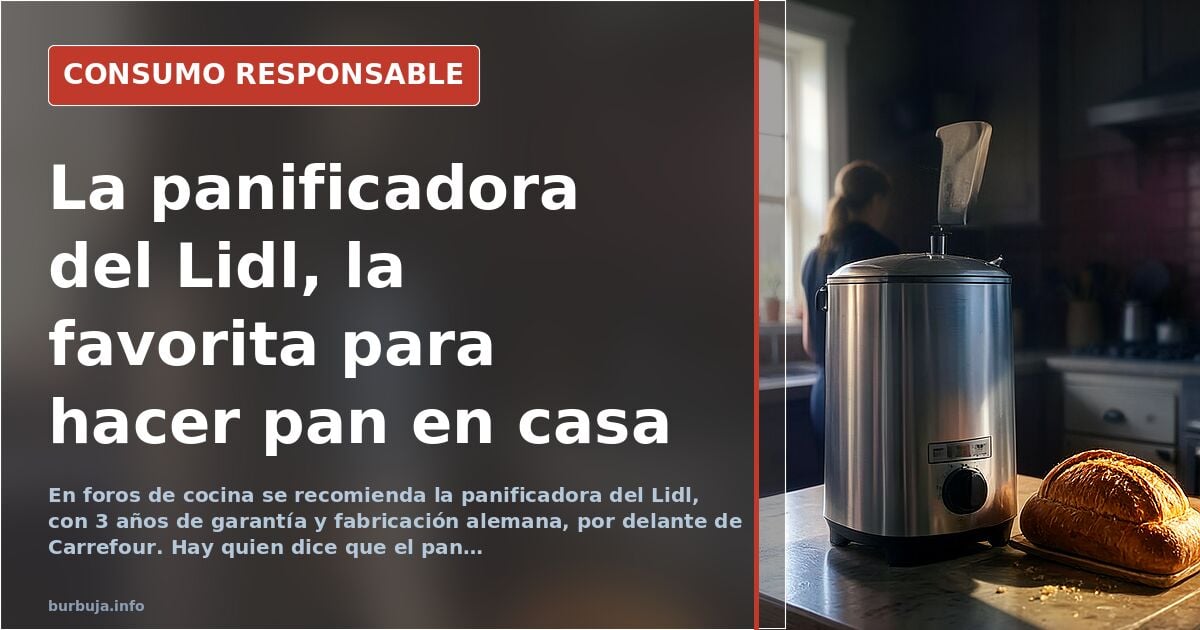
Bread makers: Lidl's model is the one forums recommend most
Buying a bread maker when there's no bakery nearby might seem like a whim for work-from-homers with sourdough ambitions. But the math changes when a decent loaf costs more than 1.50 euros and a kilo of flour is just 0.49. The question that opens the debate is simple: which machine should you buy so you don't waste your money? The answer that comes up most insistently points to one specific appliance: the Lidl bread maker, with a three-year warranty and German manufacturing, which goes on sale in waves and sells out the same morning.
Which bread maker to buy: Lidl, Carrefour or Panasonic
The basic consensus is that the Lidl one is the most recommended, trinc by Carrefour's. The Panasonic SD-256WXC and its successor, the SD-2500WXC, come up as a high-end alternative with a gluten-free program, though their price is another story. The Lidl model is not a permanent catalog product: it goes on sale two or three times a year and, when it appears, it flies off the shelves. Those who don't want to wait can try the chain's outlet at the Nassica mall in Getafe, Spain, where it can be found at a discount all year round. The warning that keeps coming up: if your only goal is making bread, any machine will do, but it should have a timer so it starts on its own and you have fresh bread when you wake up.
Bread from bread makers: dense brick or fluffy ciabatta?
This is where the fight begins. Some argue that bread from these machines leaves a lot to be desired, that it comes out like a dense brick, and that they're only good for kneading and proofing, with shaping and finishing done in the oven. The rebuttal is quick to arrive: the ciabatta comes out with the same plump shape seen in the photos, but it's fluffy and not heavy at all. The crust is the acknowledged weak point: it doesn't turn out crispy or thick. Some models let you adjust the browning, with options for a light, medium or dark crust, and on the darkest setting it comes out truly crispy. The Lidl machine, on the other hand, has no such settings: it's simple, two paddles in one pan and a heating element at the bottom.
Flour, yeast and the order of ingredients
The process has its own ritual. First the liquids, water and a splash of oil; then salt and sugar; next the flour; and finally the yeast. This order isn't superstition: if the yeast touches the water directly, it dies and the bread won't rise. If the flour isn't in the middle separating them, the paddles don't knead properly and you end up with a clump of uncooked flour at the bottom. As for the raw ingredients, a kilo of Rio flour costs 0.49 euros and fresh yeast comes in 25-gram blocks for 0.35. With about five grams of yeast per 700 grams of flour, the cost plummets. You can also use pre-made mixes, which is what many people do when they get tired of experimenting.
How long homemade bread lasts and what the electricity costs
Shelf life is another point that gets clarified: the bread stays edible for a good four days before it starts to taste stale. The whole turning-to-stone-or-gum-in-hours thing only happens with industrial bread. On the energy side, a neat calculation: at 0.20 euros per kilowatt hour including VAT, the electricity cost per batch is six cents. So the savings are not in question. What does raise doubts is the time: three hours for a 750-gram loaf with a pre-made mix, two minutes of prep and on to something else.
Sourdough, Thermomix and the artisan bread war
Not everyone buys into the machine. Some argue it's a betrayal of the palate just to save time and money, and champion artisan bread with sourdough and week-long fermentations. The rebuttal is not long in coming: sourdough takes a week to prepare, but then it gets refreshed and the bread is made with the normal process. For those with a Thermomix, Monsieur Cousine or Mambo, the machine only kneads; baking goes in the oven. And for those who don't, the bread maker kneads in two minutes without leaving the kitchen covered in flour. Homemade pizza with dough made in the bread maker is another use people champion.
The exact point where the matter gets stuck is the same as at the start: the Lidl one isn't always available. Whoever wants it will have to wait for the next wave or go to the outlet. And in the meantime, the question of whether it's worth it still has no single answer.
Also available in: Deutsch
Summary of a discussion on Burbuja.info - Foro de economía, actualidad y política., translated from Spanish and reviewed before publication. Read the full discussion (70 replies).
More summaries
-
Lidl bread makers: household savings or industrial shortcut?
Lidl bread maker: cost savings or culinary simplification? We look at durability, energy use and the results of homemade bread.
-
Spain’s supermarket sauces: fried tomato beats Mercadona
A four-year review of Spanish supermarket sauces from Mercadona, Lidl, Aldi and Carrefour, covering sugar content and prices.
-
Homemade bread: the real savings vs store-bought, by the numbers
A breakdown of the real cost of homemade bread: from €1 a loaf down to 60 cents with sourdough. Is a bread machine worth it? Data and tips to save money.
-
Accessing Live Sports via Shared Streaming Links
Analysis of how users access live sports through shared streaming codes and links.
-
The best supermarket cheese: from 16 to 36 euros a kilo
Torta del Casar reaches 35.57 €/kg, while offers bring it down to 16 €/kg. The price per kilo varies more than the buyer's own taste.
-
Mercadona shower gel: 31 ingredients and a chemical suspicion
A supermarket own-brand shower gel lists 31 ingredients: parabens, colorants and fragrances. The debate over its toxicity and long-term effects comes under scrutiny.