
Bareto: Eight Madrid Bars, Bravas at €7
Bareto plans 25 locations in 2025. Half-portion bravas cost €7 and ensaladilla €9, sparking debate over pricing.
English · Original discussion in Spanish · Published
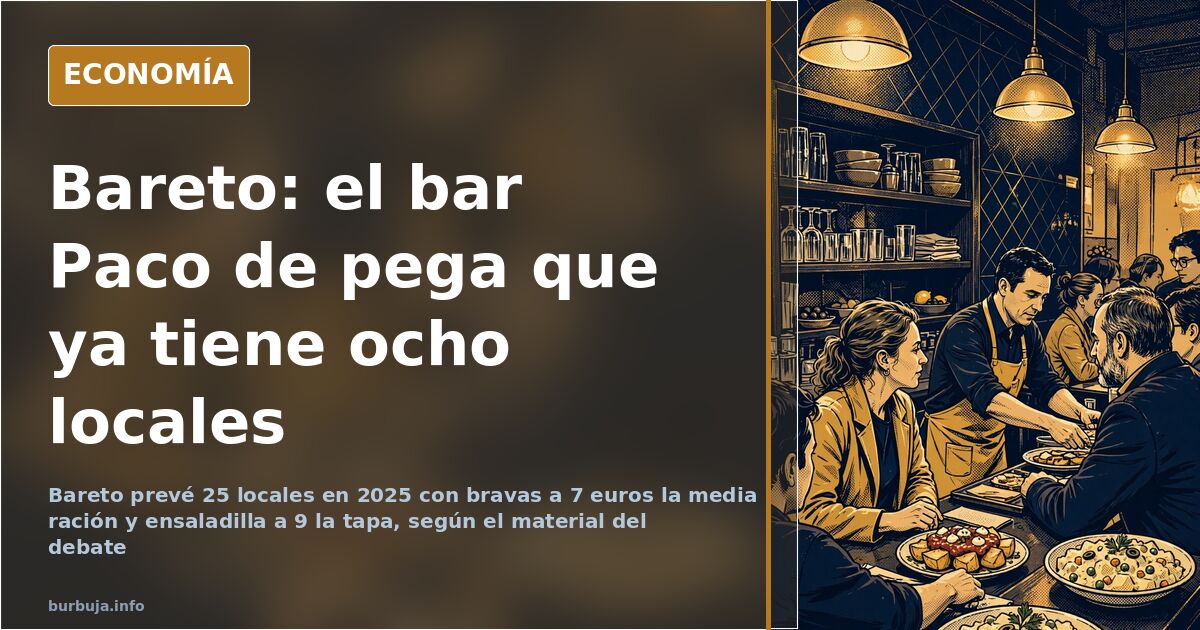
Bareto opens its eighth venue as the traditional 'bar Paco' fades out
Born in late 2021 at the former Correos beer hall on Calle Alcalá 55, the business aims to end 2024 with 13 establishments and reach 25 by 2025. Led by brothers Curro (33) and Enrique Sánchez del Amo (51), who identify as hospitality professionals rather than entrepreneurs, they claim to have revived bar culture, draft beer, and traditional tapas. Recognized with a Sol de Repsol guide rating, the group sells 33,000 liters of beer and 40,000 portions of bravas annually. The issue lies in pricing: half-portion bravas at €7, tortilla slice at €5, ensaladilla tapa at €9, and squid sandwich at €7. Officially affordable; practically, quite different.
What is Bareto and where did it come from?
The project originated from an earlier concept called Tienes toda la ración, peine in Majadahonda in 2015 but closed due to poor location, according to the founders. With Bareto, they shifted strategy: terraces and high foot traffic became non-negotiable requirements. Consequently, venues are situated near Atocha station, Espacio Caleido, and Plaza de Olavide, a hub for tapas in Chamberí. The parent company, Barbillón Family & Corp, manages 14 business units.
They admit their gastronomic proposal invents nothing. Offerings include torreznos, bravas with jamón in the sauce base (which Enrique compares to Docamar’s style), flamenquines with cecina and cheddar for €13, ensaladilla with diced potatoes and plenty of eggs, and an Arabic-style filo pastry cake with cream that serves as the group’s signature dish. They note that vegetables do not resonate well with customers.
Price as the battlefield
This is where the narrative breaks down. The article claims one eats well and drinks beer at very affordable prices, but the figures cited suggest otherwise. Half-portion bravas at €7, ensaladilla tapa at €9, tortilla slice at €5. Some argue this money buys a full menu at any neighborhood bar, while others label the proposal a trap for tourists and affluent locals. Comparisons with bars run by immigrant families, which serve full portions for less, recur frequently.
Counterarguments also hold weight: securing premises on that stretch of Calle Alcalá, facing Madrid City Hall, is not easy, and health and labor compliance costs have turned opening a traditional bar into a multi-thousand-euro investment. If the 'bar Paco' disappears, some maintain, it is not just due to competition: it is no longer viable for self-employed owners.
The 'bar Paco' as an object of worship
Nostalgia serves as the benchmark here. A true 'bar Paco,' they say, antiestéticatures the owner behind the counter fourteen hours a day, smoking slot machines, shrimp shells on the floor, used napkins, a bathroom that is really a storage room for beer crates, and a Spanish flag with a bull presiding over the space. Bareto, with interior design by Alejandra Pombo—who also designs for groups like Paraguas or Azotea—and careful lighting, is the opposite: clean, bright, aseptic. Too much so.
Some summarize it with a recurring phrase: a real 'bar Paco' cannot be artificially recreated. Others add that the concept is incompatible with franchising because the 'Paco' spirit requires the owner's physical presence, not a brand manual. Football broadcasts remain available in all venues, with reserved seating highly sought after on match days.
Inclusive, resilient, and other cursed words
Applying the adjective 'inclusive' to a bar has damaged the brand more than any gastronomic criticism. In a context where corporate language permeates even breakfast menus, labeling an establishment inclusive and designed for all audiences sounds like a press release. Irony was immediate: if it is inclusive, it must also be resilient and sustainable.
Moreover, the hospitality sector carries a poor labor fruta that the article ignores but the public knows: endless shifts, precarious agreements, constant turnover. Defining themselves as hospitality professionals rather than entrepreneurs does not fix this flank.
What the business numbers say
33,000 liters of beer per year, 40,000 portions of bravas, eight open venues, and a plan for 25 by 2025. These are chain figures, not those of a neighborhood bar. Thirty-five percent of customers visit for the brand; the rest enter due to proximity. Read coldly, this data describes a business model based on location and volume, not patron loyalty. It explains why the concept can be replicated without Paco being behind the counter.
The question is not whether Bareto works as a business. It does. The question is whether what it sells is a bar or the nostalgia for a bar. And whether that nostalgia, once packaged and franchised, remains nostalgia or is merely decoration.
Born in late 2021 at the former Correos beer hall on Calle Alcalá 55, the business aims to end 2024 with 13 establishments and reach 25 by 2025. Led by brothers Curro (33) and Enrique Sánchez del Amo (51), who identify as hospitality professionals rather than entrepreneurs, they claim to have revived bar culture, draft beer, and traditional tapas. Recognized with a Sol de Repsol guide rating, the group sells 33,000 liters of beer and 40,000 portions of bravas annually. The issue lies in pricing: half-portion bravas at €7, tortilla slice at €5, ensaladilla tapa at €9, and squid sandwich at €7. Officially affordable; practically, quite different.
What is Bareto and where did it come from?
The project originated from an earlier concept called Tienes toda la ración, peine in Majadahonda in 2015 but closed due to poor location, according to the founders. With Bareto, they shifted strategy: terraces and high foot traffic became non-negotiable requirements. Consequently, venues are situated near Atocha station, Espacio Caleido, and Plaza de Olavide, a hub for tapas in Chamberí. The parent company, Barbillón Family & Corp, manages 14 business units.
They admit their gastronomic proposal invents nothing. Offerings include torreznos, bravas with jamón in the sauce base (which Enrique compares to Docamar’s style), flamenquines with cecina and cheddar for €13, ensaladilla with diced potatoes and plenty of eggs, and an Arabic-style filo pastry cake with cream that serves as the group’s signature dish. They note that vegetables do not resonate well with customers.
Price as the battlefield
This is where the narrative breaks down. The article claims one eats well and drinks beer at very affordable prices, but the figures cited suggest otherwise. Half-portion bravas at €7, ensaladilla tapa at €9, tortilla slice at €5. Some argue this money buys a full menu at any neighborhood bar, while others label the proposal a trap for tourists and affluent locals. Comparisons with bars run by immigrant families, which serve full portions for less, recur frequently.
Counterarguments also hold weight: securing premises on that stretch of Calle Alcalá, facing Madrid City Hall, is not easy, and health and labor compliance costs have turned opening a traditional bar into a multi-thousand-euro investment. If the 'bar Paco' disappears, some maintain, it is not just due to competition: it is no longer viable for self-employed owners.
The 'bar Paco' as an object of worship
Nostalgia serves as the benchmark here. A true 'bar Paco,' they say, antiestéticatures the owner behind the counter fourteen hours a day, smoking slot machines, shrimp shells on the floor, used napkins, a bathroom that is really a storage room for beer crates, and a Spanish flag with a bull presiding over the space. Bareto, with interior design by Alejandra Pombo—who also designs for groups like Paraguas or Azotea—and careful lighting, is the opposite: clean, bright, aseptic. Too much so.
Some summarize it with a recurring phrase: a real 'bar Paco' cannot be artificially recreated. Others add that the concept is incompatible with franchising because the 'Paco' spirit requires the owner's physical presence, not a brand manual. Football broadcasts remain available in all venues, with reserved seating highly sought after on match days.
Inclusive, resilient, and other cursed words
Applying the adjective 'inclusive' to a bar has damaged the brand more than any gastronomic criticism. In a context where corporate language permeates even breakfast menus, labeling an establishment inclusive and designed for all audiences sounds like a press release. Irony was immediate: if it is inclusive, it must also be resilient and sustainable.
Moreover, the hospitality sector carries a poor labor fruta that the article ignores but the public knows: endless shifts, precarious agreements, constant turnover. Defining themselves as hospitality professionals rather than entrepreneurs does not fix this flank.
What the business numbers say
33,000 liters of beer per year, 40,000 portions of bravas, eight open venues, and a plan for 25 by 2025. These are chain figures, not those of a neighborhood bar. Thirty-five percent of customers visit for the brand; the rest enter due to proximity. Read coldly, this data describes a business model based on location and volume, not patron loyalty. It explains why the concept can be replicated without Paco being behind the counter.
The question is not whether Bareto works as a business. It does. The question is whether what it sells is a bar or the nostalgia for a bar. And whether that nostalgia, once packaged and franchised, remains nostalgia or is merely decoration.
Also available in: Deutsch
Summary of a discussion on Burbuja.info - Foro de economía, actualidad y política., translated from Spanish and reviewed before publication. Read the full discussion (169 replies).
More summaries
-
Spain's Immigration Quota Debate Sparked by Sánchez Family History
Analysis of Pedro Sánchez's grandfather's migration story, highlighting chronological inconsistencies and debates on immigration policy.
-
Feminized public-sector jobs always strike for more pay and less work
Debate on Burbuja.info about the feminization of the public sector and the use of strikes to demand better pay and lighter workloads.
-
Over 272,000 Families Evicted by Court Order Under Sánchez Government: 90 Daily
More than 272,000 families have been evicted by court order since Pedro Sánchez took office, averaging 90 per day.
-
Is now a good time to buy property? Debate
Is now a good time to buy a home? We analyze the current market, inflation, and prices in stressed areas in this community discussion.
-
Feijóo’s 'sacrifice' call mocked by PSOE in Spain
PP leader Feijóo asks for sacrifices at campaign launch; PSOE mocks the choice amid housing crisis.
-
Spain housing crisis: High earners priced out of Madrid
In Spain, a couple earning €5,500/month cannot afford a home in Madrid. Prices hit €550k and rents €2k, driven by migration and inflation.