
Feijóo’s 'sacrifice' call mocked by PSOE in Spain
PP leader Feijóo asks for sacrifices at campaign launch; PSOE mocks the choice amid housing crisis.
English · Original discussion in Spanish · Published
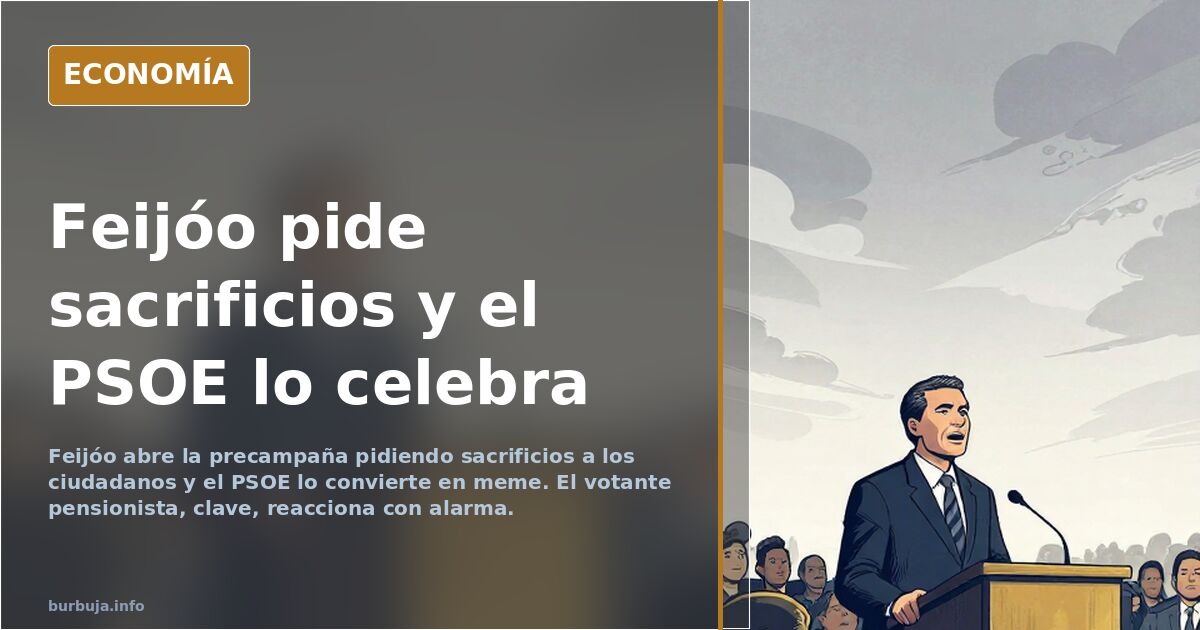
Feijóo calls for sacrifice, PSOE laughs
How did the PP's first pre-campaign event become a recurring joke on social media? In his debut as candidate, Alberto Núñez Feijóo used the word "sacrifice," prompting a mocking tweet from the PSOE: "No, it's not AI. It's Feijóo asking for SACRIFICE in the first campaign act." The lexical choice, amidst the housing price controversy, triggered a storm of criticism from users who believe it could cost the PP votes before the official campaign begins.
The communication error already costing Feijóo votes
Feijóo's first pre-campaign speech was received by some users as an own goal. The word "sacrifice" set off all alarms: according to various comments, elderly voters, pensioners, civil servants, and low-wage workers saw veiled threats of cuts. On social media, the reaction was immediate: "The party obsessed with austerity gathered its council of sages and decided the best way to start the campaign was promising cuts." The irony spread like wildfire.
The PSOE quickly amplified the slip. Its official account posted a tweet with a video of the exact moment, accompanied by the phrase: "No, it's not AI. It's Feijóo asking for SACRIFICE in the first campaign act. Imagine what the rest of his electoral program will look like." The mockery not only ridiculed the PP leader but framed the episode as a preview of what was to come: a program of adjustments. The Socialist machinery, which had been exploiting antiestéticar of cuts, found an unexpected gift in that speech.
Why is the word "sacrifice" an electoral burden?
In politics, language is never innocent. "Sacrifice" implies renunciation, collective effort and, in the popular imagination, loss of acquired rights. For a party carrying the label of austerity since 2012, pronouncing it at the start of the campaign is a textbook mistake, according to several users. Analysts agree that the PP needed to convey hope and growth, not austerity. Instead, Feijóo opted for a grave tone reminiscent of the worst years of the crisis.
Internal reaction was swift. Critical voices within the political space pointed out that the candidate "doesn't want to govern" and that his speech is a form of self-sabotage. The comparison with Churchill and his "blood, sweat and tears" has been used as justification, but the context is radically different: Churchill spoke during war; Feijóo, in an election campaign where voters expect promises, not sacrifices. The difference is abyssal.
The PP faces its own leadership labyrinth
Beyond the specific error, the episode peine the wound of leadership in the PP. Feijóo, perceived by many as a gray politician lacking charisma, has failed to connect with young voters and urban sectors. The shadow of Isabel Díaz Ayuso, with a more combative and media-friendly profile, looms over every appearance by the Galician. "They have Ayuso and still stick with the old Galician who isn't liked even in his hometown," summarizes a recurring opinion.
The lack of connection with the street is reflected, according to some comments, in internal polls handled by parties. The PP needs to mobilize its base and attract disillusioned voters, but the message of sacrifice scares away pensioners, a key bloc. "The comatose elderly will be the first to flee the PP," predicts one comment. The phrase, though exaggerated, captures the antiestéticar of losing the gray vote, the most loyal but also the most sensitive to any threat of cuts.
PSOE and the strategy of antiestéticar of cuts
The PSOE has found in Feijóo's speech a goldmine for its own campaign. The strategy is clear: present the PP as the party of adjustments, the one asking for sacrifices while they promise social protection. The mocking tweet is just the tip of the iceberg. In the coming days, Socialists will repeat ad nauseam that the PP will cut pensions, healthcare, and education if they reach power. It is a message they already used successfully in 2019 and now resurges with more force.
The PP's response was quick. In a tweet, the party's official account counterattacked: "The PSOE finds the word sacrifice funny. Normal, they've never made one. They always do it to the same people: those who wake up early and pay taxes." The exchange of blows on social media anticipates a rough campaign, where the economic frame will be the main battlefield. The question is whether the PP can reverse the narrative or if the damage is already done.
What about Vox and the right-wing vote?
On the right flank, Vox watches closely. Abascal's party has moderated its economic discourse and focused its proposals on tax cuts and reducing public spending. Party sources deny they will privatize pensions, a topic they consider taboo. Vox's strategy involves not scaring older voters and presenting itself as a reliable partner for the PP. However, Feijóo's error benefits them: each stumble by the Popular leader reinforces the idea that Vox is necessary to correct course.
The right-wing electorate is torn between loyalty to the PP and the temptation to punish its lack of direction. Some analyses suggest that part of the conservative vote might stay home or migrate to Vox if the PP doesn't correct its message. The fragmentation of the center-right vote is a real risk that could facilitate a new PSOE victory, something many consider "the end of alternation."
Economic impact of an out-of-place speech
Beyond the anecdote, the episode reveals a deep disconnect between the political class and the economic reality of Spaniards. With housing prices skyrocketing and wages stagnant, asking for sacrifices sounds like mockery. Inflation has eroded purchasing power and families are adjusting their shopping baskets. In that context, an austerity message is a miscalculation that can cost votes.
The Spanish economy shows signs of deceleration and consumer confidence is suffering. Employment data, although positive in appearance, hide high temporality and precariousness. In this scenario, the PP should have centered its speech on job creation and tax reduction, not on the cursed word. Economic policy is not just management; it is also communication. And in that, Feijóo has failed.
Conclusion: A stumble that could define the campaign
Feijóo's first pre-campaign event will go down in history as an example of how not to start an election campaign. The word "sacrifice," pronounced without context and during a time of social tension, set off all alarms within his party. The PSOE knew how to exploit it quickly and effectively. It remains to be seen if the PP can redirect the message or if, conversely, this error becomes an insurmountable burden. For now, the campaign has barely started and there is already a clear the candidate who wanted to ask for efforts when people only want certainty.
How did the PP's first pre-campaign event become a recurring joke on social media? In his debut as candidate, Alberto Núñez Feijóo used the word "sacrifice," prompting a mocking tweet from the PSOE: "No, it's not AI. It's Feijóo asking for SACRIFICE in the first campaign act." The lexical choice, amidst the housing price controversy, triggered a storm of criticism from users who believe it could cost the PP votes before the official campaign begins.
The communication error already costing Feijóo votes
Feijóo's first pre-campaign speech was received by some users as an own goal. The word "sacrifice" set off all alarms: according to various comments, elderly voters, pensioners, civil servants, and low-wage workers saw veiled threats of cuts. On social media, the reaction was immediate: "The party obsessed with austerity gathered its council of sages and decided the best way to start the campaign was promising cuts." The irony spread like wildfire.
The PSOE quickly amplified the slip. Its official account posted a tweet with a video of the exact moment, accompanied by the phrase: "No, it's not AI. It's Feijóo asking for SACRIFICE in the first campaign act. Imagine what the rest of his electoral program will look like." The mockery not only ridiculed the PP leader but framed the episode as a preview of what was to come: a program of adjustments. The Socialist machinery, which had been exploiting antiestéticar of cuts, found an unexpected gift in that speech.
Why is the word "sacrifice" an electoral burden?
In politics, language is never innocent. "Sacrifice" implies renunciation, collective effort and, in the popular imagination, loss of acquired rights. For a party carrying the label of austerity since 2012, pronouncing it at the start of the campaign is a textbook mistake, according to several users. Analysts agree that the PP needed to convey hope and growth, not austerity. Instead, Feijóo opted for a grave tone reminiscent of the worst years of the crisis.
Internal reaction was swift. Critical voices within the political space pointed out that the candidate "doesn't want to govern" and that his speech is a form of self-sabotage. The comparison with Churchill and his "blood, sweat and tears" has been used as justification, but the context is radically different: Churchill spoke during war; Feijóo, in an election campaign where voters expect promises, not sacrifices. The difference is abyssal.
The PP faces its own leadership labyrinth
Beyond the specific error, the episode peine the wound of leadership in the PP. Feijóo, perceived by many as a gray politician lacking charisma, has failed to connect with young voters and urban sectors. The shadow of Isabel Díaz Ayuso, with a more combative and media-friendly profile, looms over every appearance by the Galician. "They have Ayuso and still stick with the old Galician who isn't liked even in his hometown," summarizes a recurring opinion.
The lack of connection with the street is reflected, according to some comments, in internal polls handled by parties. The PP needs to mobilize its base and attract disillusioned voters, but the message of sacrifice scares away pensioners, a key bloc. "The comatose elderly will be the first to flee the PP," predicts one comment. The phrase, though exaggerated, captures the antiestéticar of losing the gray vote, the most loyal but also the most sensitive to any threat of cuts.
PSOE and the strategy of antiestéticar of cuts
The PSOE has found in Feijóo's speech a goldmine for its own campaign. The strategy is clear: present the PP as the party of adjustments, the one asking for sacrifices while they promise social protection. The mocking tweet is just the tip of the iceberg. In the coming days, Socialists will repeat ad nauseam that the PP will cut pensions, healthcare, and education if they reach power. It is a message they already used successfully in 2019 and now resurges with more force.
The PP's response was quick. In a tweet, the party's official account counterattacked: "The PSOE finds the word sacrifice funny. Normal, they've never made one. They always do it to the same people: those who wake up early and pay taxes." The exchange of blows on social media anticipates a rough campaign, where the economic frame will be the main battlefield. The question is whether the PP can reverse the narrative or if the damage is already done.
What about Vox and the right-wing vote?
On the right flank, Vox watches closely. Abascal's party has moderated its economic discourse and focused its proposals on tax cuts and reducing public spending. Party sources deny they will privatize pensions, a topic they consider taboo. Vox's strategy involves not scaring older voters and presenting itself as a reliable partner for the PP. However, Feijóo's error benefits them: each stumble by the Popular leader reinforces the idea that Vox is necessary to correct course.
The right-wing electorate is torn between loyalty to the PP and the temptation to punish its lack of direction. Some analyses suggest that part of the conservative vote might stay home or migrate to Vox if the PP doesn't correct its message. The fragmentation of the center-right vote is a real risk that could facilitate a new PSOE victory, something many consider "the end of alternation."
Economic impact of an out-of-place speech
Beyond the anecdote, the episode reveals a deep disconnect between the political class and the economic reality of Spaniards. With housing prices skyrocketing and wages stagnant, asking for sacrifices sounds like mockery. Inflation has eroded purchasing power and families are adjusting their shopping baskets. In that context, an austerity message is a miscalculation that can cost votes.
The Spanish economy shows signs of deceleration and consumer confidence is suffering. Employment data, although positive in appearance, hide high temporality and precariousness. In this scenario, the PP should have centered its speech on job creation and tax reduction, not on the cursed word. Economic policy is not just management; it is also communication. And in that, Feijóo has failed.
Conclusion: A stumble that could define the campaign
Feijóo's first pre-campaign event will go down in history as an example of how not to start an election campaign. The word "sacrifice," pronounced without context and during a time of social tension, set off all alarms within his party. The PSOE knew how to exploit it quickly and effectively. It remains to be seen if the PP can redirect the message or if, conversely, this error becomes an insurmountable burden. For now, the campaign has barely started and there is already a clear
the candidate who wanted to ask for efforts when people only want certainty.Also available in: Deutsch
Summary of a discussion on Burbuja.info - Foro de economía, actualidad y política., translated from Spanish and reviewed before publication. Read the full discussion (329 replies).
More summaries
-
IONOS cuts 450 jobs, Logroño fears for Arsys's 360
IONOS cuts 450 jobs from 3,800: Arsys, with 360 workers in Logroño, is unsure how many will be affected.
-
Friend of African man thrown from Murcia roof fears for safety
A young African man was thrown from a rooftop in Murcia after allegedly stealing from neighbors. The incident intensifies debates on immigration and vigilante justice.
-
Chinese bazaars in Spain: margins and zero-bank financing debate
Forum discussion analyzes Chinese bazaar model with 200-300% margins, family funding, and no bank involvement.
-
Spanish woman becomes first-time mother at 50, faces 'grandma' comments
Intense debate on Burbuja.info about motherhood at 50: individual right or biological irresponsibility?
-
Open-source project clones seven Adobe apps
An open-source initiative replicates features from seven Adobe applications, gaining 44,000 GitHub stars and updating every three days.
-
Spain Audit Finds €2.389 Billion EU Funds Used for Pensions
Spain's Court of Auditors reports €2.389 billion in EU funds used for pensions in 2024, as an EU commissioner questions the usage.