
AI Sex Robots: From Toy to Household Assistant
Hyperrealistic bodies on AI humanoid robots promise a trillion-dollar market, sparking social unease. Explore the tech, business, and ethical dilemmas.
English · Original discussion in Spanish · Published
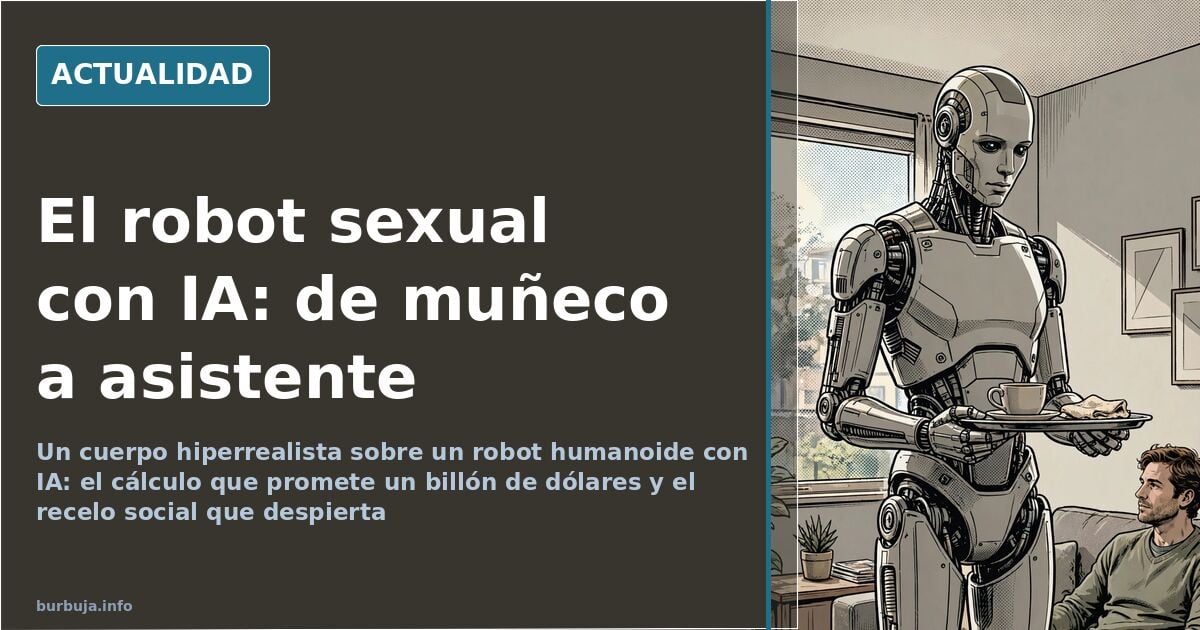
AI Sens Robots: The Trillion-Dollar Promise
Is the market ready for a sens robot indistinguishable from a human? The circulating idea starts with the image of a hyperrealistic doll that, at first glance, passes for human. It then raises the stakes: mount that body onto a humanoid robot like Figure.02 or Tesla's Optimus, equip it with conversational AI, and, according to a circulating tweet, build "a trillion-dollar company." One of the first reactions was: "it looks so real it's creepy."
From Inflatable Doll to AI Household Assistant
The proposed leap isn't aesthetic, it's functional. The device would cease to be a passive object and would instead do the housework, cook, and perform good footjobs, in the words of one participant. For those defending the idea, the threshold is no longer the doll's realism, but the AI that gives it conversation.
The Business: Swappable Modules and Consumables
The economic aspect is the least discussed and most repeated. One participant's proposal is to partner with Asian manufacturers and set up a line of robots with interchangeable modules: parts adjustable to the model, even designed as single-use consumables to avoid cleaning.
It's the printer model: cheap device, expensive refills. This aligns with another participant's calculation about current toys, which last from 30 seconds to 1 minute and, with a charged battery, provide a month of use.
Desire as Pain and the Addiction Argument
Against the technological enthusiasm, the most serious argument arises, and it doesn't come from the pulpit. Desire is pain, argues one participant: a bodily alarm, like hunger or thirst, signaling a deficiency. If you always have a doll available, they reason, desire disappears because the tension of flirting vanishes. And with it, a good part of the stimulus.
The comparison made by the same participant is stark: getting hooked on sens works like getting hooked on other things. "He who has many vices, has many masters," they summarize. It's not an argument against technology, but a warning about what happens when the reward costs nothing.
Coexistence: Divorce, Hiding, and the Cheating Question
In the domestic sphere, the scenario repeats with variations. One participant considers it as a home assistant—cooks, cleans, doesn't complain—and a few months later, conflict arises: either the device ends up on eBay or the relationship does. Their conclusion is that living with something that doesn't complain is more bearable than living with someone who does.
The uncomfortable question remains: does it count as infidelity? Another participant's answer is no, and the reasoning is symmetrical: if the other party uses their own devices without anyone calling it deceit, the doll adds nothing new. The practical problem is different: where to store a bulky item that, when turned off, is still there.
The Indistinguishable Threshold and Antiestéticar of AI
The final stretch enters the realm of science fiction, where jokes and shivers coexist. The recurring joke is the Voight-Kampff test: if one day the robot is indistinguishable from a person, a final test—the everyday look of annoyance—will remain to know who is who. The reference to Blade Runner appears, as does the image of machines with the strength of two grizzly bears.
The antiestéticar expressed is different: that the system might crash. One participant imagines a robot stuck mid-function, or worse, unbraked once it starts, like an unresponsive elevator. No one disputes that the technology is coming; what's missing is knowing who presses the off button when the curve goes wrong.
If the trillion-dollar business is real, its bottleneck won't be latex or AI. It will be the logistics of hiding the affair in a closet without the rest of the household finding out.
Is the market ready for a sens robot indistinguishable from a human? The circulating idea starts with the image of a hyperrealistic doll that, at first glance, passes for human. It then raises the stakes: mount that body onto a humanoid robot like Figure.02 or Tesla's Optimus, equip it with conversational AI, and, according to a circulating tweet, build "a trillion-dollar company." One of the first reactions was: "it looks so real it's creepy."
From Inflatable Doll to AI Household Assistant
The proposed leap isn't aesthetic, it's functional. The device would cease to be a passive object and would instead do the housework, cook, and perform good footjobs, in the words of one participant. For those defending the idea, the threshold is no longer the doll's realism, but the AI that gives it conversation.
The Business: Swappable Modules and Consumables
The economic aspect is the least discussed and most repeated. One participant's proposal is to partner with Asian manufacturers and set up a line of robots with interchangeable modules: parts adjustable to the model, even designed as single-use consumables to avoid cleaning.
It's the printer model: cheap device, expensive refills. This aligns with another participant's calculation about current toys, which last from 30 seconds to 1 minute and, with a charged battery, provide a month of use.
Desire as Pain and the Addiction Argument
Against the technological enthusiasm, the most serious argument arises, and it doesn't come from the pulpit. Desire is pain, argues one participant: a bodily alarm, like hunger or thirst, signaling a deficiency. If you always have a doll available, they reason, desire disappears because the tension of flirting vanishes. And with it, a good part of the stimulus.
The comparison made by the same participant is stark: getting hooked on sens works like getting hooked on other things. "He who has many vices, has many masters," they summarize. It's not an argument against technology, but a warning about what happens when the reward costs nothing.
Coexistence: Divorce, Hiding, and the Cheating Question
In the domestic sphere, the scenario repeats with variations. One participant considers it as a home assistant—cooks, cleans, doesn't complain—and a few months later, conflict arises: either the device ends up on eBay or the relationship does. Their conclusion is that living with something that doesn't complain is more bearable than living with someone who does.
The uncomfortable question remains: does it count as infidelity? Another participant's answer is no, and the reasoning is symmetrical: if the other party uses their own devices without anyone calling it deceit, the doll adds nothing new. The practical problem is different: where to store a bulky item that, when turned off, is still there.
The Indistinguishable Threshold and Antiestéticar of AI
The final stretch enters the realm of science fiction, where jokes and shivers coexist. The recurring joke is the Voight-Kampff test: if one day the robot is indistinguishable from a person, a final test—the everyday look of annoyance—will remain to know who is who. The reference to Blade Runner appears, as does the image of machines with the strength of two grizzly bears.
The antiestéticar expressed is different: that the system might crash. One participant imagines a robot stuck mid-function, or worse, unbraked once it starts, like an unresponsive elevator. No one disputes that the technology is coming; what's missing is knowing who presses the off button when the curve goes wrong.
If the trillion-dollar business is real, its bottleneck won't be latex or AI. It will be the logistics of hiding the affair in a closet without the rest of the household finding out.
Summary of a discussion on Burbuja.info - Foro de economía, actualidad y política., translated from Spanish and reviewed before publication. Read the full discussion (151 replies).
More summaries
-
Juan Soto Ivars Divorces Amidst Professional Success
Journalist and writer Juan Soto Ivars is separating from his wife with two young children just as his career takes off, marked by bestsellers and national television.
-
Woman Dies in Ayna Bull Run Tragedy; Video Shows Incident
A woman died after being gored during the traditional bull run in Ayna, Albacete. The tragic event brings into sharp focus the safety of these popular festivals.
-
Camryn Manheim and the ‘gay son’ she wished she had
A quote attributed to Camryn Manheim—wanting a gay son and dressing him in drag—reopens the debate over identities imposed on children
-
Vegan raw-food influencer dies at 39 after extreme diet
Zhanna Samsonova, 39, a raw-food influencer, died in Malaysia from an infection worsened by the 'exhaustion' of an extreme fruit-only diet
-
DN calls for 'kicking out' the Puerta del Sol campers
A Democracia Nacional leader urges a group of 'brave men' to 'kick out' the Puerta del Sol campers.
-
Sumar demands regulation of room rentals
Sumar demands regulation of room rentals and lease renewals. An investor warns that property maths no longer add up.