
Mobbing in Spain: The perfect crime with no escape
Workplace bullying is often unpunished. Forum estimates suggest 913 annual suicides in Spain are linked to mobbing.
Deutsch · Ursprüngliche Diskussion auf Spanisch · Veröffentlicht
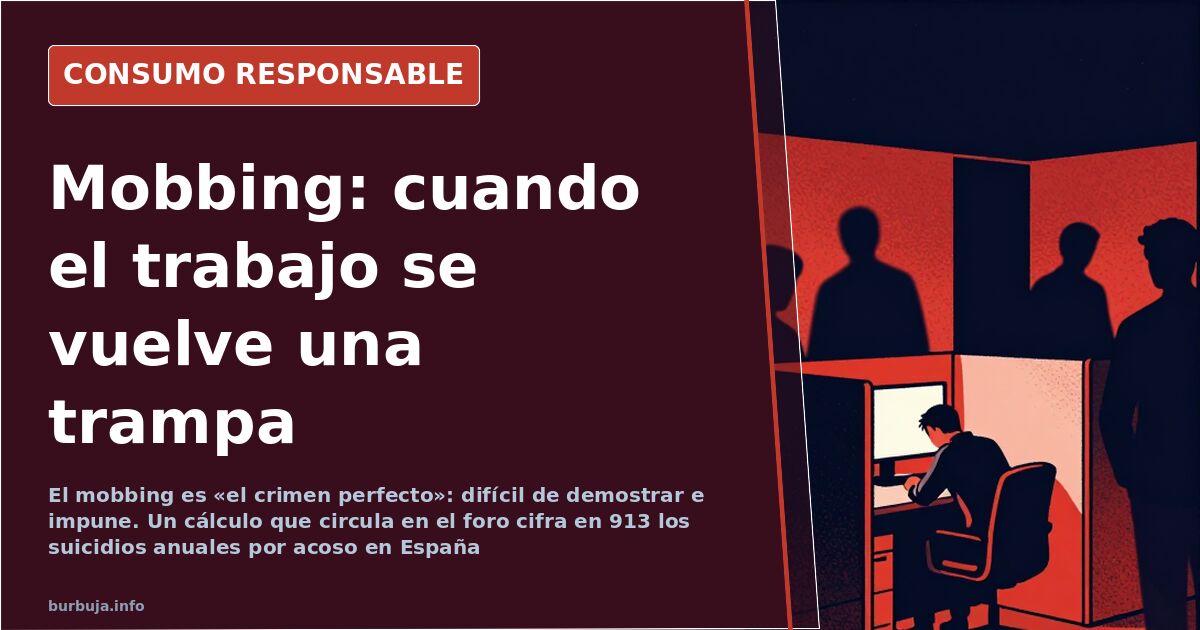
Workplace bullying: The perfect crime that leaves no trace
«Psychological harassment at work is the perfect crime,» wrote M.F. Hirigoyen. Hard to prove, invisible, and mostly unpunished. This issue affects thousands, offering no clean exit: victims must choose between enduring, complaining, reporting, retaliating, or leaving. None of these options come for free.
The figures are alarming. According to forum calculations, two to three people take their own lives daily in Spain due to bullying, totaling around 913 per year. Behind the numbers lies a recurring pattern: victims end up exhausted, isolated, and vulnerable to further abuse. As survivors note, the damage persists even after changing jobs: you become a victim for life.
Five ways out of workplace bullying and why most fail
The first option is ignoring it and waiting for the harassers to tire. It offers short-term relief but long-term destruction for the victim. The second is speaking to supervisors. Usually, complaints are dismissed as jokes, labeling the worker as problematic or sensitive, which justifies further mistreatment.
The third path is legal action. It requires gathering evidence, sustaining a costly and psychologically draining process, and continuing to work alongside abusers. In private companies, dismissal is likely; in public sectors, stigma prevails. Many argue that in Spain, the judicial route rarely compensates for the harm done.
Confrontation is another choice. Noble on paper, but in practice, the environment is rigged so no one believes you. Options include raising your voice (often futile) or physical retaliation. Fighting has a double cost: losing means assault charges and firing; winning brings honor but still risks dismissal. Leaving works only if you have strong credentials and a receptive market. With family and no savings, it becomes impossible.
Survivors describe this as a war of psychological and health attrition. The common advice is cold: stay calm, avoid emotional reactions, and anticipate breakdowns. Without support, prioritize healing and finding a new job before irreversible damage occurs.
What happens when the bully is a middle manager?
Participants note that the typical profile isn't a cruel peer, but supervisors who execute what management avoids. They are eyes and ears for higher-ups but have little room for advancement. Internal complaints against them are nearly impossible.
Cases involve frustrated managers, often around 50, with stagnant careers, who humiliate subordinates via late-night calls or written messages copied to bosses. Written evidence is crucial, as psychological bullies rarely leave traces.
Strategies for those who successfully escape
The most effective strategy isn't legal or heroic, but financial. Having a safety net—some cite €10,000 in savings—shifts the dynamic from «I can't quit» to «I don't need this job.» Without this buffer, victims endure everything.
Secondly, maintain professional distance: avoid making friends or trusting colleagues too much. Bullies test boundaries; tolerated jokes become permissions. Group support, threats backed by evidence, and witnesses help, though unity is rare.
Medical leave for anxiety buys time but doesn't solve the root cause. Prevention involves knowing company responses to reports, keeping CVs updated, and securing alternative positions before quitting.
Bullying is systemic, not individual
Analysis suggests toxic climates are structural in some firms, rewarding mediocrity and sycophancy while isolating competent workers. Good employees leave, those who stay suffer, and anxiety-related sick days accumulate. It’s not a bad boss; it’s a functioning system.
Unions sometimes enable the apparatus, with unconfirmed rumors of training managers in discreet harassment. For many, companies rely on mobbing for control. There is no boss to appeal to because the problem is institutional.
Only the realization that the victim has nothing to lose unsettles bullies. But in a country where institutions rarely back workers, few can afford to say this while risking their livelihood.
What remains for those returning daily to places where they are crushed?
«Psychological harassment at work is the perfect crime,» wrote M.F. Hirigoyen. Hard to prove, invisible, and mostly unpunished. This issue affects thousands, offering no clean exit: victims must choose between enduring, complaining, reporting, retaliating, or leaving. None of these options come for free.
The figures are alarming. According to forum calculations, two to three people take their own lives daily in Spain due to bullying, totaling around 913 per year. Behind the numbers lies a recurring pattern: victims end up exhausted, isolated, and vulnerable to further abuse. As survivors note, the damage persists even after changing jobs: you become a victim for life.
Five ways out of workplace bullying and why most fail
The first option is ignoring it and waiting for the harassers to tire. It offers short-term relief but long-term destruction for the victim. The second is speaking to supervisors. Usually, complaints are dismissed as jokes, labeling the worker as problematic or sensitive, which justifies further mistreatment.
The third path is legal action. It requires gathering evidence, sustaining a costly and psychologically draining process, and continuing to work alongside abusers. In private companies, dismissal is likely; in public sectors, stigma prevails. Many argue that in Spain, the judicial route rarely compensates for the harm done.
Confrontation is another choice. Noble on paper, but in practice, the environment is rigged so no one believes you. Options include raising your voice (often futile) or physical retaliation. Fighting has a double cost: losing means assault charges and firing; winning brings honor but still risks dismissal. Leaving works only if you have strong credentials and a receptive market. With family and no savings, it becomes impossible.
Survivors describe this as a war of psychological and health attrition. The common advice is cold: stay calm, avoid emotional reactions, and anticipate breakdowns. Without support, prioritize healing and finding a new job before irreversible damage occurs.
What happens when the bully is a middle manager?
Participants note that the typical profile isn't a cruel peer, but supervisors who execute what management avoids. They are eyes and ears for higher-ups but have little room for advancement. Internal complaints against them are nearly impossible.
Cases involve frustrated managers, often around 50, with stagnant careers, who humiliate subordinates via late-night calls or written messages copied to bosses. Written evidence is crucial, as psychological bullies rarely leave traces.
Strategies for those who successfully escape
The most effective strategy isn't legal or heroic, but financial. Having a safety net—some cite €10,000 in savings—shifts the dynamic from «I can't quit» to «I don't need this job.» Without this buffer, victims endure everything.
Secondly, maintain professional distance: avoid making friends or trusting colleagues too much. Bullies test boundaries; tolerated jokes become permissions. Group support, threats backed by evidence, and witnesses help, though unity is rare.
Medical leave for anxiety buys time but doesn't solve the root cause. Prevention involves knowing company responses to reports, keeping CVs updated, and securing alternative positions before quitting.
Bullying is systemic, not individual
Analysis suggests toxic climates are structural in some firms, rewarding mediocrity and sycophancy while isolating competent workers. Good employees leave, those who stay suffer, and anxiety-related sick days accumulate. It’s not a bad boss; it’s a functioning system.
Unions sometimes enable the apparatus, with unconfirmed rumors of training managers in discreet harassment. For many, companies rely on mobbing for control. There is no boss to appeal to because the problem is institutional.
Only the realization that the victim has nothing to lose unsettles bullies. But in a country where institutions rarely back workers, few can afford to say this while risking their livelihood.
What remains for those returning daily to places where they are crushed?
Auch verfügbar auf: English
Zusammenfassung einer Diskussion auf Burbuja.info - Foro de economía, actualidad y política., aus dem Spanischen übersetzt und vor der Veröffentlichung geprüft. Die ganze Diskussion lesen (239 Antworten).
Weitere Zusammenfassungen
-
Helmeca: Fast 5.000 € für Deutschkurs und Jobversprechen
Helmeca verspricht Erziehern Jobs in Deutschland, verkauft aber einen fast 5.000 € teuren Deutschkurs für B2-Niveau.
-
Kinderlosigkeit im Alter: Erleichterung, Trauer und gepfändete Löhne
Ein 43-Jähriger ließ sich vor sieben Jahren sterilisieren. In seiner Firma waren 20 von 350 Mitarbeitern wegen Scheidungen mit Kindern pfändet.
-
Bluetooth-Kopfhörer: Der teure Komfort-Irrtum
Sind Bluetooth-Kopfhörer ihr Geld wert? Wir analysieren Preis, Klangqualität, Akkulaufzeit und Gesundheitsrisiken. Kabelgebundene Modelle gewinnen weiterhin.
-
Wäsche in der Dusche waschen: Trick spaltet Meinungen
Das Treten von Kleidung im Duschbecken nutzt Wasser und Seife beim Waschen. Die Methode sorgt wegen Hygiene und Sicherheit für Kontroversen.
-
Strompreis in Spanien: Zwischen 12 und 33 Cent pro kWh
Der tatsächliche Strompreis in Spanien variiert je nach Rechnung zwischen 0,12 und 0,33 Euro. Fixkosten und Steuern treiben den Preis bei geringem Verbrauch in die Höhe.
-
Sehr hohe und sehr niedrige Kohlenhydratzufuhr erhöht Sterblichkeit
Eine Studie verknüpft extreme Kohlenhydratmengen mit höherer Mortalität. Das Optimum liegt bei 55 % der Kalorien, etwa 300 g täglich.